Rock hard facts
Ekeberg has some unique topological features thanks to hundreds of millions of years of geological processes.
Gneiss
The bedrock at Ekeberg consists of different gneisses formed around 1.6 billion years ago. Gneiss is a hard rock and among other things was used in the first stone building to be erected in Oslo in the Middle Ages. Today, the reddish gneiss from the Ekeberg escarpment is found in the ruins of the St. Clement’s Church, St. Mary’s Church and the Royal Estate at Sørenga.
Alum slate
The alum slate started as sludge on the seabed. Around 500 million years ago – long before the Oslo field and geological faults were formed – most of Norway’s eastern parts were under water. Dark, decaying sludge from dead plants and algae covered the seabed like a thick carpet. Alum salt was formed in the sludge, and over millions of years, the layers of sludge eventually petrified to slate on top of the old bedrock of gneiss.Today, the alum slate is long eroded from the top of Ekeberg, but when the Oslo field rose and sank 200 million years later, parts of the slate layers slipped down along the Ekeberg fault. Thus, outcrops of alum slate are found in the lower part of the Ekeberg escarpment.
Limestone
Tens of millions of years after the sludge that formed the alum slate had subsided, another layer settled on the seabed. The ocean had become richer in organisms with shells. When they died, their calcareous shells settled on the seabed, creating thick layers of shells. In time, the shell layers became limestone – another rock that has been used as a building material in Oslo. Limestone is soft and thus easy to carve for delicate stonework and details on stone buildings. A field of limestone stretches from Galgeberg up to the Ekeberg escarpment.
Dolerite
During the formation of fissures and volcanic activities, magma from the earth’s inner core was “caught” in cul-de-sacs and fissures, unable to reach the surface. This magma then cooled down over a few thousand years and turned into dolerite, an igneous rock that did not see the light of day before the mountains above it eroded away. In the Stone Age, dolerite was used for tools such as axes and picks. At Ekeberg, below Røhrts vei, are the remains of a dolerite quarry from the Stone Age.
The Breccia overhang in "Lover's lane"
At the bottom of the trail known as “Kjærlighetsstien”, a rocky crag testifies to the massive earthquakes that resulted in the sinking of the “Oslo pot” which left the Ekeberg fault standing as a ridge. The crag is formed from breccia, a species of stone that was shattered by earthquakes and geological faults.
Birds and tree hollows
In Ekebergparken, more than 40 species of breeding birds have been recorded.
Domestic animals and wildlife
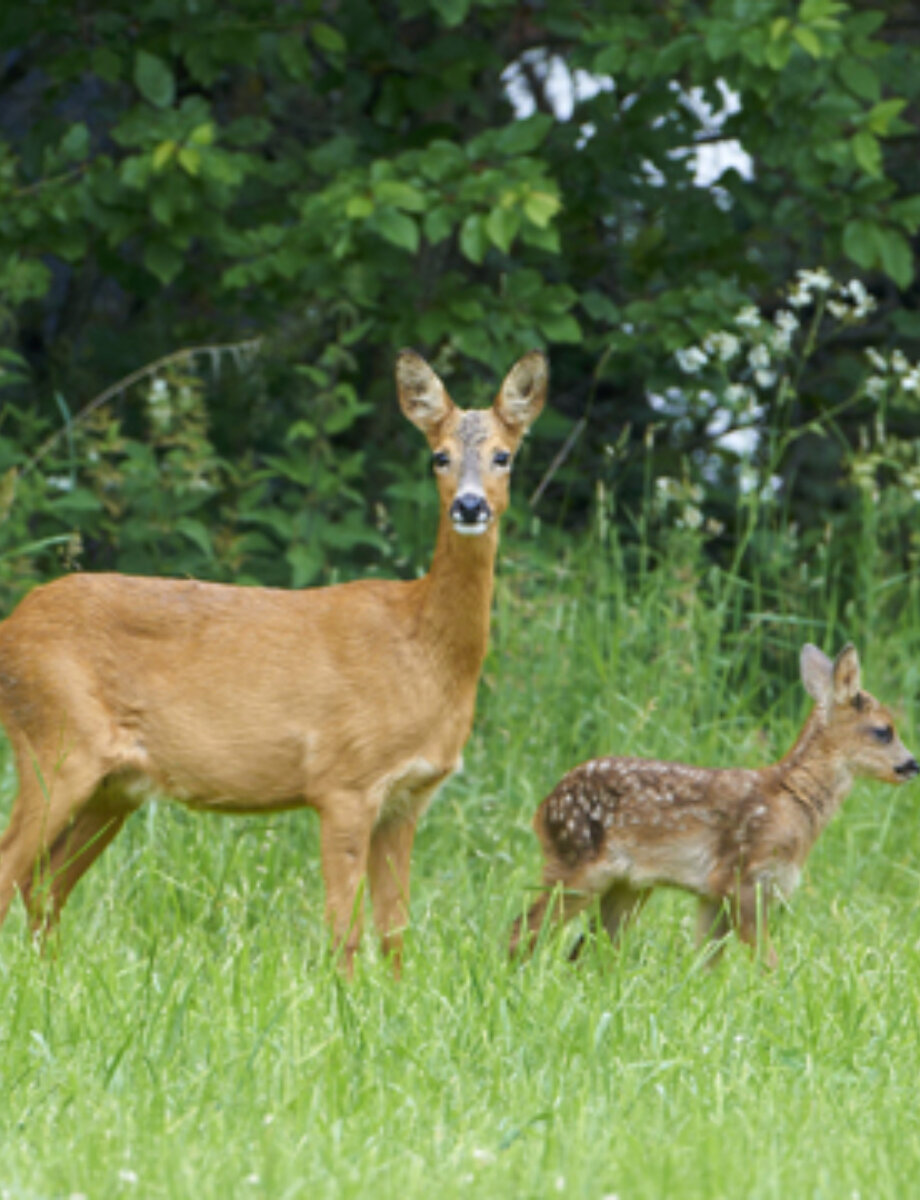
An array of different animals roam the forest of Ekeberg.
Plant life
The pine forest dominates at Ekeberg, but over the years garden plants have taken over many parts of the area.