
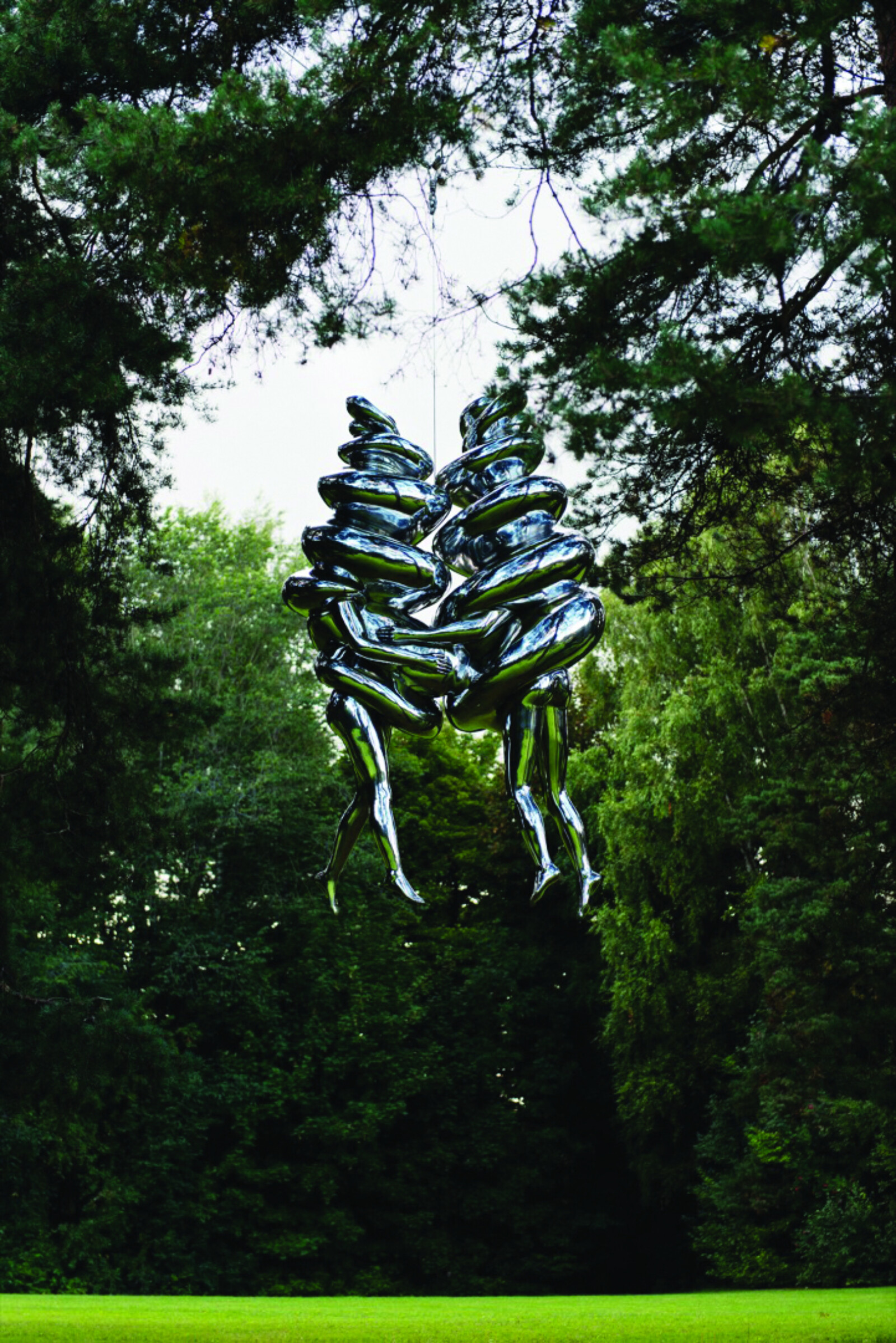
The Couple
- Date 2003
- Unveiled 2013
- Material Aluminium
- Dimensions 365 x 20 x 10 cm
© The Easton Foundation / VAGA, New York / BONO. Photo: © Ivar Kvaal
«The spiral is important to me. It is a twist. As a child, after washing tapestries in the river, I would turn and twist and ring them ... Later I would dream of my father's mistress. I would do it in my dreams by ringing her neck. The spiral—I love the spiral—represents control and freedom.»
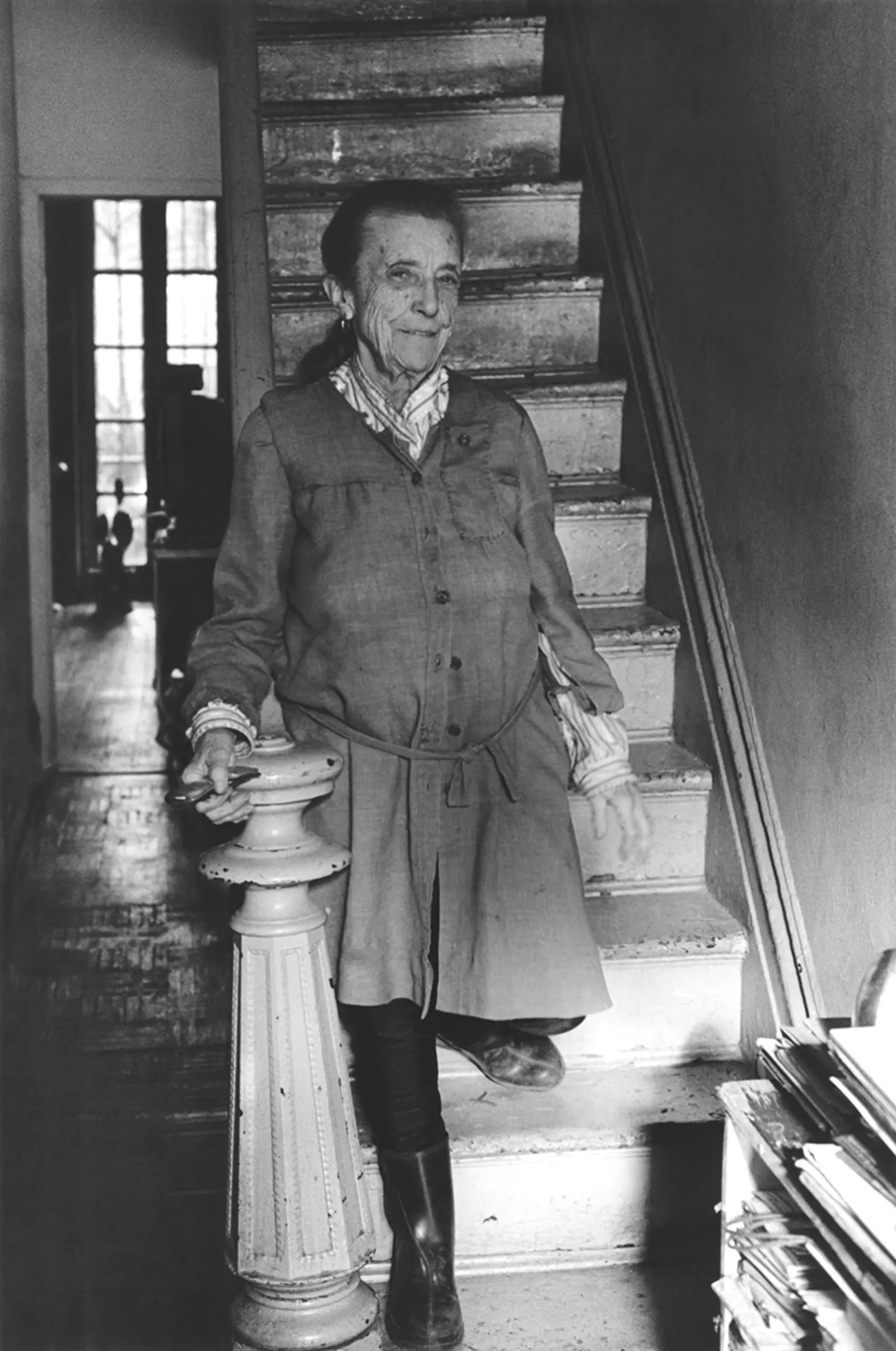
Louise Bourgeois
(b. Paris, France, 1911-2010)
Louise Bourgeois grew up in Paris, but moved as an adult to New York, where she worked for the rest of her life. Her family run a business restoring wallpaper, and from an early age, Bourgeois participated in this line of work. She studied mathematics, geometry, philosophy and art history, before she decided upon pursuing a career as an artist. In the years 1935-38 she studied at Ècole des Beaux-Arts and Académie de la Grande Chaumiére in Paris. Initially, she worked with painting and printmaking, but during the 1940s, her attention shifted to sculpture. During the 1950s she dedicated much of her time to studies and therapy based in psychoanalysis. The 1960s marked an experimental turn in her practice, introducing new materials and more sculptural work. In 1982 a retrospective exhibition at the Museum of Modern Art in New York led to her international breakthrough. At the 1993 and 1990 Venice biennales she represented the U.S. Her works are exhibited all over the world. The National Museum in Oslo has procured a number of her works, her sculpture Eyes (1997) is placed at the Tjuvholmen Sculpture Park, outside the Astrup Fearnley Museum. Another major work in Norway is her installation The Damned, the Possessed and the Beloved (2011), placed at Steilneset memorial in Vardø, Finnmark. Steilneset functioned as location for public executions in older days. In 2011, a memorial drawn by architect Peter Zumthor was raised, commemorating the victims of the witchcraft processes in Finnmark.
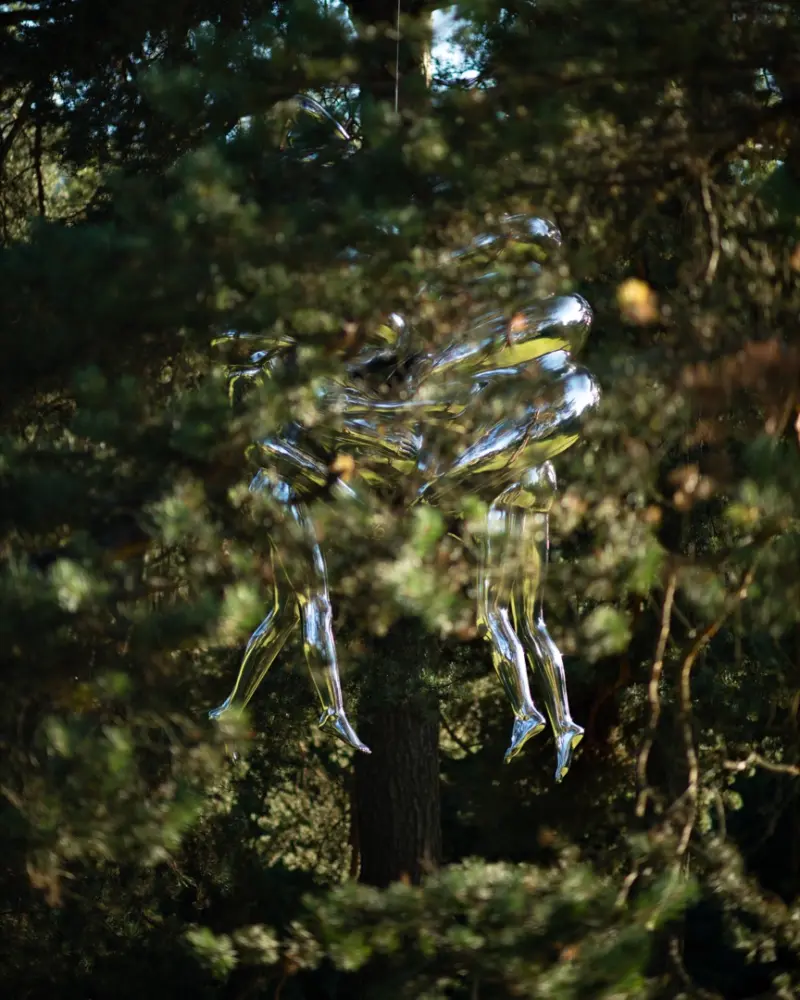
The Couple deals with an intimate relationship between two figures. A couple embraces tightly, as they hover between the trees, staying together – for better or for worse. Bourgeois' art often oscillates between the figurative and abstract, as is the case for The Couple. Her works vary in form, materials and scale. Even so, they revolve around the same subjects: jealousy, anger, fear and loneliness. A significant part of her oeuvre is autobiographical and reflects upon her family relations.
Louise Bourgeois was one of the great figures within contemporary art. Through personal experiences and trauma, she sought to examine and confront universal themes of abandonment and love. Interpersonal relations were often a focal point, and she became known for being personally revealing in her art. She worked in many different artistic directions and modes of expression, such as painting, drawing, printmaking, sculpture, and installations, as well as using all kinds of materials including textiles, wood, rubber, and metal.
A specific event affected her greatly throughout her life and became a recurring theme in her art practice: her father was unfaithful to her mother and had an affair with her governess when she was little. The family relations were thrown off balance, and she related the experience as a double betrayal, both from her father and her governess.
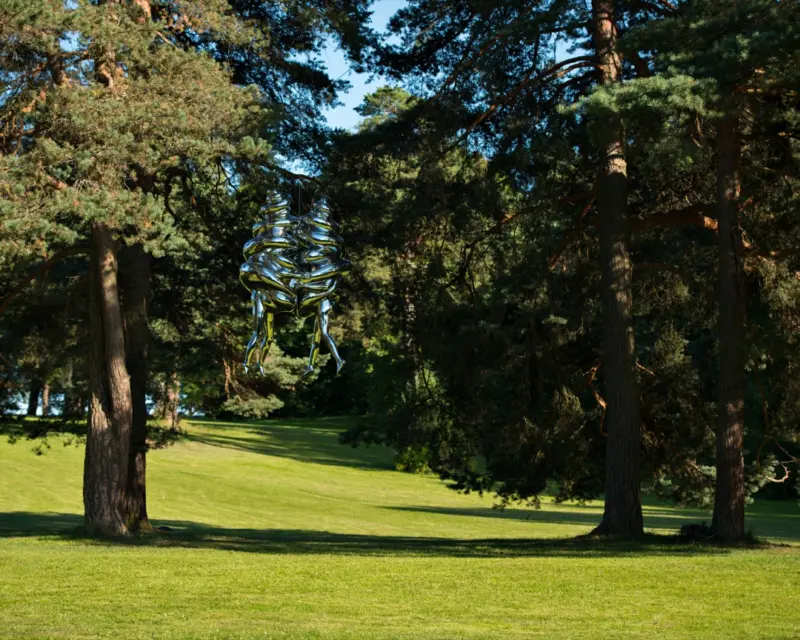
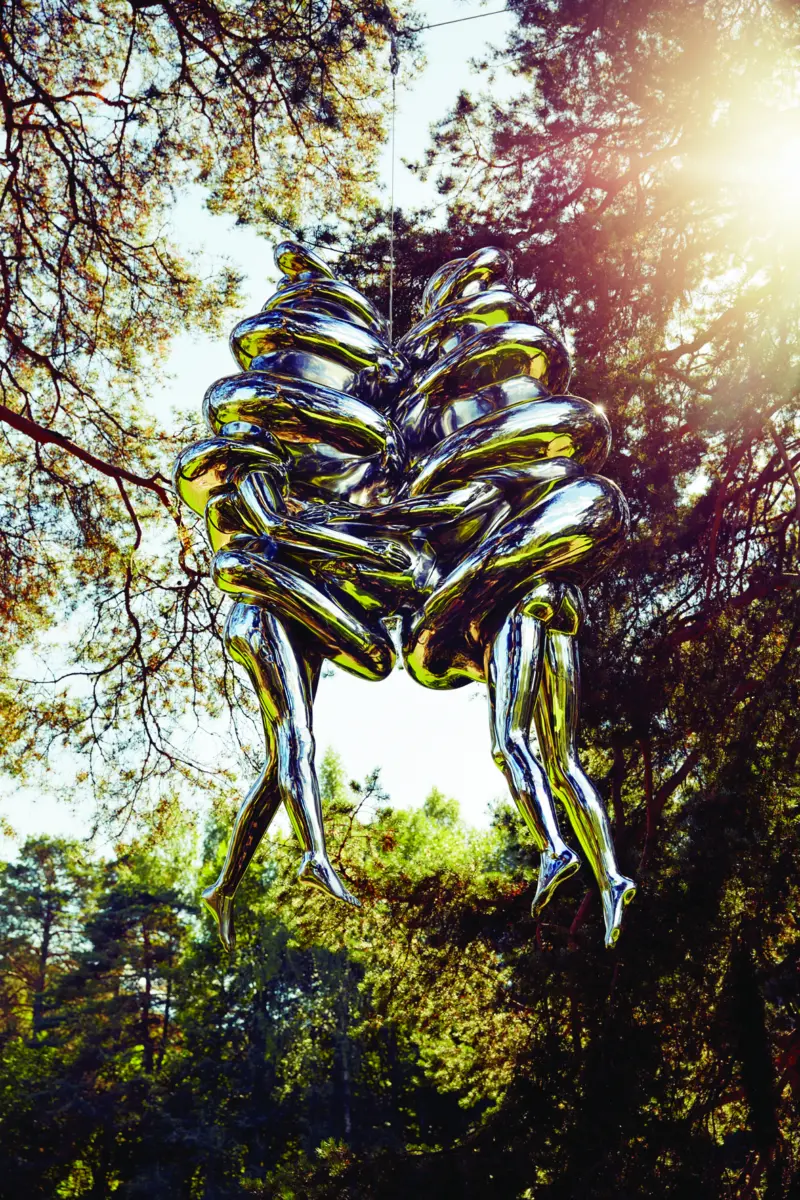
The Couple was made late in her career and exists in several castings. At Ekebergparken, it hangs high above the ground on a wire between two large tree crowns, swaying gently in the wind. The shiny surface of the aluminium reflects the surroundings and makes it seem almost weightless, even though it weighs around six hundred kilograms. The sculpture consists of two spiral figures with arms and legs that melt into each other, as if in a loving embrace. The spiral is a shape Bourgeois frequently used. Either as an independent sculptural form or combined, as it is here, with figurative elements. For her, the spiral was ambiguous, expressing control, freedom and chaos. In this way, the spiral in The Couple expresses the different stages in a love affair, which can be beautiful and controlled, but also turbulent and forceful.
Guided tours
Experience The Couple and many of the other artworks in the collection with our art mediators. We offer guided tours for private groups all year round.