
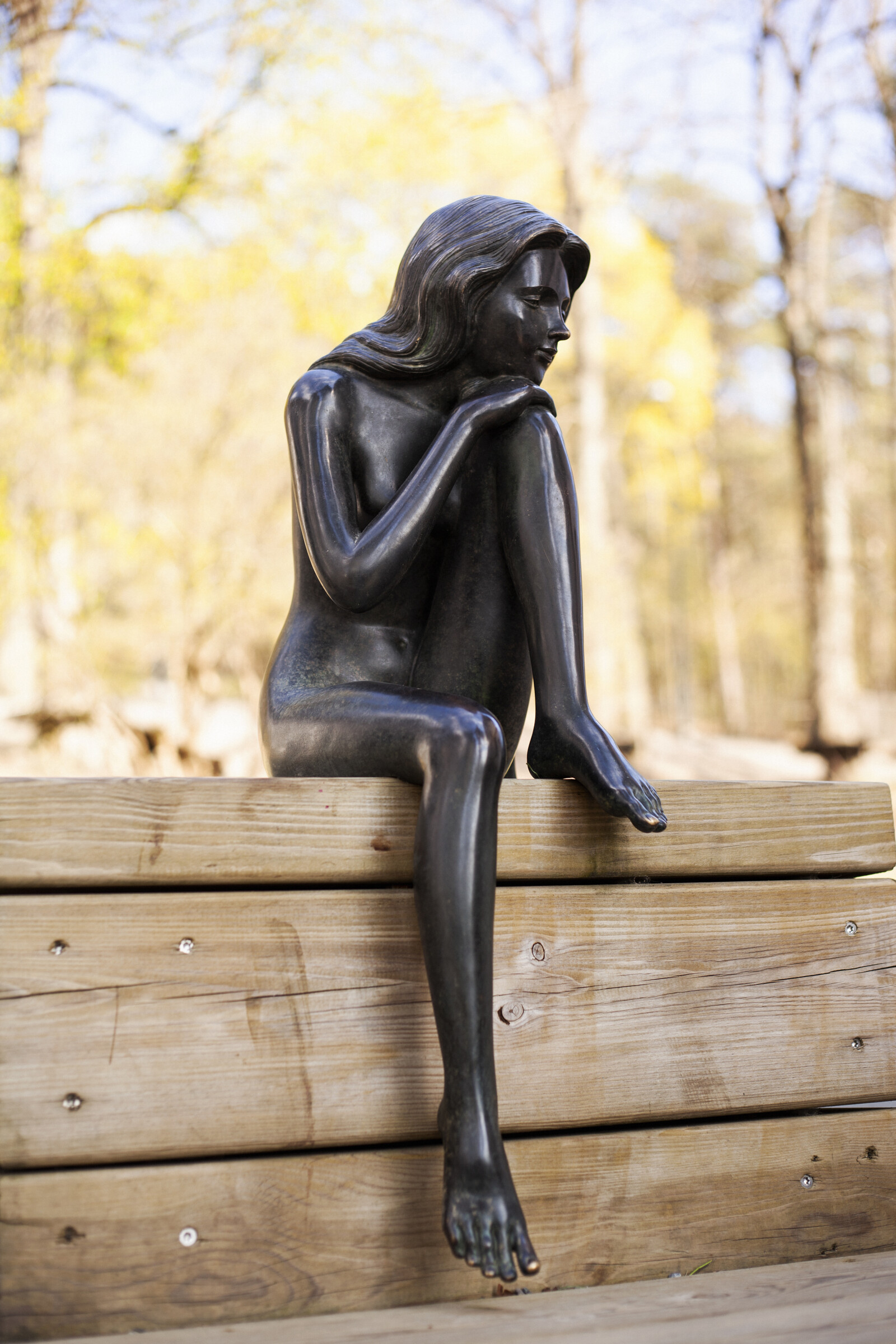
Reflections (currently unavailable)
- Date 2006
- Unveiled 2013
- Material Bronze
- Important under restoration and not available
- Dimensions 70 cm
© Guy Buseyne. Photo: © Kristina A. Kvåle /Ekebergparken
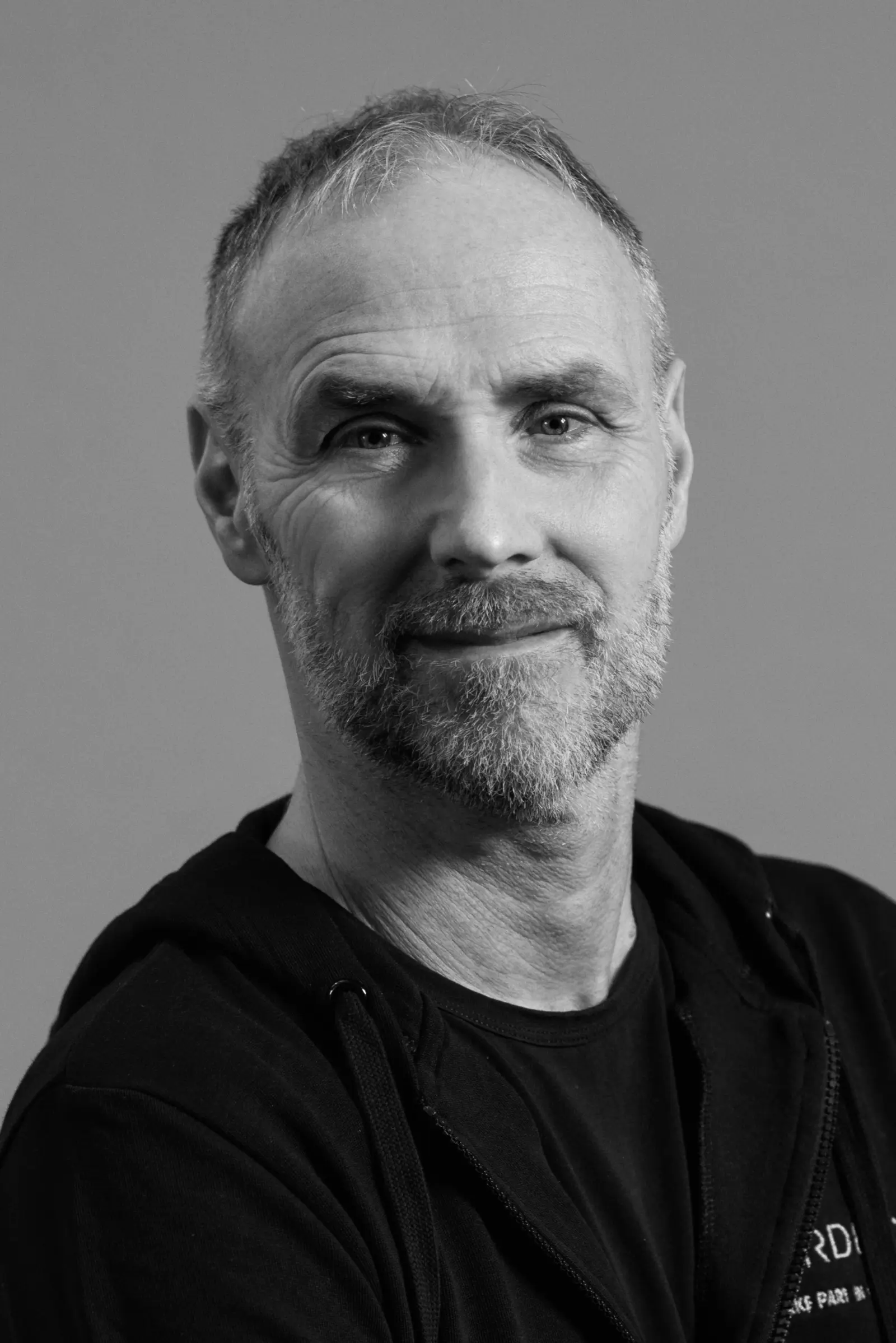
Guy Buseyne
(b. Belgium, 1961)
Guy Buseyne lives in Belgium and has a background in publishing and graphic design. He studied sculpture and ceramics for two years at the Academy of Fine Arts in Bruges, as well as completing courses in furniture design and restoration. Buseyne works as a furniture and jewellery designer, collaborating with several design agencies. As a sculptor, he draws on his extensive knowledge of design. The major bulk of his sculptures depict human characters in figurative techniques, but he also makes use of a more abstracted language of form.
Please note: The sculpture is currently under restoration and is not available. It will be installed back by autumn 2026.
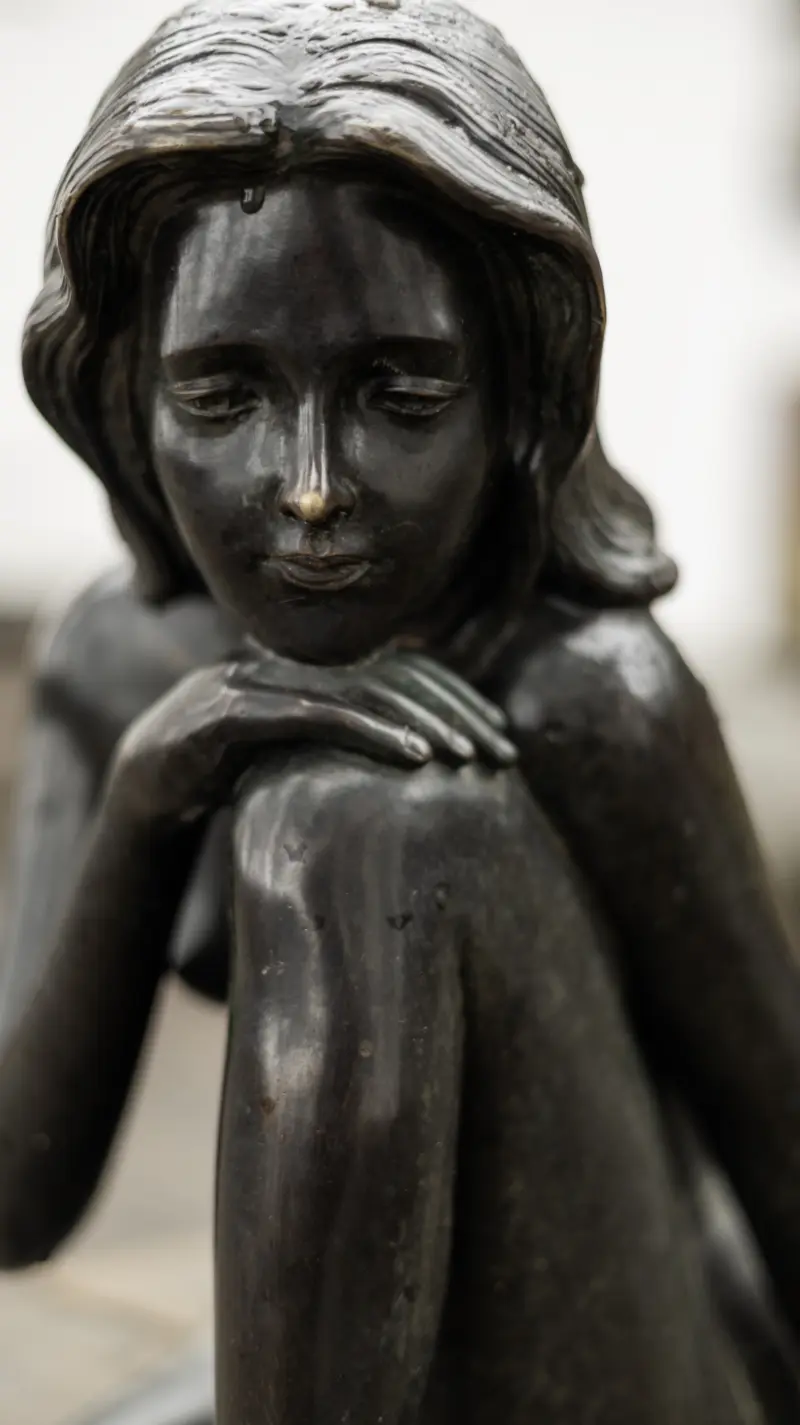
Reflections adheres to naturalist and figurative traditions. Buysene's work relates to Auguste Rodin's well-known sculpture The Thinker, a man poised in almost the same position as this girl; both with a hand resting on a bent knee and the head tilted downwards as the figure is submerged in profound contemplation.
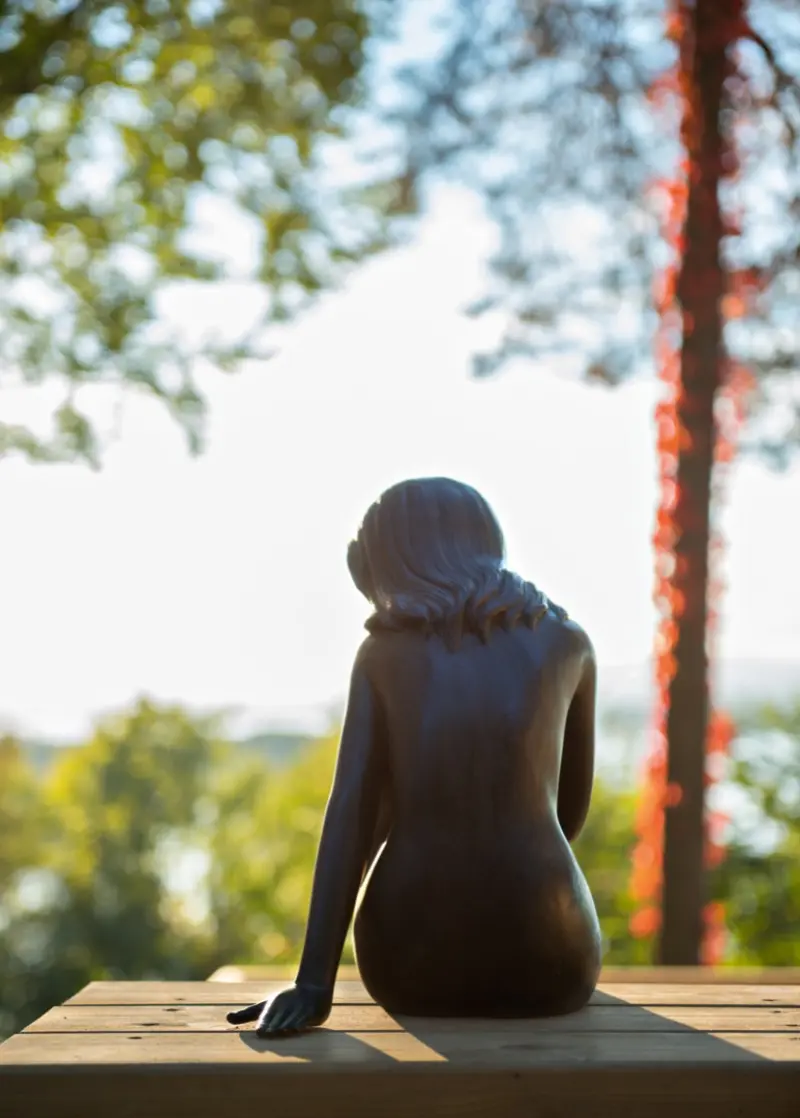
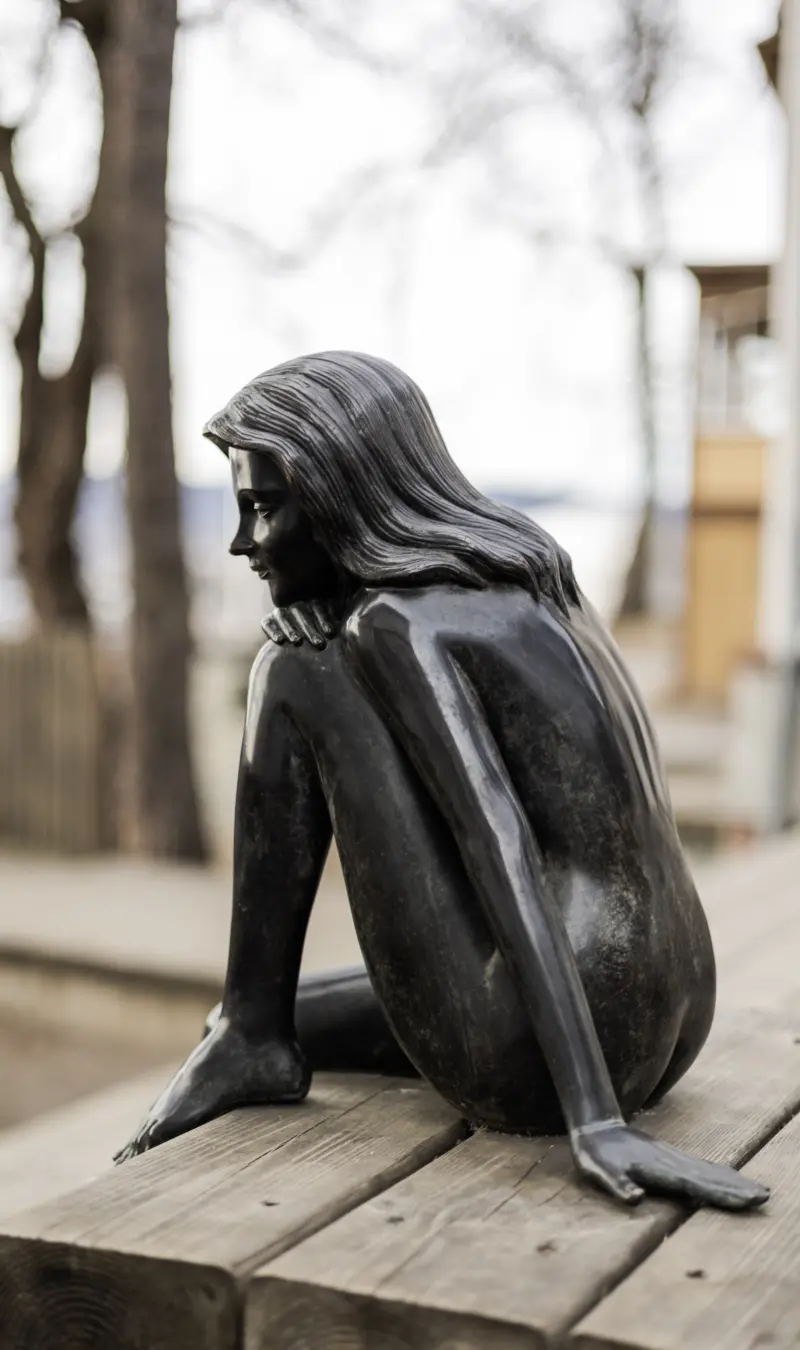
Reflections is one of the smallest sculptures in the collection. It depicts a young woman sitting with her arm and head resting on one of her legs in a relaxed manner. Instead of being placed high up on a pedestal, as is the norm in classical and figurative public sculptures, she is installed on a bench close to the ground. The size and placement of Reflections makes her accessible to the viewer, especially to the park’s younger visitors.
With her thoughtful and reflective posture, Reflections draws parallels to perhaps the most famous sculpture in art history, The Thinker (Le Penseur, circa 1880) by Auguste Rodin. In contrast to The Thinker with its heroic size and depiction of an intensely contemplative man, you might say that Buseyne’s Reflections is a depiction of a human being in a more balanced frame of mind; less grand, dramatic and elevated.
The Thinker by Rodin was originally made in a smaller format for the complex composition The Gates of Hell but was later made in several monumental versions (from around 1904). Michelangelo’s (1475-1564) sculptural depiction of his patron Lorenzo de’ Medici (circa 1524), shown seated, deep in thought and contemplation in a Roman suit of armour can also be seen as a direct contrast to the depiction of a pensive girl we see in Buyseyne’s Reflections.
Guided tours
Experience Reflections and many of the other artworks in the collection with our art mediators. We offer guided tours for private groups all year round.