
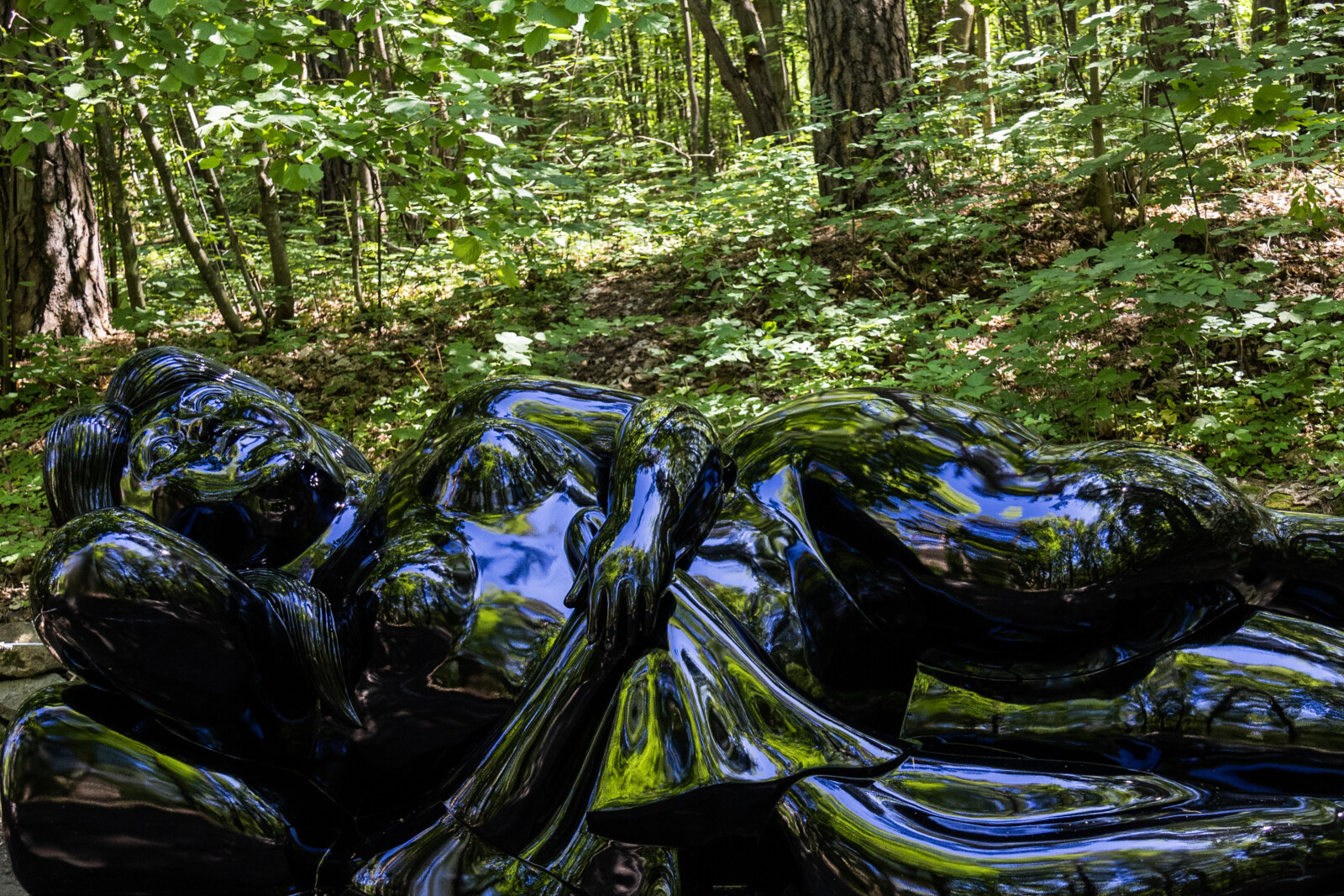
Reclining Woman
- Date 2004
- Unveiled 2014
- Material Bronze
- Dimensions 154 x 368 x 147 cm
© Fernando Botero / BONO. Photo: © Kristina A. Kvåle / Ekebergparken
«Sculptures permit me to create real volume… You can touch the forms and give them the smoothness and the sensuality that you want.»
Fernando Botero
(b. Medellín, Colombia, 1932-2023)
Fernando Botero was a self-taught painter and sculptor. He came from a poor family and his father died when he was only four years old, leaving his mother to hard work trying to make ends meet. Botero knew early on that he wanted to be an artist and even though his family strongly opposed it, he stood his ground and already as a twenty- year-old won a local art prize followed by several drawing and painting exhibitions in his home country. He used the prize money to travel to Europe, where he studied Pablo Picasso’s cubism and the colour use of the Renaissance masters. After this trip, he settled first in Mexico and later New York. In his younger days, his motifs were inspired by Colombian and Spanish art. Later, the Mexican painter Diego Rivera was a paragon for his work. Botero is renowned for his themes that depict men and women in a figurative, naïvistic manner. Despite the obstacles he met on his way, Fernando Botero's determined work has earned him international renown, and his easily recognizable style has been dubbed Boterism.
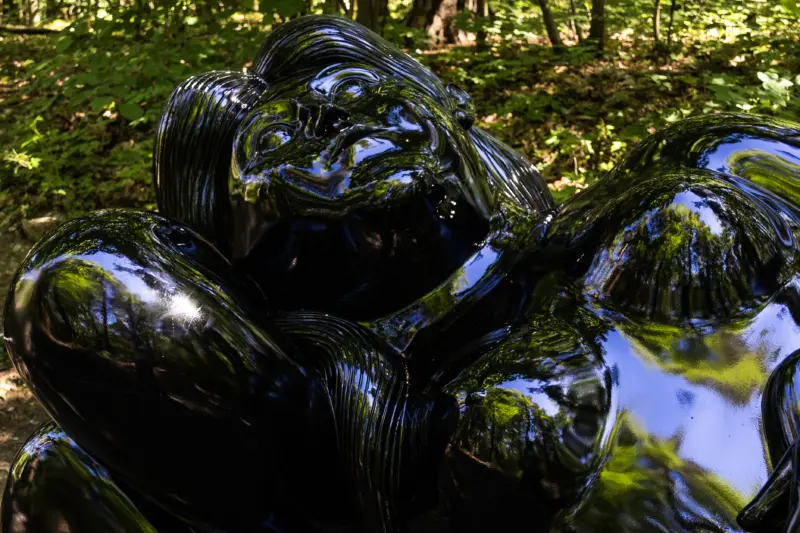
The sculpture Reclining Woman depicts the female form in a posture that is well known from classical art. The reclining woman has been a favourite subject from the Renaissance onwards. In earlier periods, the woman was likely to be rendered within a landscape, but later the subject was moved indoors. The sculpture is an example of Botero's ground rule: art ought to be an exaggeration of reality, both in terms of size, shape and spirituality.
It was during his time in New York in the 1960s that Botero began work on his figurative, stylised and naive paintings of chubby women, men and animals. He references Latin-American folk art in his use of flat, bright colours and boldly outlined forms in these paintings. Form and volume would come to make up his artistic signature both in painting and in sculpture. Botero insisted on retaining this, even when he was practically shunned by the abstract expressionist art scene in New York. He finally got his breakthrough with exhibitions in Germany and his style has since become so iconic that it has coined its own term; Boterism.
Reclining Woman in the Ekeberg Sculpture Park is no exception. The figure is massive and smooth, the weight of the body and drapery pulling heavily towards the ground. The large female figure recalls primitive art, Henry Moore’s semi-abstract female shapes, as well as prehistoric fertility goddesses.
Even though Botero can easily be associated with something innocent and cuddly, he uses satire and irony in his work. He draws on art historical references for inspiration, such as for example Leonardo da Vinci’s Mona Lisa (1503) and Jan Van Eyck’s Arnolfini Portrait (1434), which have been graced with their own chubby and colourful Botero versions.

Guided tours
Experience Reclining Woman and many of the other artworks in the collection with our art mediators. We offer guided tours for private groups all year round.