
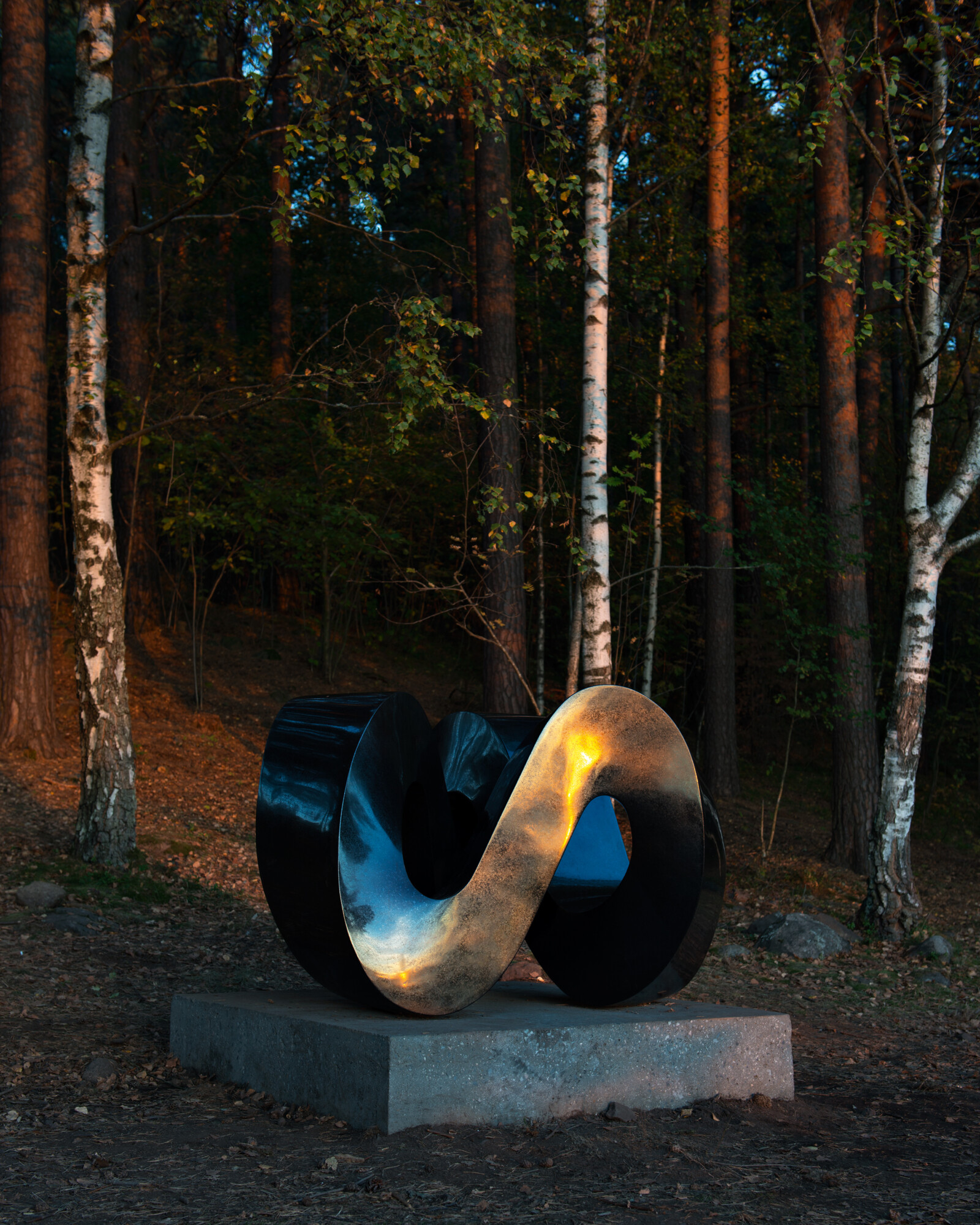
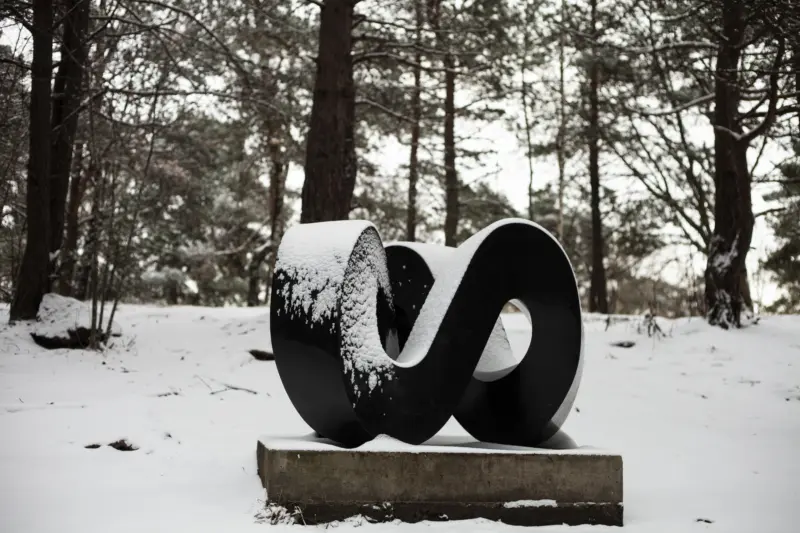
Möbius Trippel
- Date 1998
- Unveiled 2013
- Material Diabas stone
- Dimensions 95 x 140 x 125 cm
© Aase Texmon Rygh / BONO. Photo: © Ivar Kvaal
«I am very interested in calmness. I would like people to search for a calmness they are lacking in themselves and in our time.»
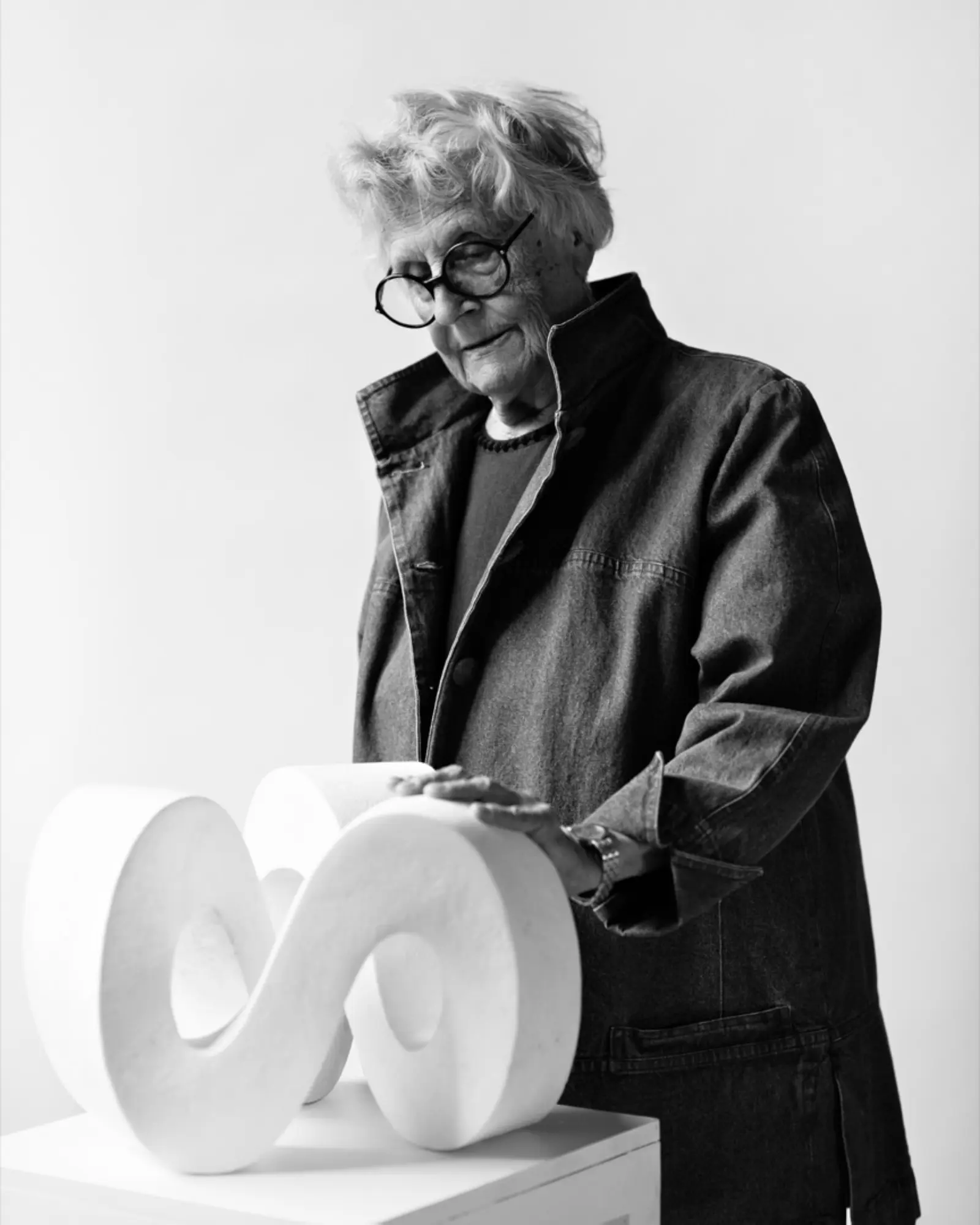
Aase Texmon Rygh
(b. Dyrøy kommune, Troms, 1925-2019)
Aase Texmon Rygh was born in Dyrøy in Troms, Norway. She studied at the National Academy of Craft and Art Industry in Oslo (1944-46), and later at The Royal Danish Academy of Fine Arts in Copenhagen, under Einar Utzon-Frank (1948-49). Her solo exhibition at The Museum of Contemporary Art in Oslo in 2014, titled Modernisme for alltid! (Modernism Forever!) consolidated Texmon Rygh’s position as one of the country’s most important sculptors.
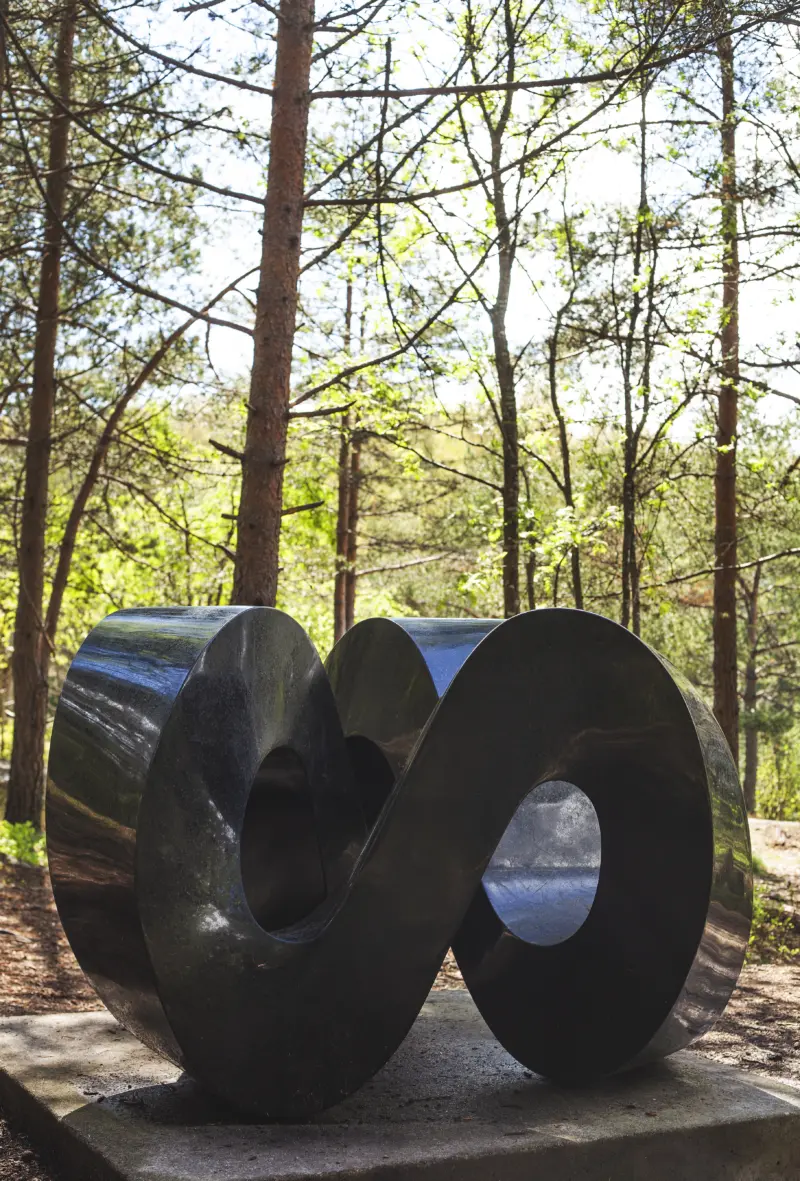
The sculpture Möbius trippel (Möbius Triple) was inspired by the German mathematician August Ferdinand Möbius (1790–1868). The Möbius band bears his name, and can in simple terms be described by using a flat strip, giving it a half-twist and joining the ends in a loop. The resulting surface simultaneously points outwards and inwards. Rygh sees this form is as universally valid, on level with the circle and the square. This fascination with form resulted in a series of sculptures based on the Möbius shape.
Texmon Rygh was a pioneer of Norwegian modernism. In her body of work, Texmon Rygh progressed from abstractions of natural shapes to a non-figurative expression rooted in geometric symbols and principles. In her work, nothing was left to chance, and everything done to accommodate the material. She was always working towards the absolute simplification.
In the 1950s, she was one of very few Norwegian sculptors who worked in an abstract style, making her art controversial at the time. The figurative was so dominant in the field, it took years of emotional debates before she was accepted as a member of the Norwegian Sculptors Society in 1963. She did find artistic kinship with Norwegian modernist painters such as Ludvig Eikaas, Knut Rumohr, and Jakob Weidemann. During the 1970s, she experienced a change in status, becoming one of the most prominent modernists on the Norwegian art scene.
Texmon Rygh would mould the sculptures in clay or plaster first, and then cast the final version in bronze, carve it in wood, or as in Möbius trippel, carve it in stone. The stone used for Möbius trippel is diabase, which occurs natural and in quite large quantities at Ekeberg.
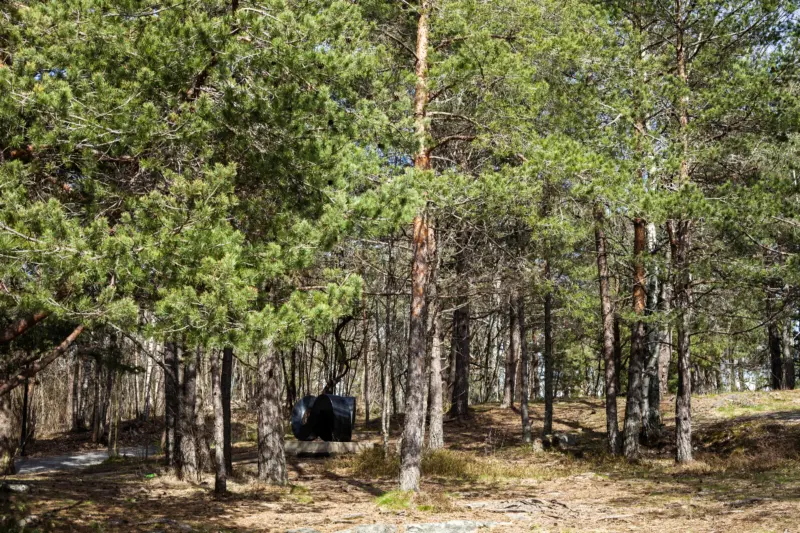
Guided tours
Experience Möbius Trippel and many of the other artworks in the collection with our art mediators. We offer guided tours for private groups all year round.