
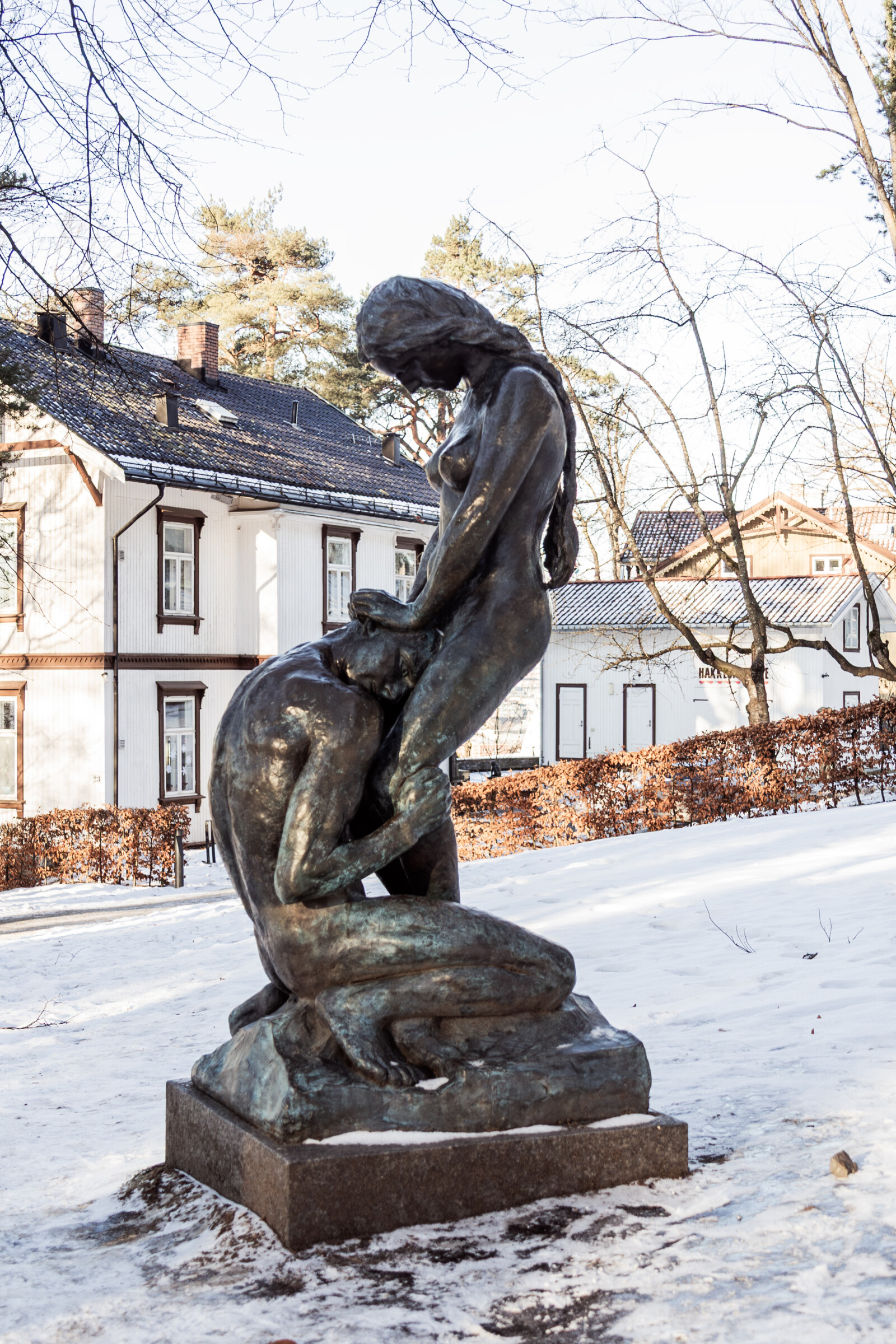
Man and Woman
- Date 1908
- Unveiled 2014
- Material Bronze
- Dimensions 160 cm
Photo: © Kristina A. Kvåle / Ekebergparken
«I never had a choice. I was a sculptor even before I was born. I have been driven and pushed by enormous forces from without. Anything else would have been of no use, there was no other way. I was always driven back to it.»
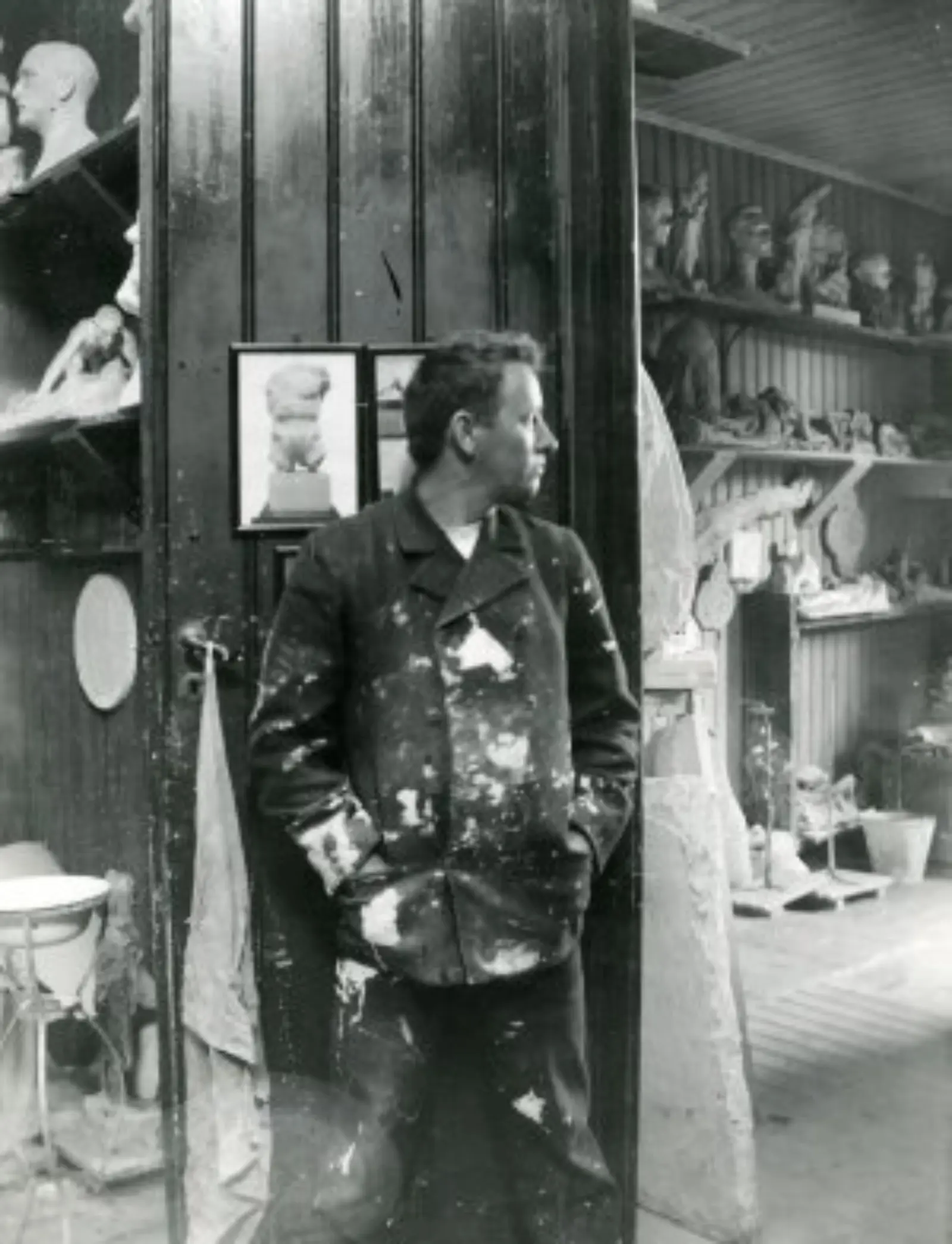
Gustav Vigeland
(b. Mandal, Norway, 1869-1943)
Gustav Vigeland is one of Norway’s most prominent sculptors, regardless of period or style. Vigeland had a turbulent childhood and was heavily influenced by his father’s puritanical views on life. He never studied art formally, nor did he finish primary school, however, he learned woodcarving techniques from an early age, from his father who was a carpenter. In 1889 the sculptor Brynjulf Bergslien (1830–1898) and art historian Lorenz Dietrichson (1834–1917) took him under their wings. Both saw Vigeland’s talent in his sketches of human bodies. He spent his youth in Paris and was inspired by Auguste Rodin's work. Vigeland also studied in Germany and Italy. Here, he found impulses in early Renaissance sculptures, particularly Donatello's. On his return to Norway, he created several sculptures on public commissions, such as the Neo-Gothic figures for the Nidaros cathedral in Trondheim and the Niels Henrik Abel Memorial in Oslo. His largest project was the Vigeland Park in Oslo, a facility populated by sculptures and reliefs based on Vigeland's ideas in the 1920's.
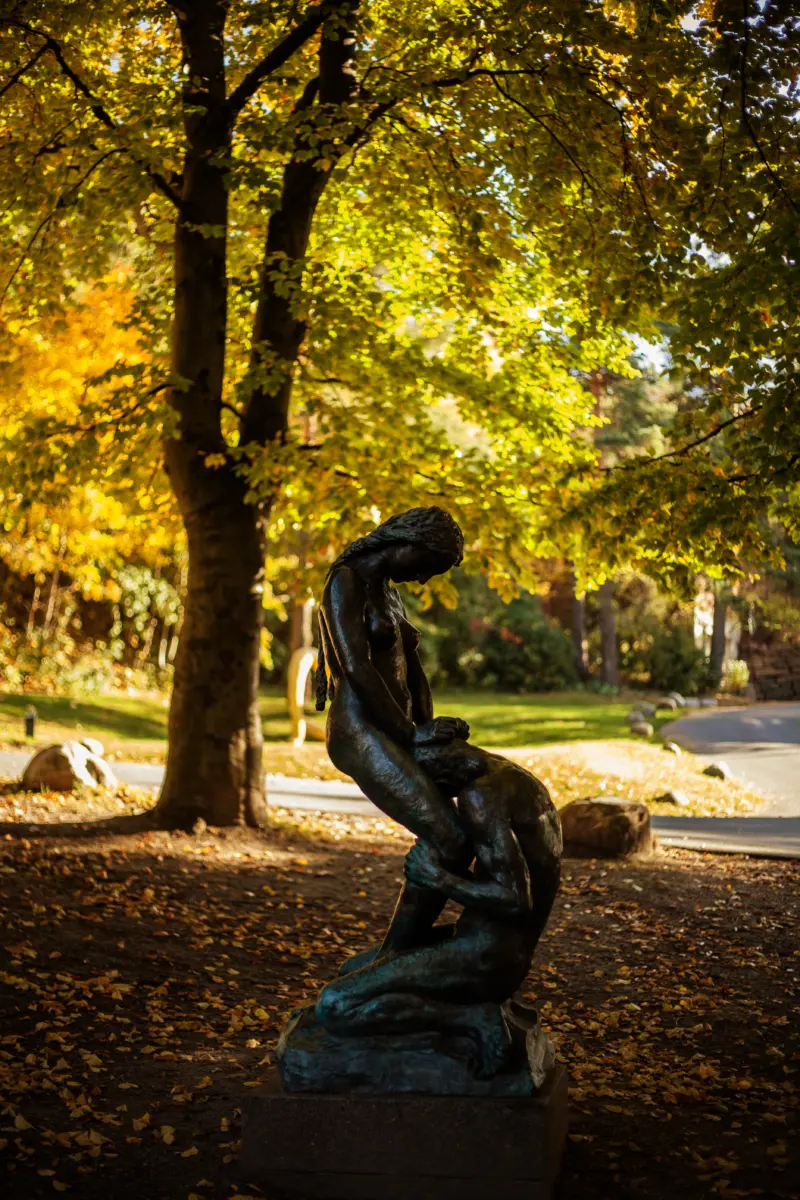
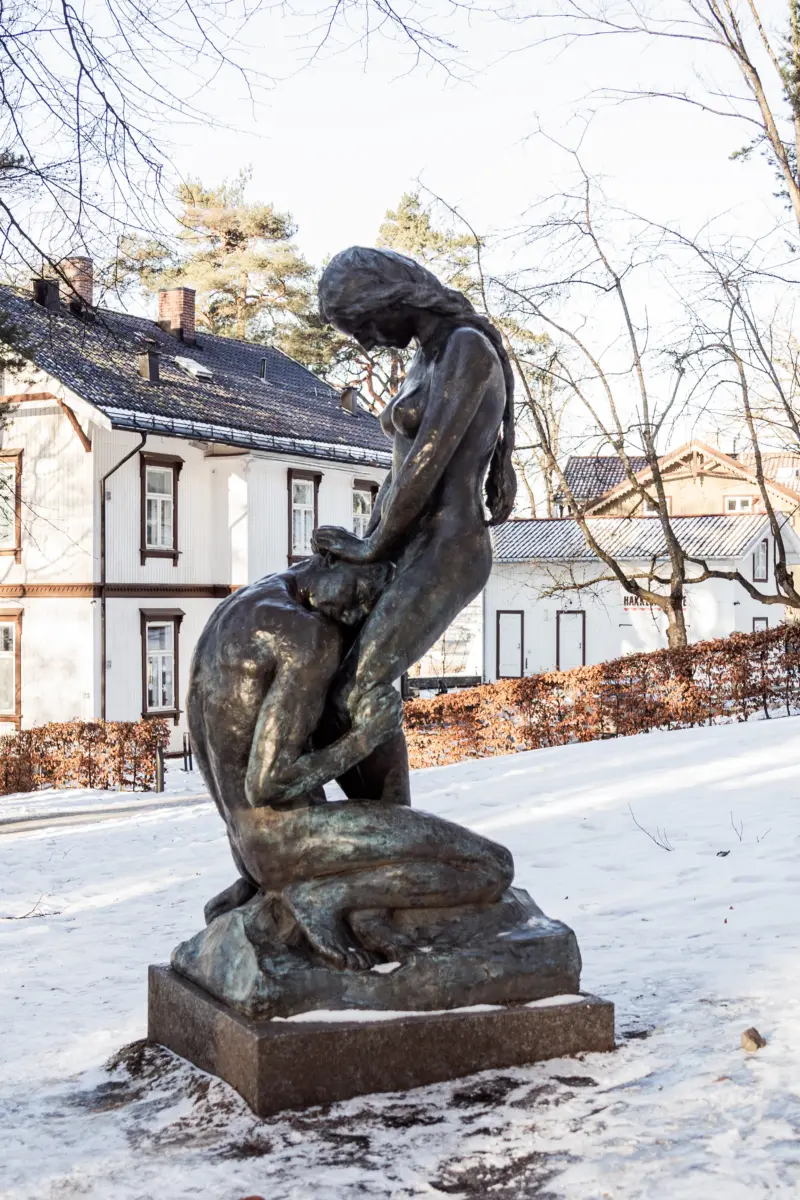
Gustav Vigeland depicts the charged relationship between man and woman in Man and Woman. Uncharacteristic of its age, the woman is the strong character in control of the situation. The man is kneeling before her and tries to keep her in his grasp.
From the end of the 1880s and into the 1900s Vigeland went on several study trips in Europe. In 1893 he spent a longer period in Paris, where he was able to visit August Rodin’s atelier. Whether he met Rodin has not been confirmed, but seeing Rodin’s art made a strong and formative impression on him. To Vigeland, Rodin’s art represented a liberation from traditional sculpture: from a retrospective and stiff style to an expressionistic and dynamic one.
Rodin’s influence becomes evident in the sculpture Man and Woman, a typical example of Vigeland’s early work. It depicts a man clinging to the knees of a woman, face turned away, while his fingers press into her calves. The woman pushes against his head and looks down. These poses express an intense tension between the two naked figures. This sculpture is somewhat leaner and more pronounced than most of the works commonly associated with Vigeland. The intimate body language contrasts with the ambiguous facial expressions. It is through the body, as in Rodin’s work, that the tension is expressed. This relationship between man and woman is an ongoing theme in Vigeland’s art, expressing pleasure, conflict and emotional crises.

Guided tours
Experience Man and Woman and many of the other artworks in the collection with our art mediators. We offer guided tours for private groups all year round.