
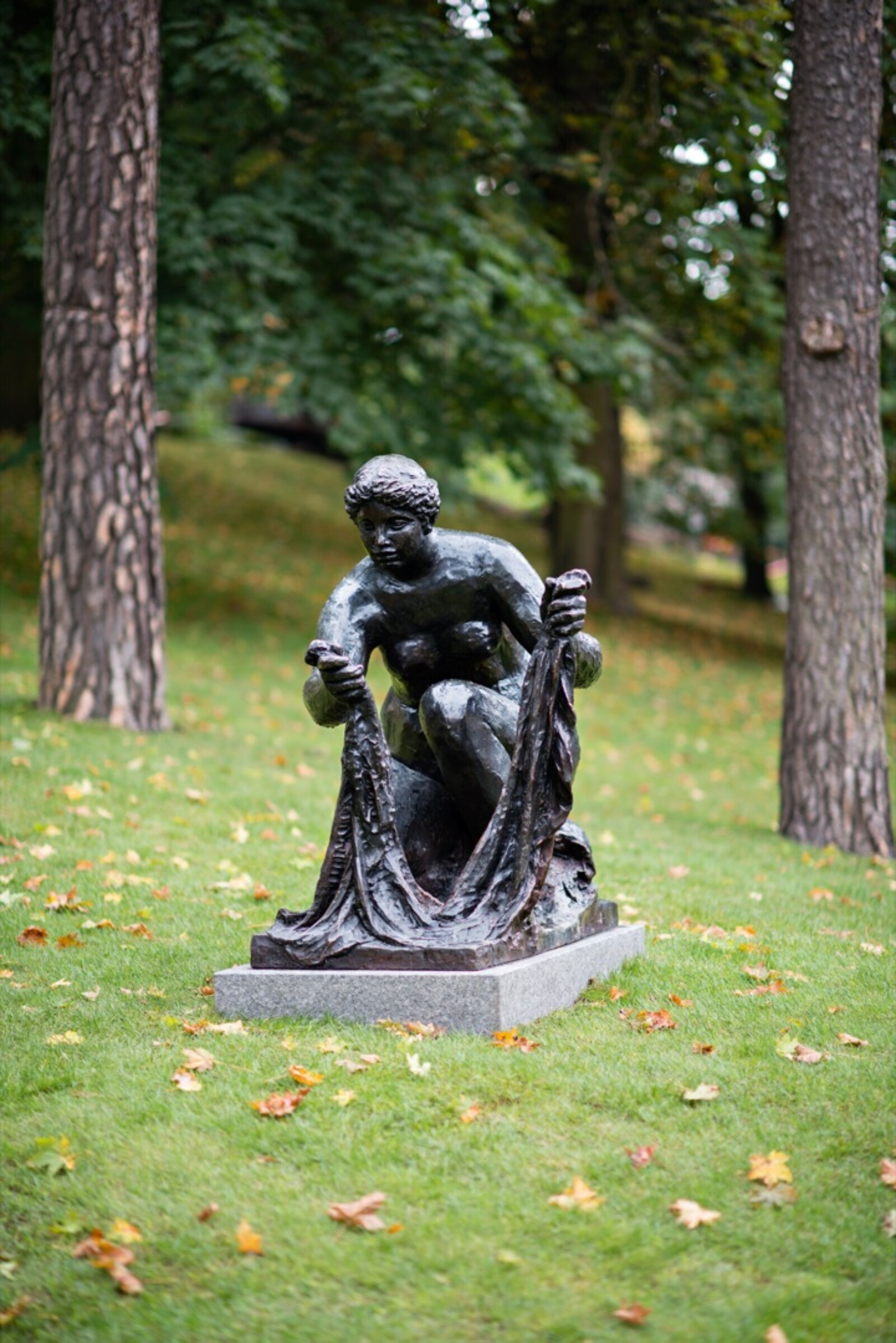
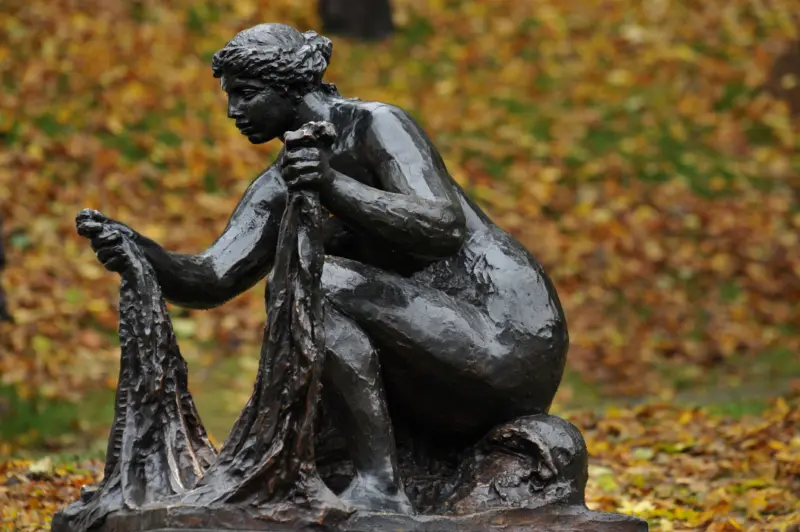
La Grande Laveuse
- Date 1917
- Unveiled 2013
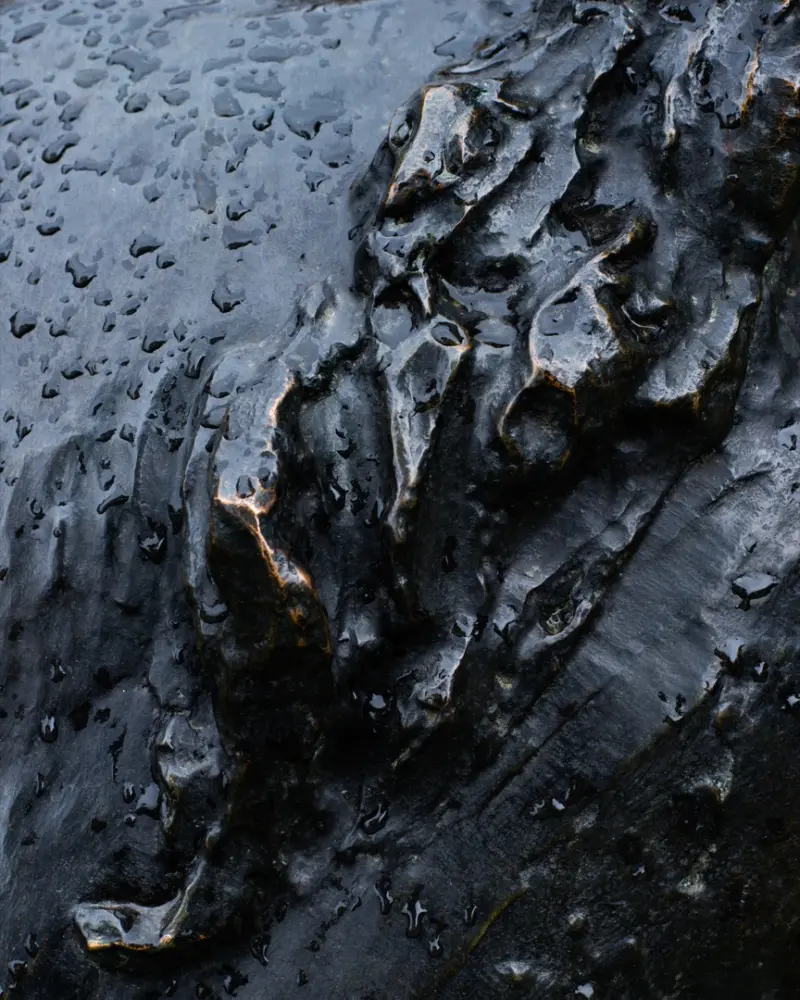
- Material Bronze
- Dimensions 122 x 134 cm
Photo: © Ivar Kvaal
«There are too many unpleasant things in life as it is without creating still more of them.»
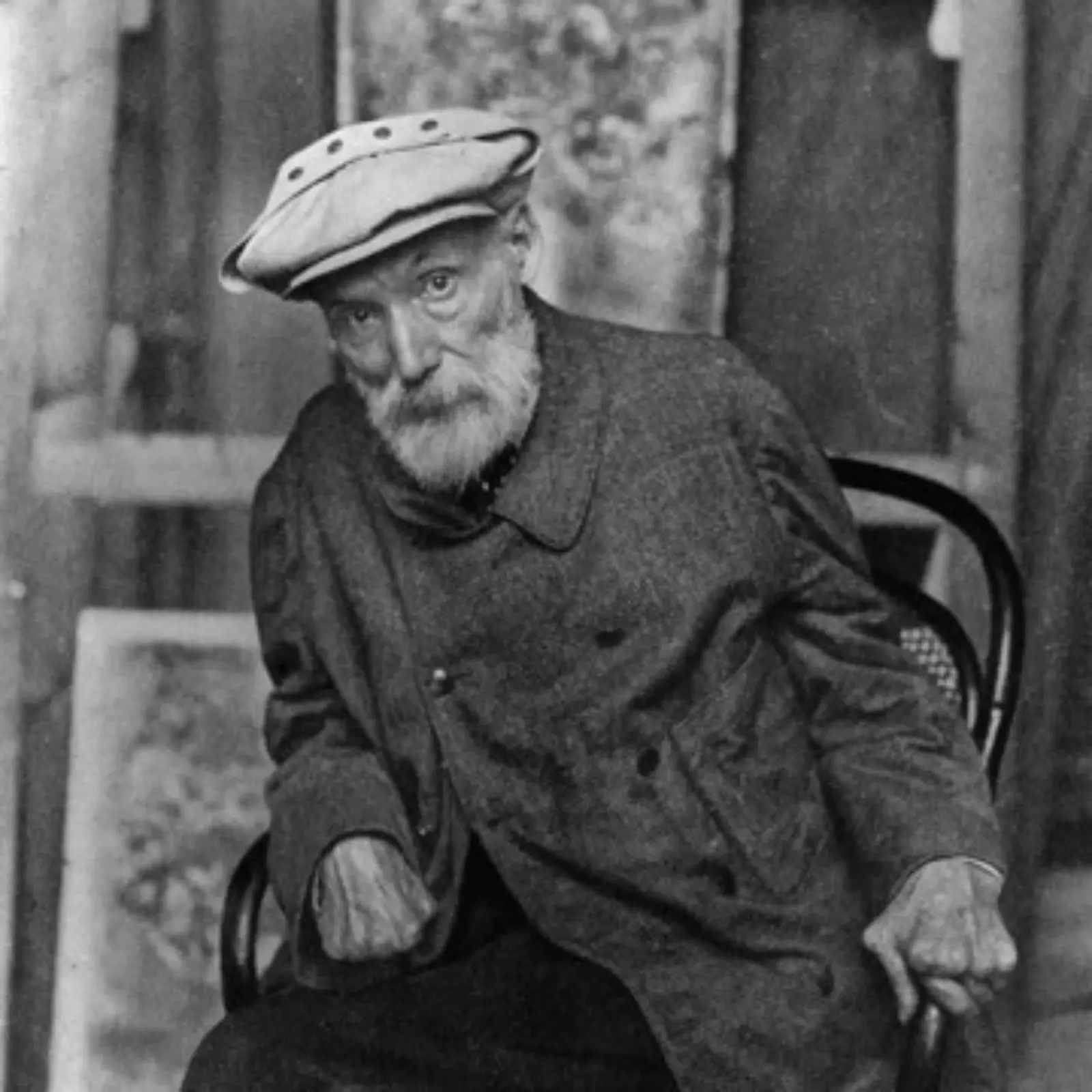
Pierre-Auguste Renoir
(b. Limoges, France, 1841-1919)
Pierre-Auguste Renoir is one of the most important figure painters of Impressionism, and he is especially known for his depictions of women and social settings in cheerful atmospheres. The motifs are idyllic, but Renoir had, throughout his entire career a drive in terms of technical development of painting, and he changed his style several times. La Loge (1874), Bal du moulin de la Galette (1876), Le Déjeuner des canotiers (1880-81) and Les Parapluies (1881, 1885-86) are considered major works by Renoir. He grew up in Paris, and as a young man he was an apprentice in porcelain painting. He became very skilled within this field but lost his job when it became possible to print directly onto the porcelain. From 1862 he studied under Charles Gleyres at the École des Beaux-Arts. Here he met, among others, Claude Monet, who became a close friend and colleague. In his early 50s, he developed rheumatism and osteoarthritis, which affected him the rest of his life. Despite his difficulties with this, he worked until the end – sitting in a wheelchair and with the help of assistants.
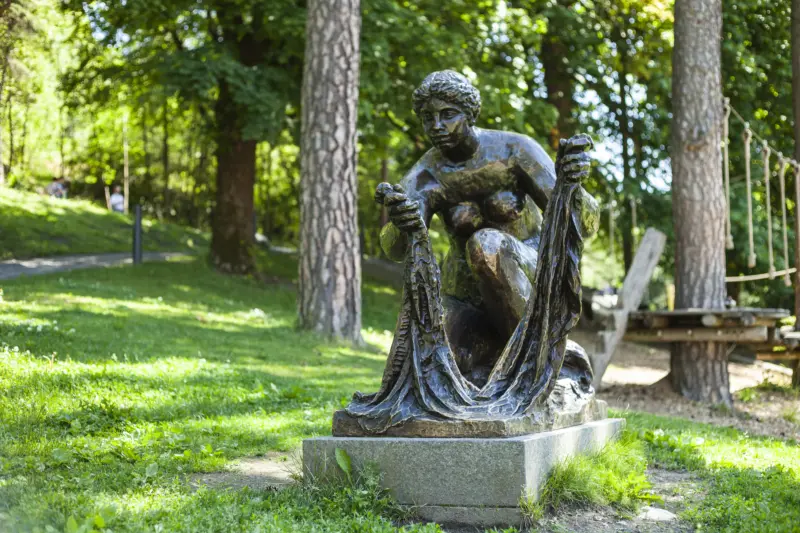
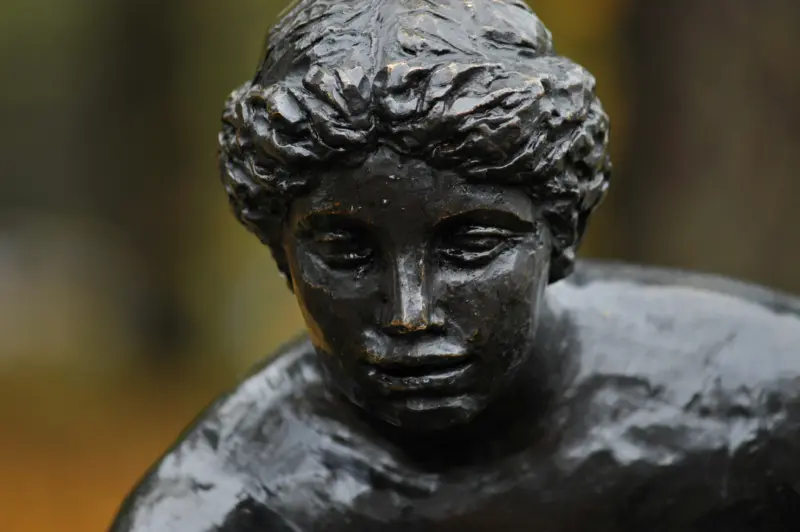
La Grande Laveuse depicts a woman washing clothes. La Grande Laveuse was one of the last sculptures made by the two before Renoir’s death. It was supposed to be a counterpart to another sculpture called Le Forgeron (The Blacksmith). Together they were meant to symbolise the contrast between man and woman, fire and water. However, La Grande Laveuse was the only one to be completed. The powerful expression of the sculpture with its harmonious composition and playful lines transforms the washerwoman in her daily routines to a graceful and beautiful personification of water.
Pierre-Auguste Renoir is one of the leading painters of the 1800s and is especially known for his part in the impressionist movement of the 1860s. He depicted contemporary life and landscapes and was especially interested in the female figure and its beauty, and in capturing the effect of colours and light with his characteristic brush strokes of dots and dashes. Voluptuous women are depicted bathing in his light and atmospheric paintings. Renoir looked to Greco-Roman sculpture for paragons. It was called “le retour au style”. Nevertheless, Renoir's curvaceous, enchanting female figures have a lot in common with his sensuous paintings of women.
Renoir started sculpting late in his career, due to increasing ailments from his arthritis. He made a few portrait busts of family members around 1875, but he first started making larger compositions in 1913.This was thanks to the influence of his main art dealer, Ambroise Vollard, who introduced him to the young sculptor Richard Guino (1890–1973). Guino became his assistant and the two of them worked together until 1918. Guino made models based on Renoir’s drawings and paintings. They had a close and creative collaboration, and it is hard to separate their artistic styles from each other.
Guided tours
Experience La Grande Laveuse and many of the other artworks in the collection with our art mediators. We offer guided tours for private groups all year round.