
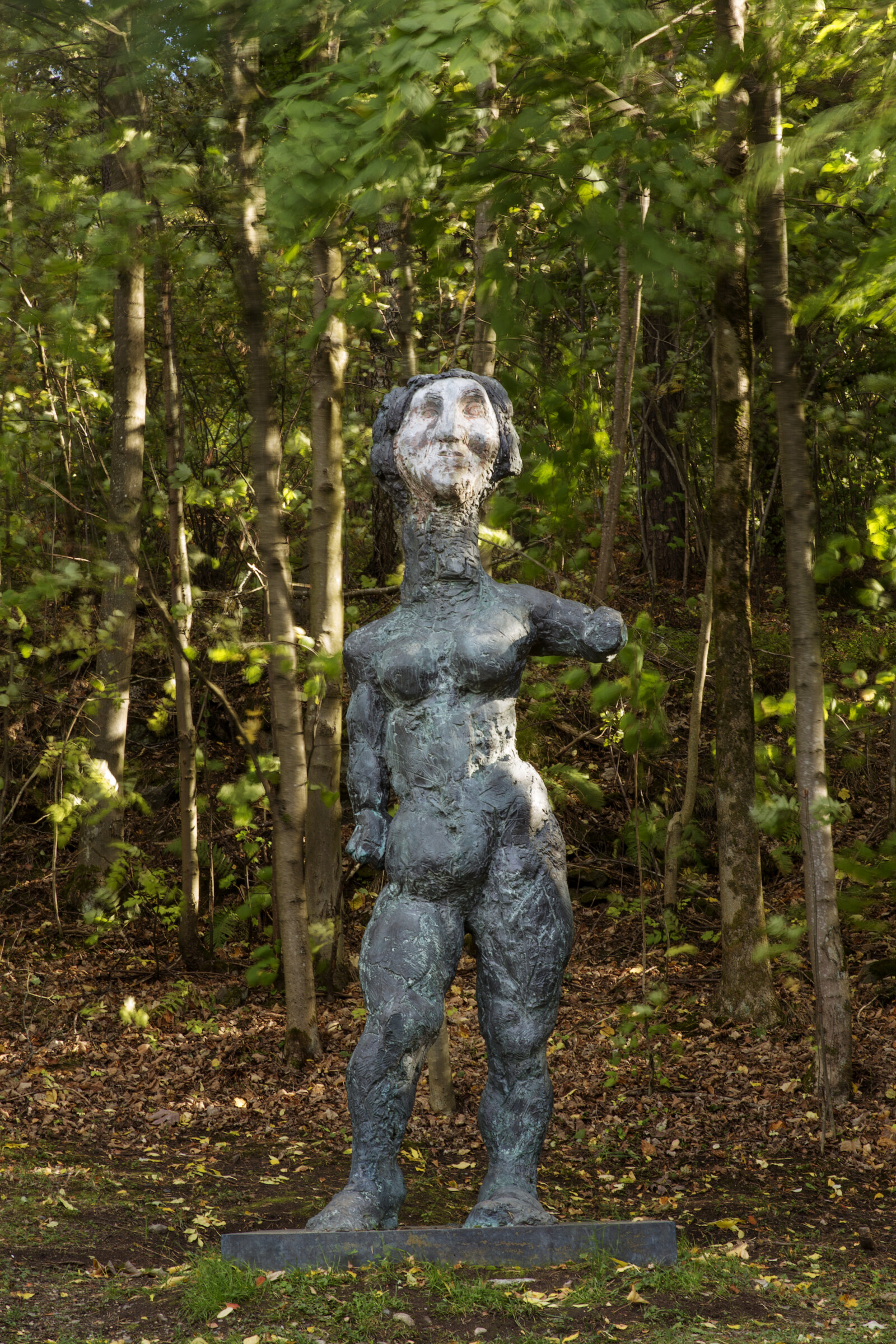
Judith
- Date 1995
- Unveiled 2017
- Material Bronze
- Dimensions 296 x 138 x 139 cm
© Markus Lüpertz / BONO. Photo: © Jo Straube
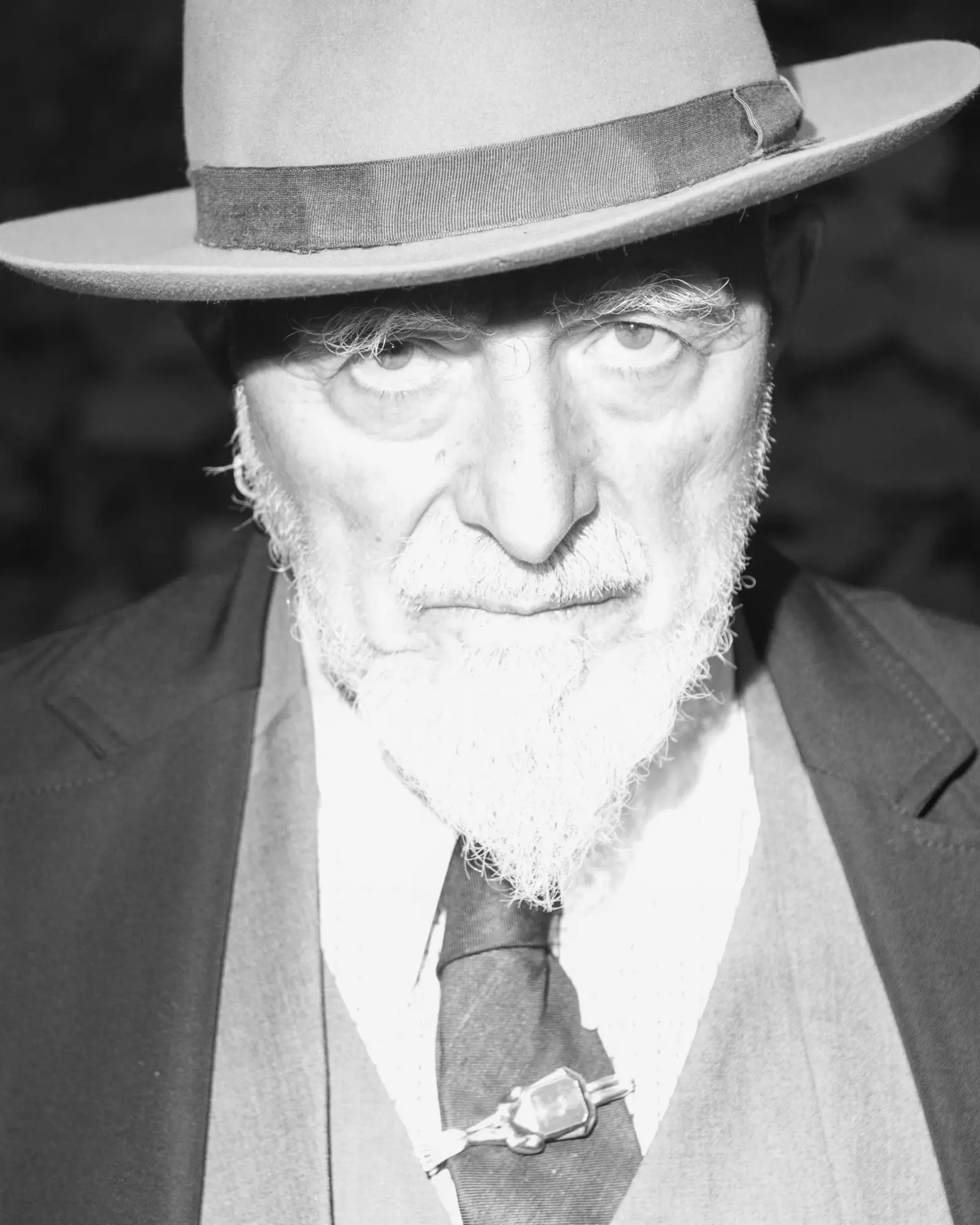
Markus Lüpertz
(b. Liberec, Czech Republic, 1941)
Markus Lüpertz is an internationally celebrated painter and sculptor whose work blends figuration and abstraction. His motifs often refer to the canon of art history, from Greek antiquity to the Renaissance. He stands as a pioneer within neo expressionism. He studied for a short period at the Kunstakademie Düsseldorf, but was expelled on grounds of provocative work, and what escalated into a physical conflict. Many years later, he returned to the academy as a professor, and was appointed rector in 1988, remaining in this position until 2009. Through his work as an artist, but also as professor at several academies, and the time as rector in Düsseldorf, he has made his distinct mark on German art.
Judith is from a period when Lüpertz used religious and mythological references in his work. The sculpture represents the biblical heroine of the same name (in Protestant tradition, the Book of Judith belongs to the apocrypha), who went off to conquer the Assyrians who occupied her hometown Bethulia. With her seductive beauty, she managed to trick and decapitate the enemy’s general Holofernes, which resulted in the withdrawal of Assyrian forces.
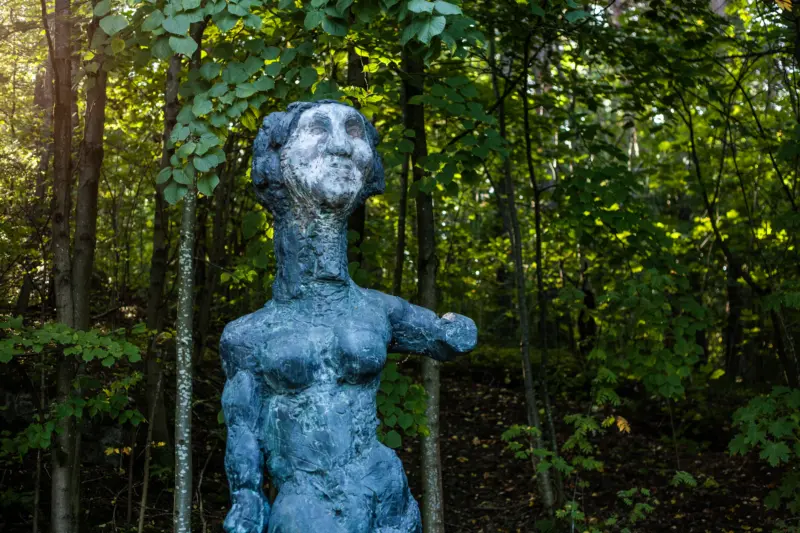
Lüpertz’s Judith, with characteristics such as an elongated neck, oversized head and bulky silhouette, does not resemble a classical beauty. These formal qualities instead represent a sculptural tradition within neo-expressionism where the simplification of certain shapes is contrasted by the enhancement of others.
Markus Lüpertz is a prolific pioneer within German post-war art. He has been nick named the Painter Prince (Malerfürst) in German media, often to the annoyance of the artist himself. He studied at Düsseldorf Art Academy and moved to Berlin in 1961. At the time, abstract expressionism and pop art were in vogue on the German art scene. Artists wanted to distance themselves from the way the Nazi regime had appropriated and used art and did so by delving into abstraction. Lüpertz resisted this trend, and invented his own individual contribution to abstract art. This was not in the form of reduction or analysis, but by creating representations of meaningless objects. He was inspired by Nietzsche’s use of Dionysian poetry concepts from antiquity and called his style—the abstract that was also figurative— dithyrambs. The dismissal of conventions became the main theme of his artistic production. The Danish artist, Per Kirkeby (1938– 2018), had an apt description of his friend Lüpertz; that he just kept on painting without his works fitting in anywhere.
The story about Judith is a popular motif in art history, but Lüpertz represents the heroine in a completely untraditional style. Her surface is rough and uneven, which gives her a simplistic and unrefined expression. This outwards appearance becomes an expression of her inner strength. Judith stands out stylistically from other sculptures in park’s collection. She rejects all the preceding concepts of idealised beauty. She stands her ground and forces us to take a closer look. Maybe by separating Judith from the concept of an ideal beauty she can be seen as the strong heroine she is.

Guided tours
Experience Judith and many of the other artworks in the collection with our art mediators. We offer guided tours for private groups all year round.