
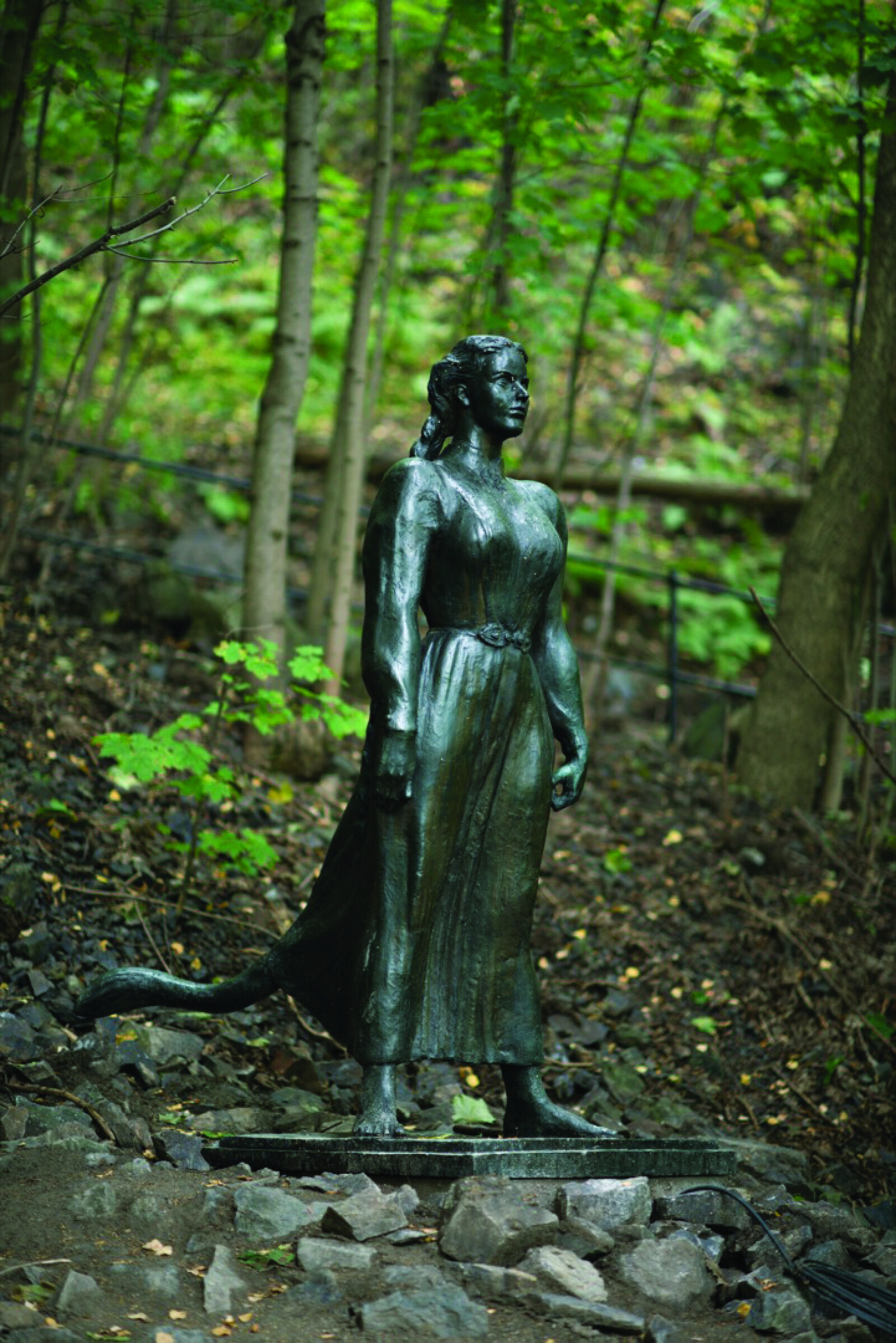
Huldra
- Unveiled 2013
- Material Bronze
- Dimensions 220 x 94 x 154 cm
© Dyre Vaa / BONO. Photo: © Ivar Kvaal
«You do not become an artist. You either are one, or you're not.»
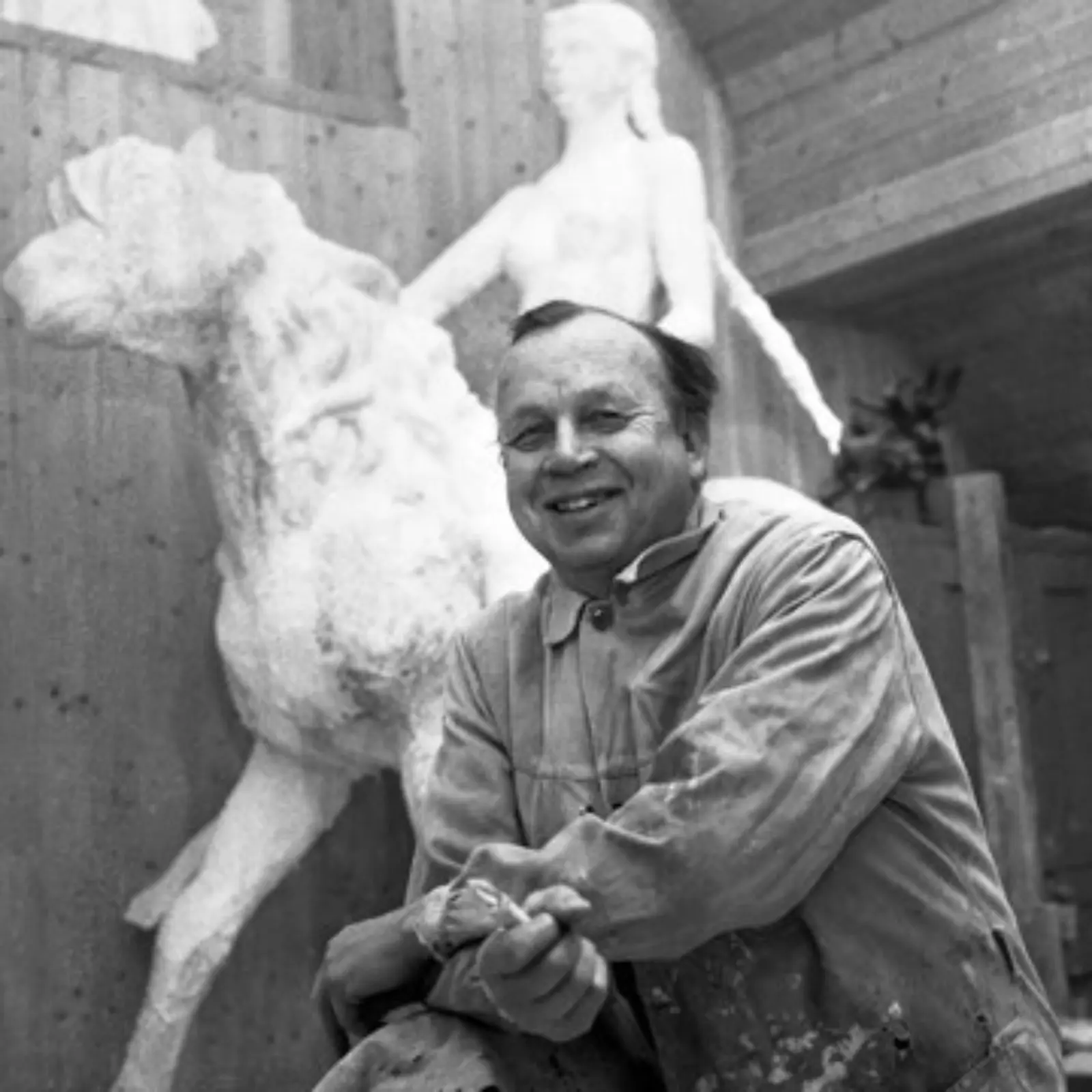
Dyre Vaa
(b. Telemark, 1903-1980)
Dyre Vaa grew up in Kviteseid in Telemark. He decided early on to become a sculptor and attended the National Academy of Art and Craft Industry and the Academy of Fine Arts in Oslo. His educational foundation was within the figurative tradition and Vaa remained true to this method of expression throughout his life. His sculptures can be found across the country. He received a number of awards and was made a Knight of the Order of St. Olav in 1969.Vaa was one of the most productive and sought-after Norwegian sculptors of his generation.
Dyre Vaa was inspired by Norwegian literature and folklore among. Huldra is placed by Kjærlighetsstien, “Lover's path”. Huldra, a wicked wood nymph, known from Norwegian fairytales, stands with her feet firmly planted on the ground, her dress envelopes her body and reveals powerful legs, while the thick, woolly tail stretches out behind her. She directs her assertive gaze straight ahead of her. Has Vaa depicted huldra in the moment she makes herself visible to humans?
The Hulder, a form of bewitching female forest spirit, is a character known from the Asbjørnsen and Moe fairytales. Norwegian sagas and fairytales portray these mischievous forest nymphs as dangerous and supernatural beings with long golden locks of hair and cow tails. She lives underground, luring men to her, stealing children and replacing them with her own. She appears in a flash before people working in the marshes or woods, and just as quickly vanishes from view again.
The image of these wood nymphs as beautiful young women with tails became an iconic representation, especially when Peder Christen Asbjørnsen (1812–1885) and Jørgen Engebretsen Moe (1813– 1882) published illustrated books of Norwegian fairytales in the 1880s. Their illustrators, Theodor Kittelsen (1857–1914) and Erik Werenskiold (1855–1938) made works that have lodged themselves in the Norwegian psyche.
The sculpture Huldra was intended for a larger decorative work for Tandbergs Radiofabrikk, which at the end of the 1930s had launched the popular radio model, Huldra. Dyre Vaa did several large commissions for the radio factory. Vaa is best known for his decorations of Ankerbrua (1937) - a bridge across Akerselva in Oslo, the Henrik Ibsen Monument (unveiled 1958) in Skien and the Sailor’s Monument in Bergen (1939–1945, unveiled 1950).
Guided tours
Experience Huldra and many of the other artworks in the collection with our art mediators. We offer guided tours for private groups all year round.