Post-war
After the war, the whole of Ekeberg was cleared. It became important to make sure the park was safe to use, but also important to get rid of the cemetery as quickly as possible. It was mainly the park maintenance crew that lead the restoration efforts, but German prisoners of war under the direction of the Norwegian army also cleared mines and removed graves, which were relocated to Alfaset in 1952.
The war cemetery and the occupation forces' activity at Ekeberg cast long shadows over the area in the years after the war. The sports park on Ekebergsletta was established in 1948, and Ekeberghallen opened later, in 1973. The slope that today is home to the sculpture park did not buzzle with the life as it once did, in the public park era around the turn of the century.
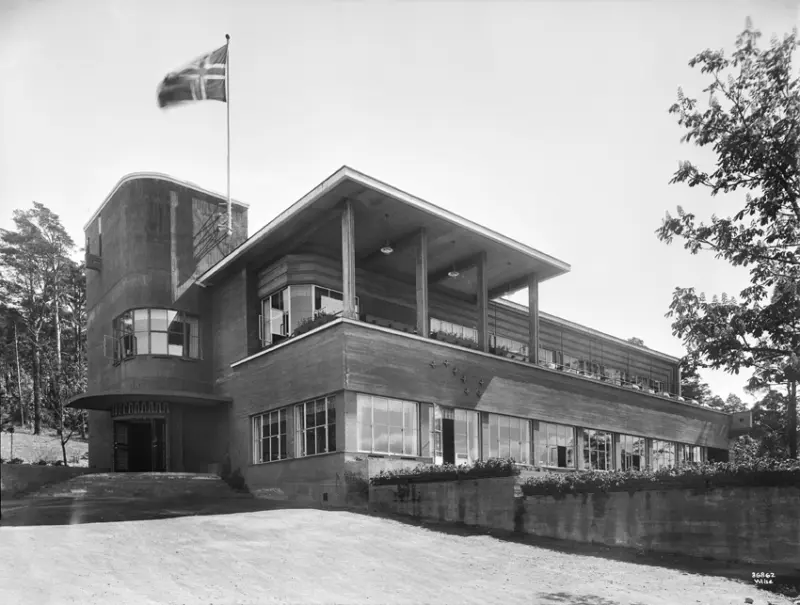
The exception was the Ekeberg restaurant, which had been confiscated by the occupying forces during the war years. After the war it had to undergo extensive repairs. In addition to the repairs, the building was extended to hold a total seating capacity of 800 dining visitors. From 1963, the restaurant became a popular dance hall venue in the post-war years, and earned the nickname “Åreknuten” (The Varicose Vein), due to the age of the clientele that spent many a well-oiled evening there. Plans were made to construct a hotel behind the restaurant to maintain business outside of the summer season, but these plans were rejected by Oslo municipality. Maintenance work was not prioritised, resulting in decay, and in 1997 the restaurant closed. A year later it was bought by a private investment group. However, the building continued to decay even though the Directorate for Cultural Heritage declared it a listed building in 2002. That year the restaurant was bought by Eiendomsspar AS, under administration by Christian Ringnes. After extensive refurbishment, the Ekeberg Restaurant finally reopened in March 2005.
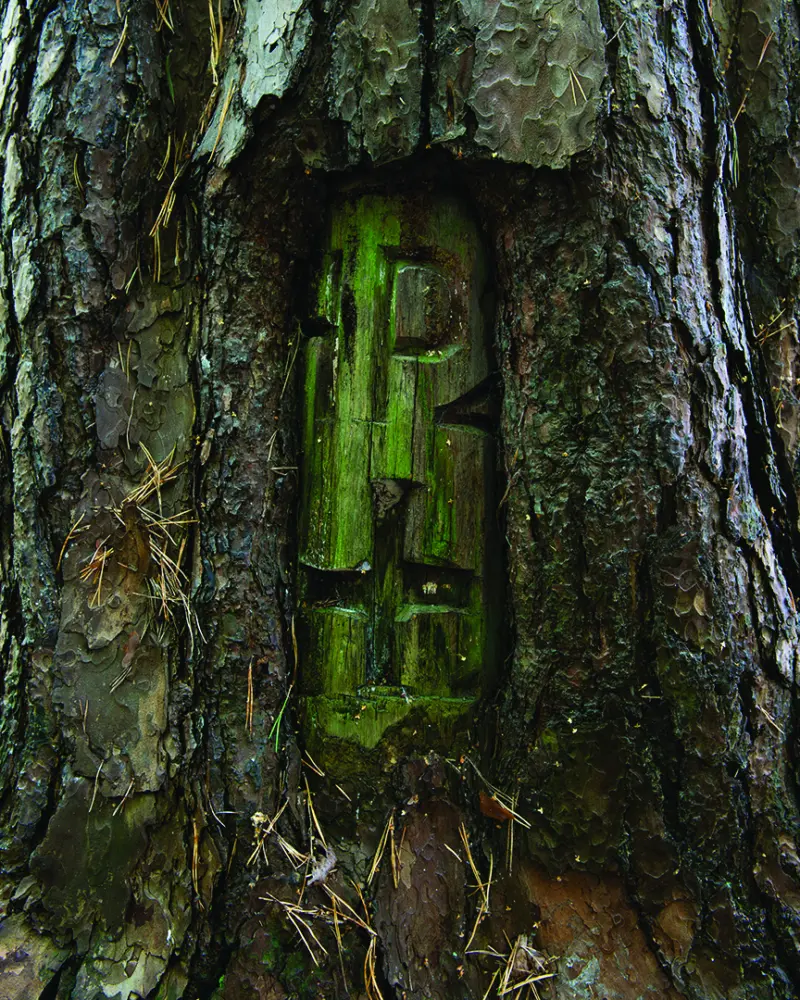
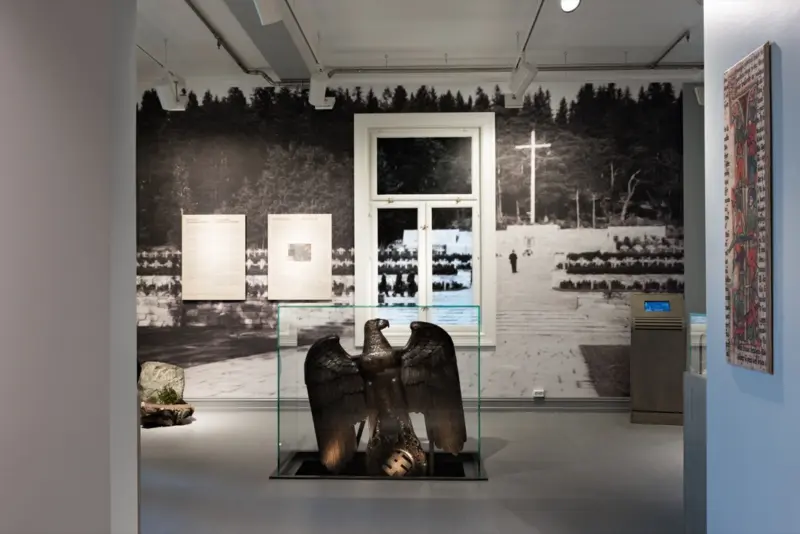
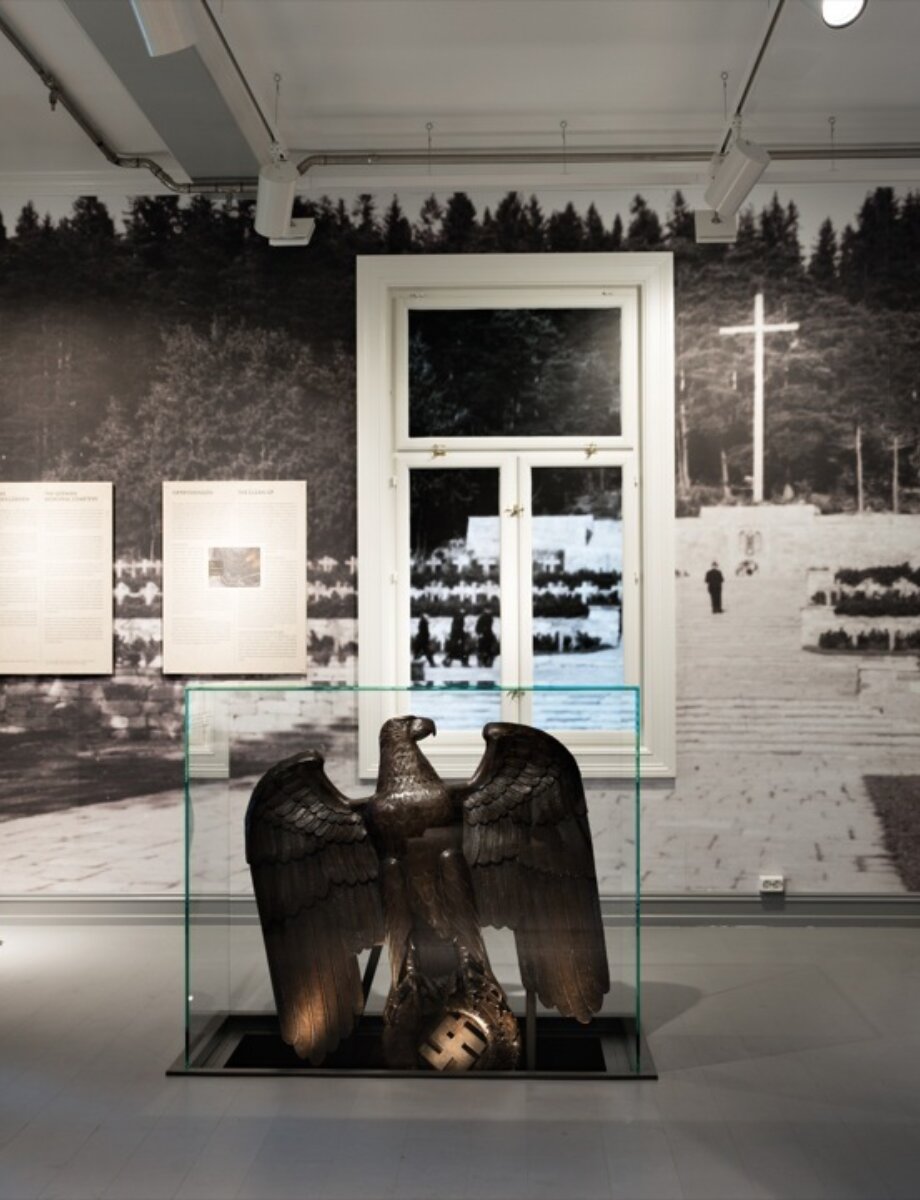
Even though the cemetery was removed, elements of the staircase remained. During the planning of the Sculpture park the Cultural Heritage Management Office decided that they it were to be reestablished. The landscape architects Bjørbekk & Lindheim had designed a completely new staircase, but the Cultural Heritage Management Office made it a requirement that the main form of the old installation must be preserved and that it had to be treated as cultural heritage. Today, the installation is a well-established recreational area. Other war memories visible in the landscape today are the markings on tree trunks that show where the mines were once placed, made in the process of clearing them, and two artillery positions (so-called ring stands) that remain. One is at the viewpoint where Per Inge Bjørlo’s installation Indre Rom IV is currently in place. The other one is next to the water pond and filled in with soil. Part of the stone wall that separated the military area from the cemetery also remains. The eagle with swastika is now on view in the museum in Lund’s house. The eagle is lowered into the floor and placed off-balance as a fallen symbol, but also as an important memory of the occupation years.
Historical timeline
Cultural Heritage
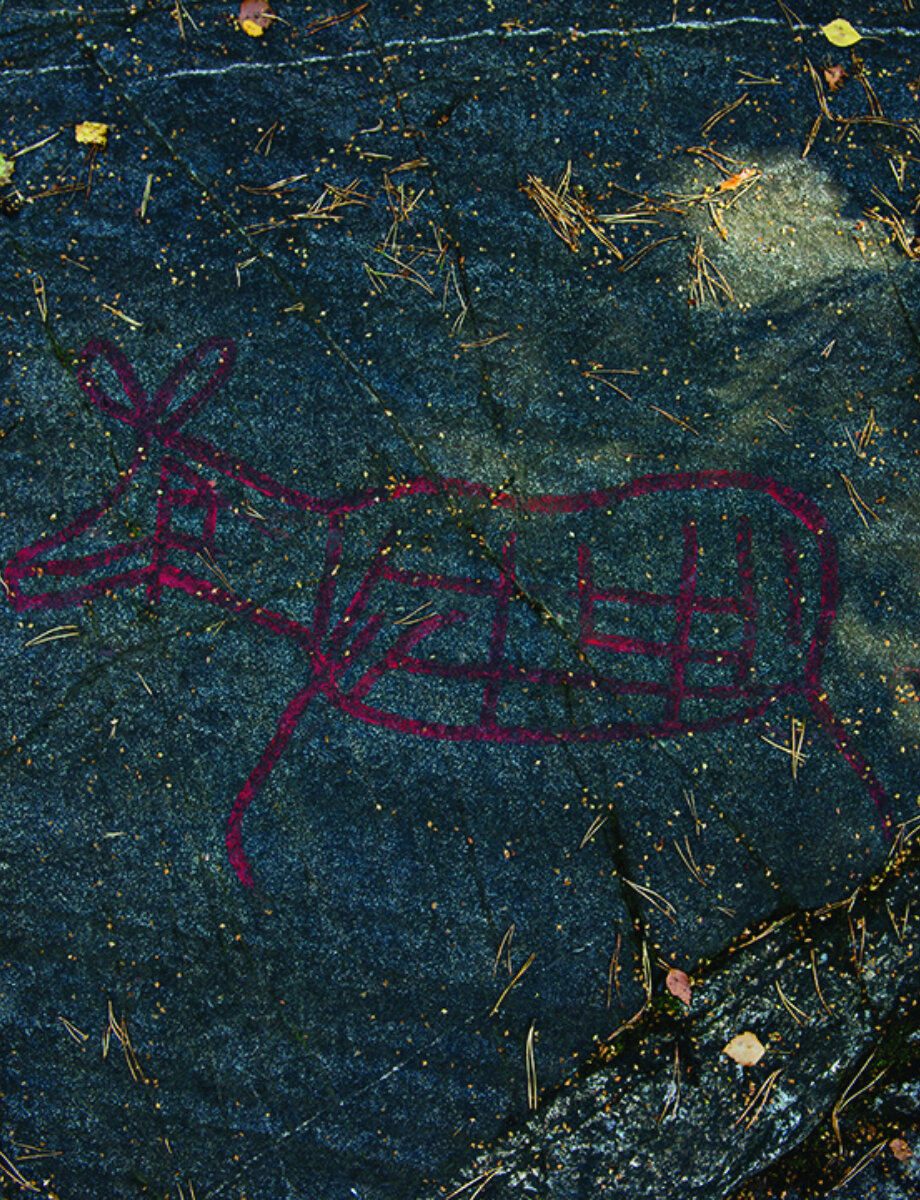
The comprehensive archeological surveys in preparation for the establishment of the sculptural park in 2011 showed that the cultural heritage at Ekeberg was even richer and more extensive than previously thought.
A Public Park Anno 1900
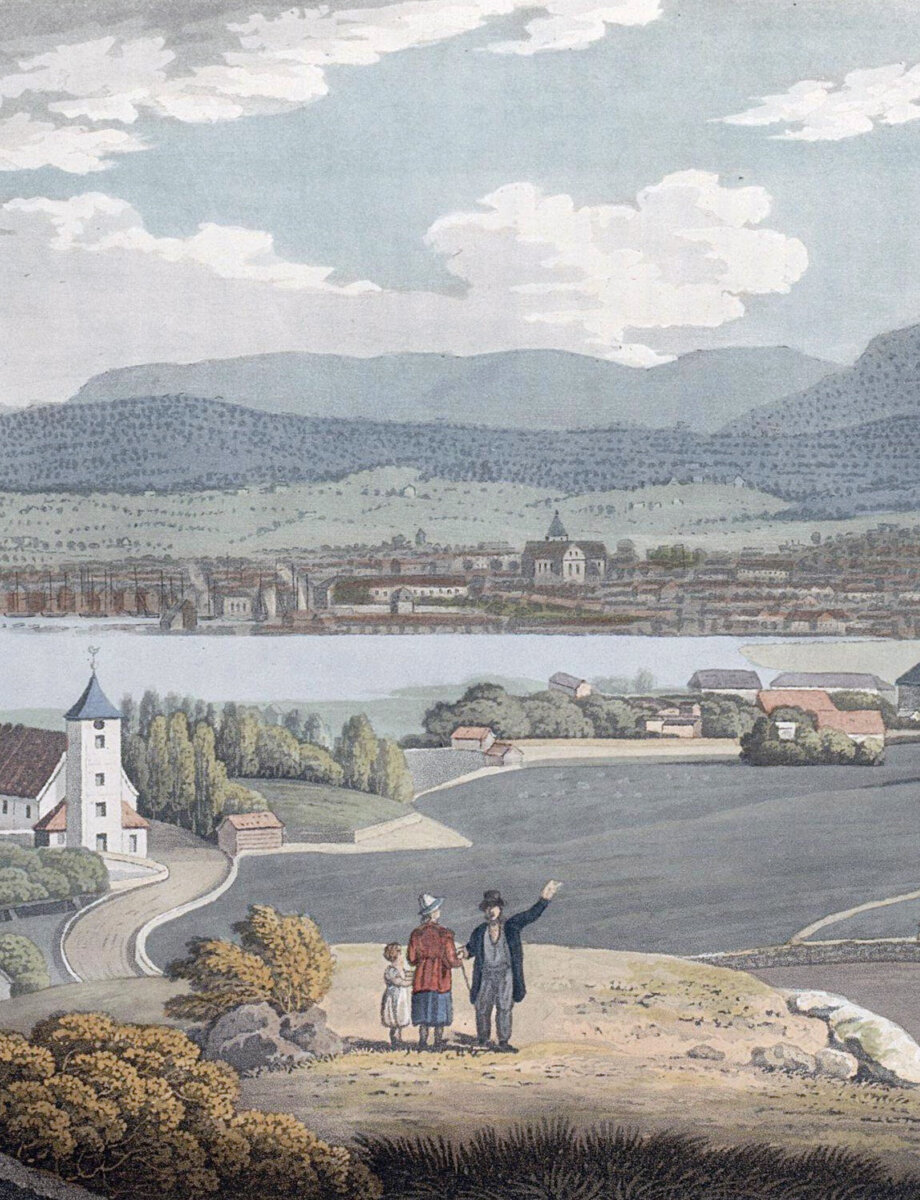
In 1889 the City Council bought a large private property at Ekeberg, with the intention to create a recreational area for the inhabitants of Kristiania.
The War Cemetery
The Ekeberg area, with its steep hillsides, the plateau and the striking view of the city and the fjord, was seen as a strong strategic and military point for centuries, and for the occupying forces during World War II.
The establishment of Ekebergparken
The Ekeberg Park officially opened on 26th September 2013. Around fifty representatives from the Norwegian and international press attended. The reviews were overwhelmingly positive. Ekebergparken has since figured in many listings of the best sculpture parks in the world.