The establishment of Ekebergparken
Christian Ringnes relates that his dream of a sculpture park came to him on a sailing trip in the 1990s. He didn’t know at that time where or how this park could take form, but he wasn’t unfamiliar with the concept of contributing art to the public sphere in Norway. Over the years, he has together with his company Eiendomsspar AS realised several of the well-known monuments in the capital: the fountain Peacock (1989) by Lund and Slaatto, located by the National Theatre, The Glove (1997) by Wenche Gulbrandsen at Christiania Torv, The Tiger (2000) by Elena Engelsen at Jernbanetorget, and Peace Star (2000) by Vebjørn Sand at Gardermoen airport.
The idea of establishing a sculpture park on the hill at Ekeberg made its first public appearance in 2003 after Ringnes’ company Eiendomsspar bought the Ekeberg Restaurant. Christian Ringnes wandered around the area and came to the conclusion that the area’s glory days as a public park were long gone and that the previously resplendent functionalist style building was left deserted and decaying. After many years of little in the way of maintenance, the area had also attracted a somewhat shady reputation. In other words, there was not much left of the lively outdoor area that the City council had once established as the first public park in Oslo towards the end of the 1800s.
“In praise of women”
An interview with Dagbladet from 2003 marks the first time Ringnes publicly expressed his desire to establish a sculpture park at Ekeberg, at that time “in praise of women”. Carried away with excitement, he had already established a foundation and acquired several artworks, by amongst others, Knut Steen, Per Ung and Kirsten Kokkin for the imagined park (Eide, 2003).
There were strong reactions from both the art scene and nature conservationists. The public conversation around the creation of the sculpture park rose to high temperature early on. The discussion centred around the question of who should have the power to decide which artworks would be placed in public areas.
The criticism and resistance that followed, characterised the project’s progress in the years that lead up to the opening of the park in 2013. Concern around the potential destruction of nature, the private initiative, and the feminine theme, were particularly hot topics. The plan to implement an economically robust foundation, an art committee and extensive regulation of the area under the guidance of public entities in collaboration with the foundation, did not reach out to people in general, even though it was often stipulated in the media (Balas & Ringnes, 2009).
As the battle raged on, Ringnes commented that he realised with hindsight that his statement about a park “in praise of women” probably wasn’t the best wording. This statement especially, issued in the heat of the moment, had been one of the elements that contributed to fanning the flames. Christian Ringnes was quoted in Aftenposten on May 4th, 2007:
“I’d say the phrasing was a bit unfortunate at the start when I talked about a sculpture park in praise of women. I went a bit overboard. I’ve since had help from the council, amongst others, to expand the concept. A natural landscape inspired by the feminine, is more accurate in terms of what we’re trying to create”.
The City Council decree
On 24 August 2011 the sculpture park at Ekeberg was finally made official by decree of the City Council with a large majority. The agreement that was made between the council and the foundation was the result of a process that had taken several years and there was no doubt that the debate contributed to shaping, adjusting, and improving the result. In the regulation plan that was made during the preparatory work together with the landscape architects, the municipality and the foundation, it was decided that up to eighty sculptures could be placed in the area, of which several should be site specific. In addition, the cultural heritage and archaeological findings done in the area became part of the park. The buildings that were on the old Karlsborg property were to be restored and transformed into a café and exhibition space for the public. The old water reservoir would be made into an artwork. The agreement stipulated a sum of NOK 300 million, equally divided between acquiring sculptures, establishing and developing the park, and a fund for management and maintenance. The municipality and the foundation were to appoint an art committee to delve into the theme of the park and make a selection from the sculptures Ringnes had already bought. They ended up rejecting two thirds of the sculptures that were already acquired (Hagen, 2011).
Even though several referendums in the media revealed that Oslo’s population in general were very positive to the sculpture park, the public protests at the City Hall the day the park was announced were loud and visible. And the protests didn’t die down in the two-year period leading up to the completion of the park. Official complaints were sent to the County Governor of Oslo, to the Regulatory Department for Public Acquisitions, and to the Ministry of Climate and Environment. One movement, Folkeaksjonen, pressed charges against Oslo City Council for corruption. Some tried to physically obstruct the work in the park. On a more humorous note, a cartoon was published in Aftenposten, and several caricatures reached the papers, one in which Christian Ringnes was portrayed naked in a yoga posture, and the rock band Black Debbath issued a ballad with the title “No to the wanking path at Ekeberg”.
Opening
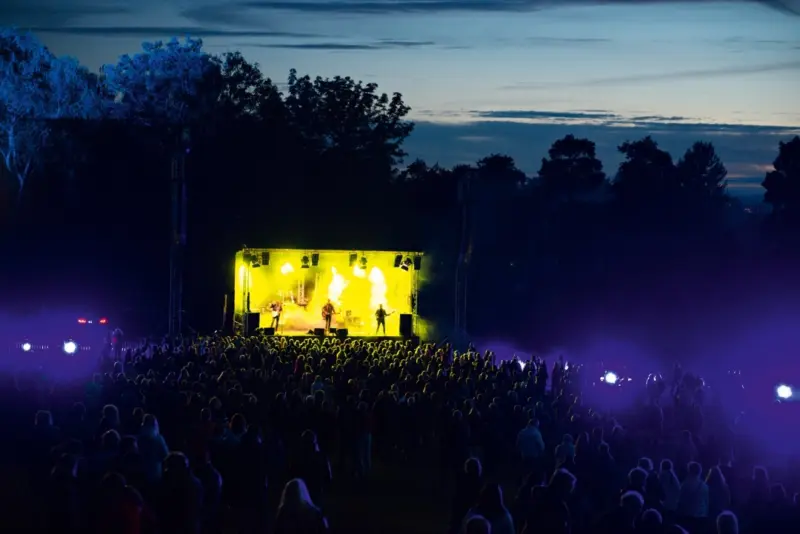
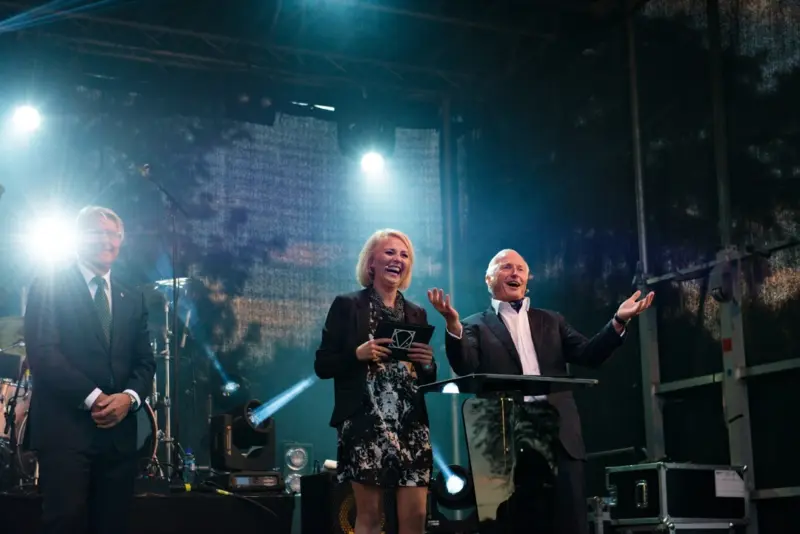
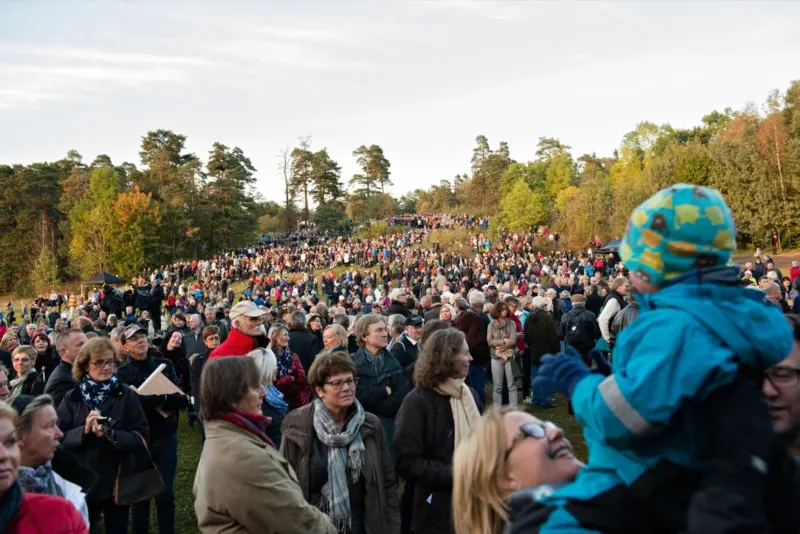
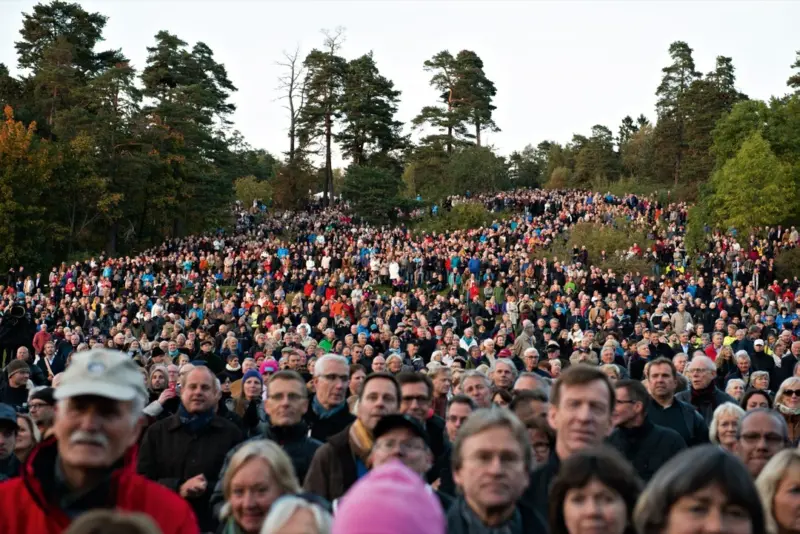
The Ekeberg Park officially opened on 26th September 2013. Around fifty representatives from the Norwegian and international press attended. The reviews were overwhelmingly positive. Ekebergparken has since figured in many listings of the best sculpture parks in the world.
The result is a sculpture park where art, history, and nature are unified in an exciting way that keeps evolving. The natural environment and cultural heritage at Ekeberg create the framework for how and where the sculptures are placed. Ekebergparken has been described as an organic, feminine counterpart to Oslo’s other large sculpture park, the Vigeland Park. Architecture historian Thomas Thiis-Evensen explains;
“The two parks are extremely different. One is geometrical, while the other is organic (...) where the axis of the Vigeland Park dominates the nature, the paths of the Ekeberg Park become subject to nature” and “Both the Vigeland Park and the Ekeberg Sculpture Park have their role models. The first is from Versailles and the Baroque idea that a landscape can be imposed upon, while the other is in line with the English garden where the landscape is free” (Thiis-Evensen, 2011).
Sources / further reading
Eide, H. (2003, 14. Juni). Alle som har mye, bør gi. Dagbladet.
Balas, G. og Ringnes, C. (2009, 18. juni). Skogen på Ekeberg skal bestå! Aftenposten.
Fredriksen, B. F. (2011, 20. mai). Viktig Skulpturpark. Aftenposten.
Ringnes, C. (2007, 4. mai). Aftenposten.
Hagen, A. W. (2011, 29. mai). Forkastet kunst for ti millioner. Dagens Næringsliv.
Thiis-Evensen, T. (2011)
Historical timeline
Cultural Heritage
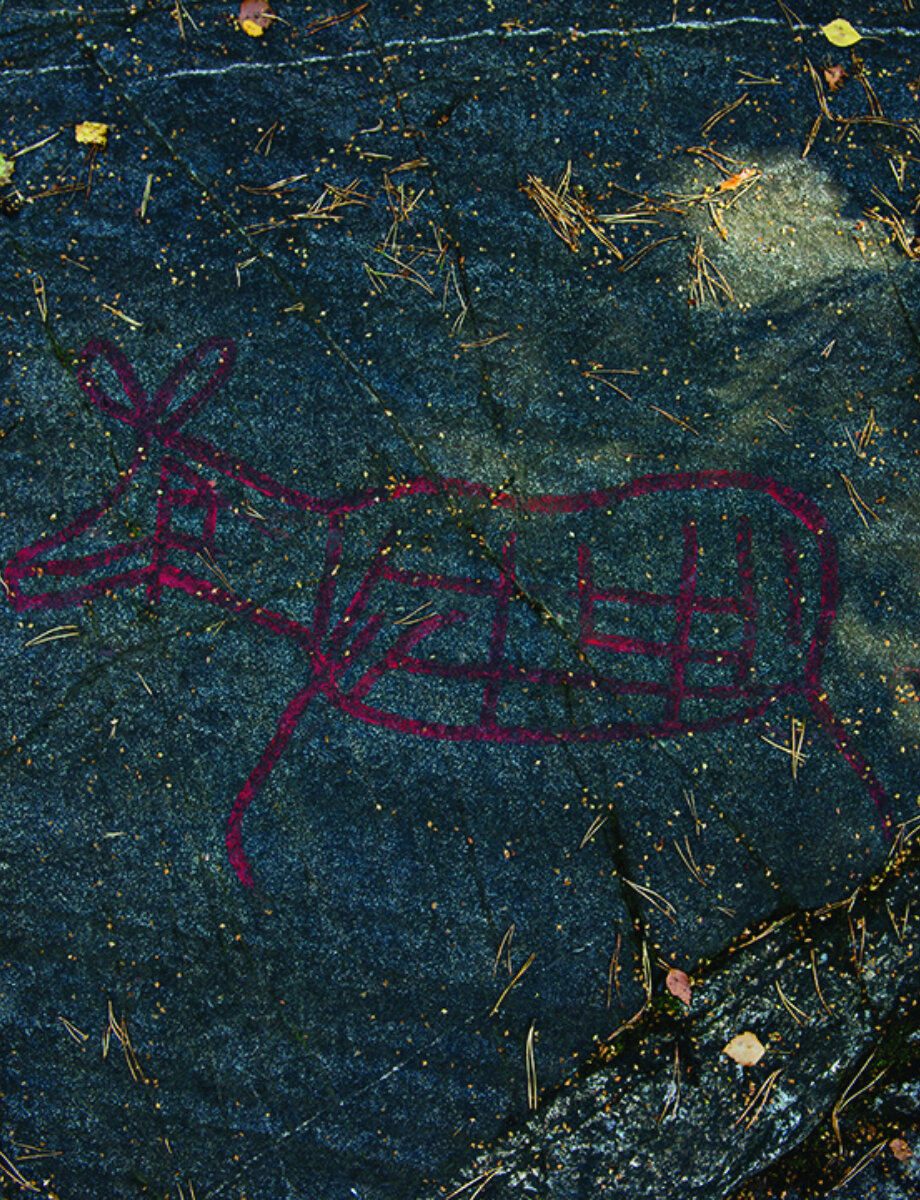
The comprehensive archeological surveys in preparation for the establishment of the sculptural park in 2011 showed that the cultural heritage at Ekeberg was even richer and more extensive than previously thought.
A Public Park Anno 1900
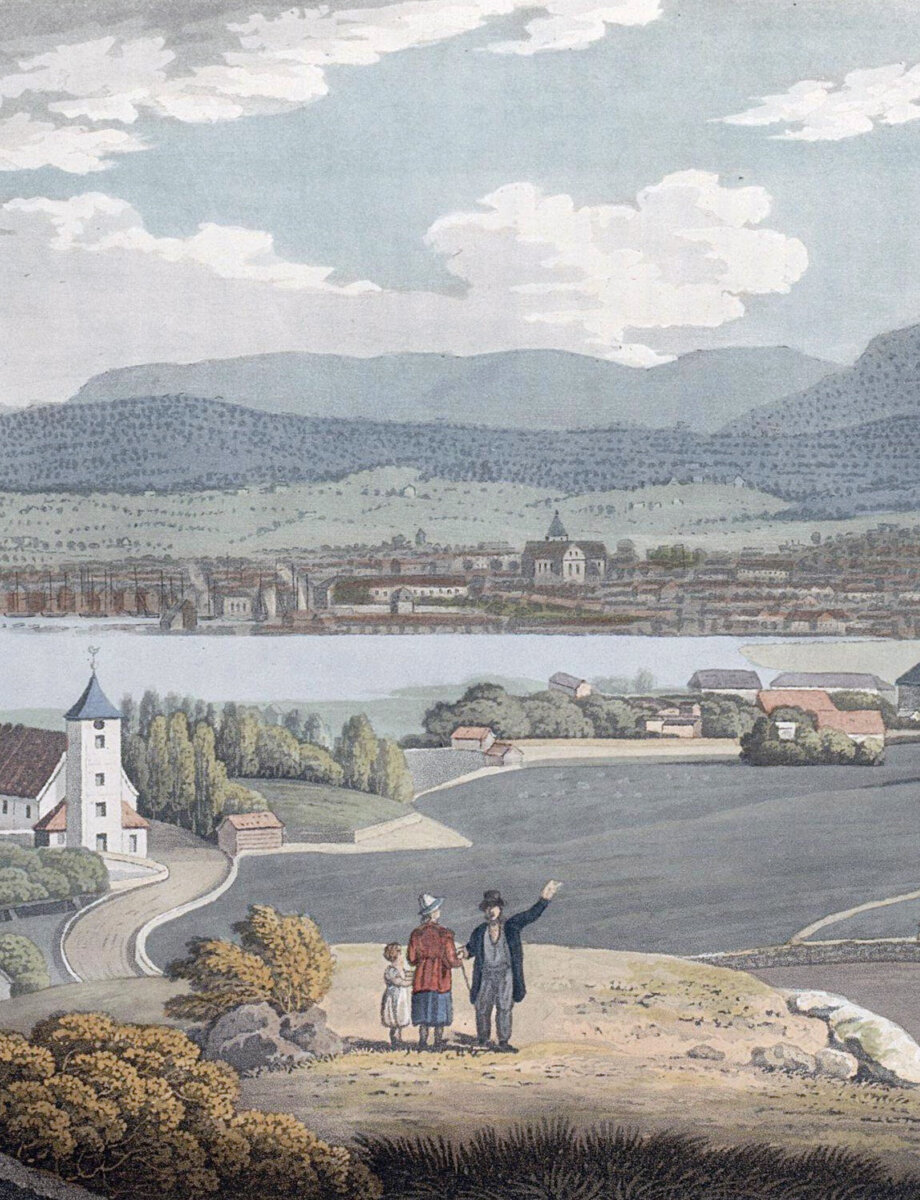
In 1889 the City Council bought a large private property at Ekeberg, with the intention to create a recreational area for the inhabitants of Kristiania.
The War Cemetery
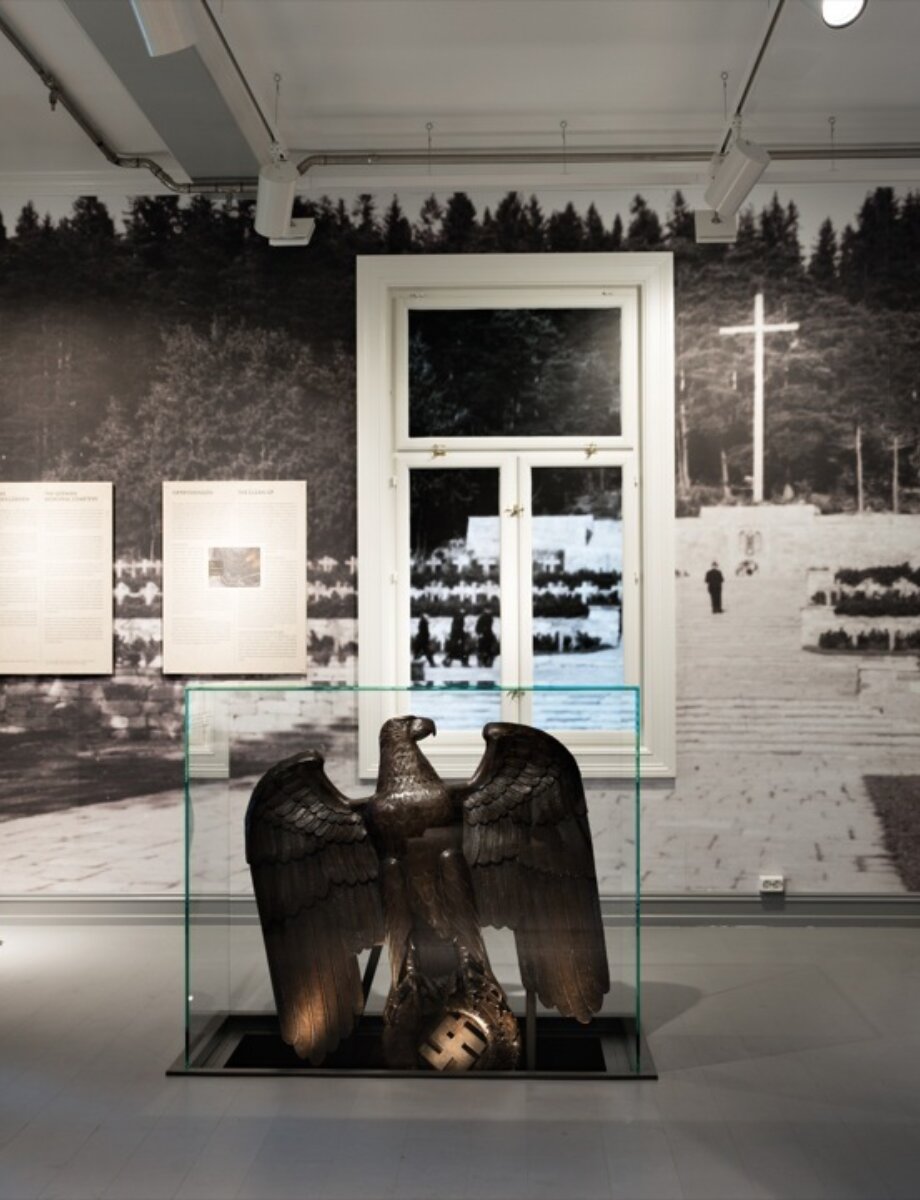
The Ekeberg area, with its steep hillsides, the plateau and the striking view of the city and the fjord, was seen as a strong strategic and military point for centuries, and for the occupying forces during World War II.
Post-war
The whole of the Ekeberg area was cleared after the war. It became important to make sure the park was safe to use, but also important to get rid of the highly symbolical war cemetery as quickly as possible.