
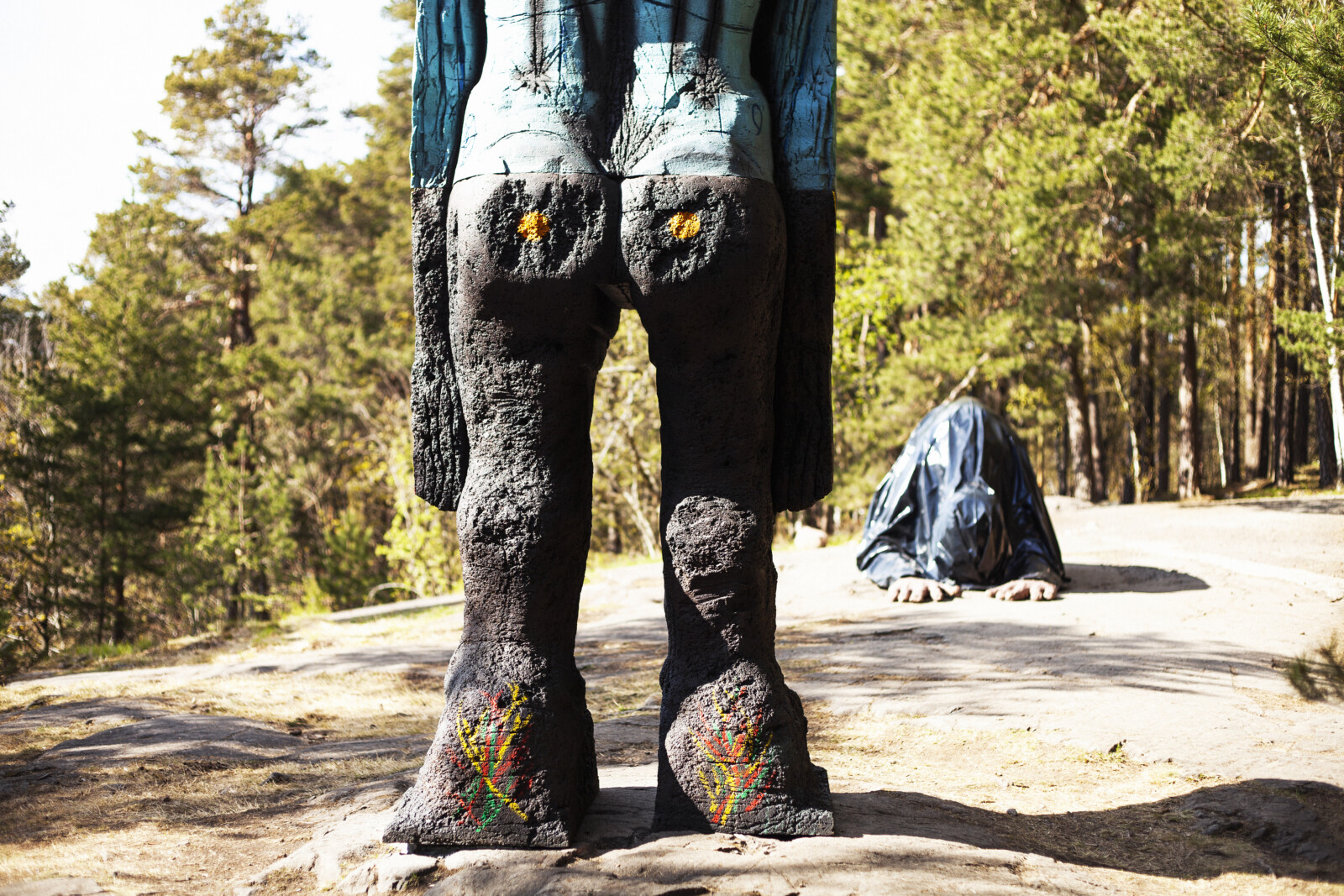
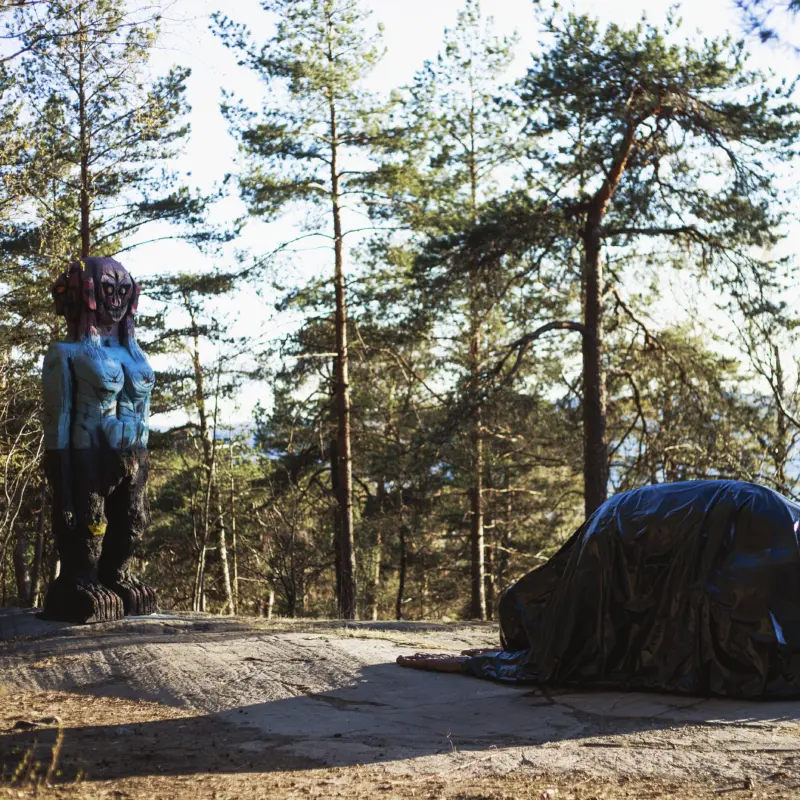
We Come in Peace
- Date 2018
- Unveiled 2021
- Material Hand-painted and patinated bronze
- Dimensions 417 x 122 cm / 525 x 140 cm
© Huma Bhabha / BONO. Photo: © Kristina A. Kvåle / Ekebergparken
«I don’t find my figures unsettling – quite the opposite, as I feel they are comforting and friendly. Sculpture should challenge and also be available to all with art outdoors in the public realm.»
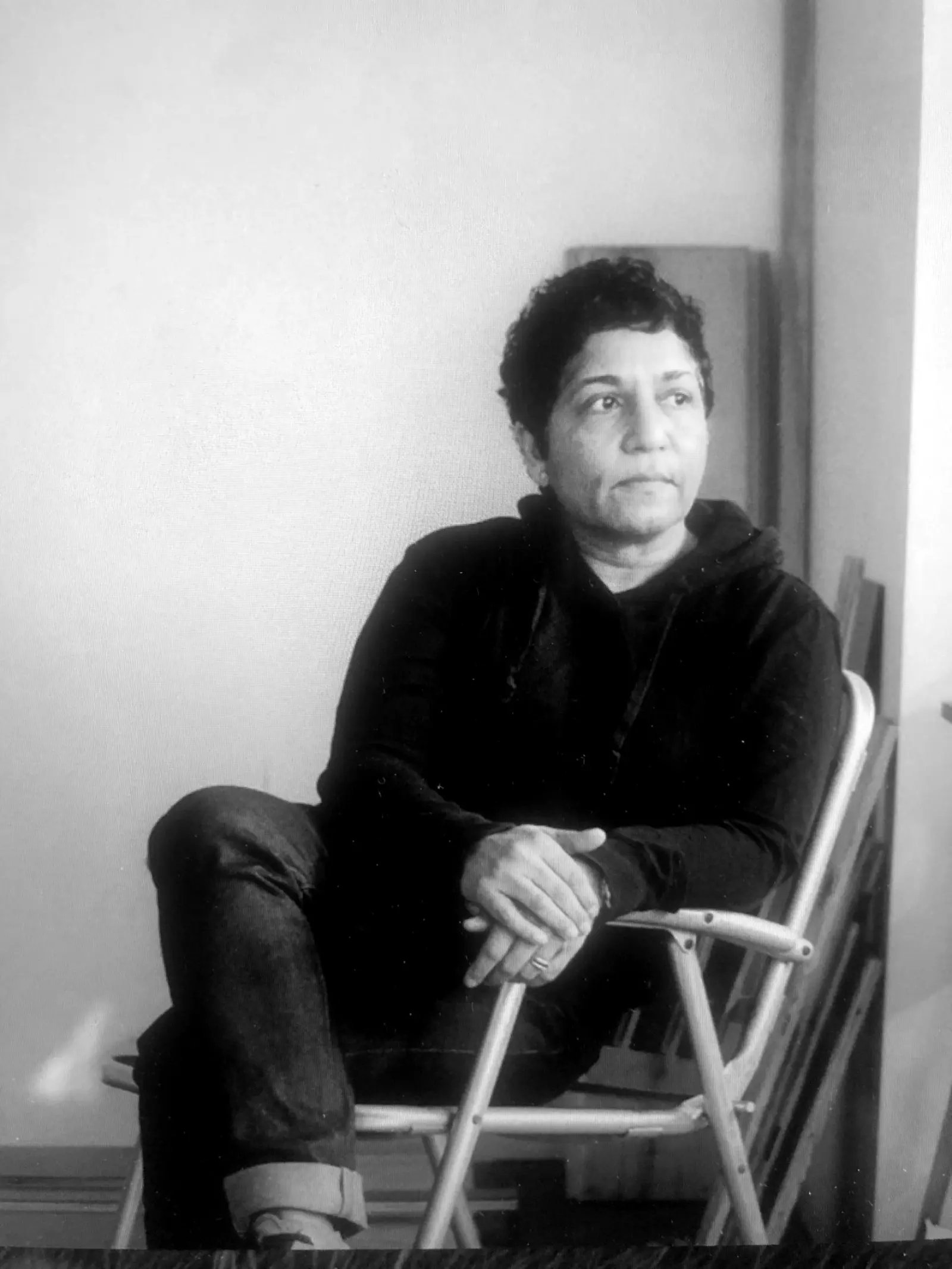
Huma Bhabha
(b. Karachi, Pakistan, 1962)
Huma Bhabha was born and brought up in Karachi, Pakistan. She moved to the US at a young age and studied Fine Art at the Rhode Island School of Design. In 1989 she completed her MFA at the University of Columbia. She lives and works in Poughkeepsie, New York. Bhabha has in recent years solidified her position as an important voice on the international art scene. She has had solo exhibitions at major institutions like MoMA PS1 in New York and Collezione Maramotti in Reggio Emilia, Italia. She has recieved many prizes for her achievements, and her work is in the collections of, among others, Centre Pompidou, Paris; Hirshhorn Museum and Sculpture Garden, Washington, DC; The Metropolitan Museum of Art, New York; The Museum of Modern Art, New York; Tate, London; and Whitney Museum of American Art, New York. She received broad international recognition in 2018 for the installation We Come in Peace, made on commission for the New York Metropolitan Museum of Art and their roof terrace. This installation is the one that is now installed in Ekebergparken, along the trail named Spettestien.
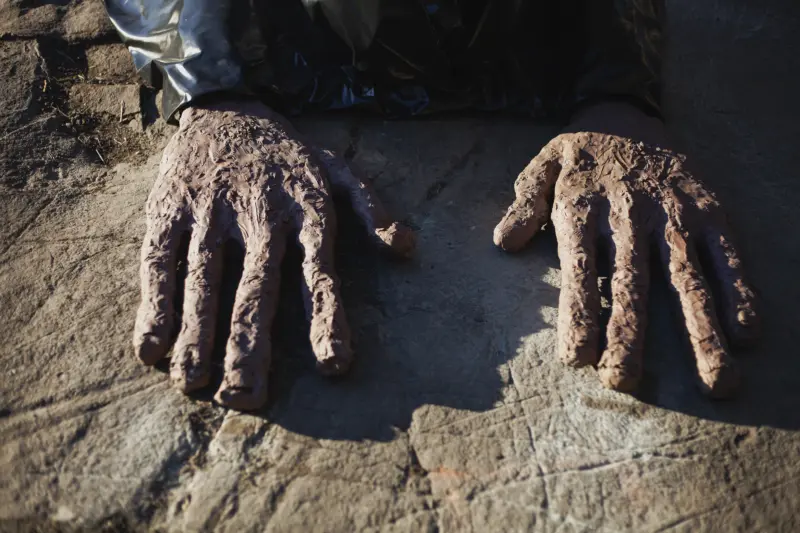
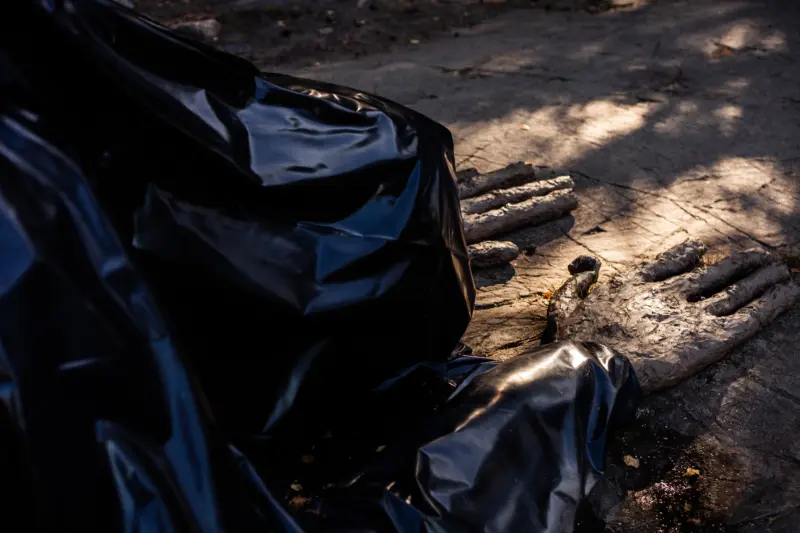
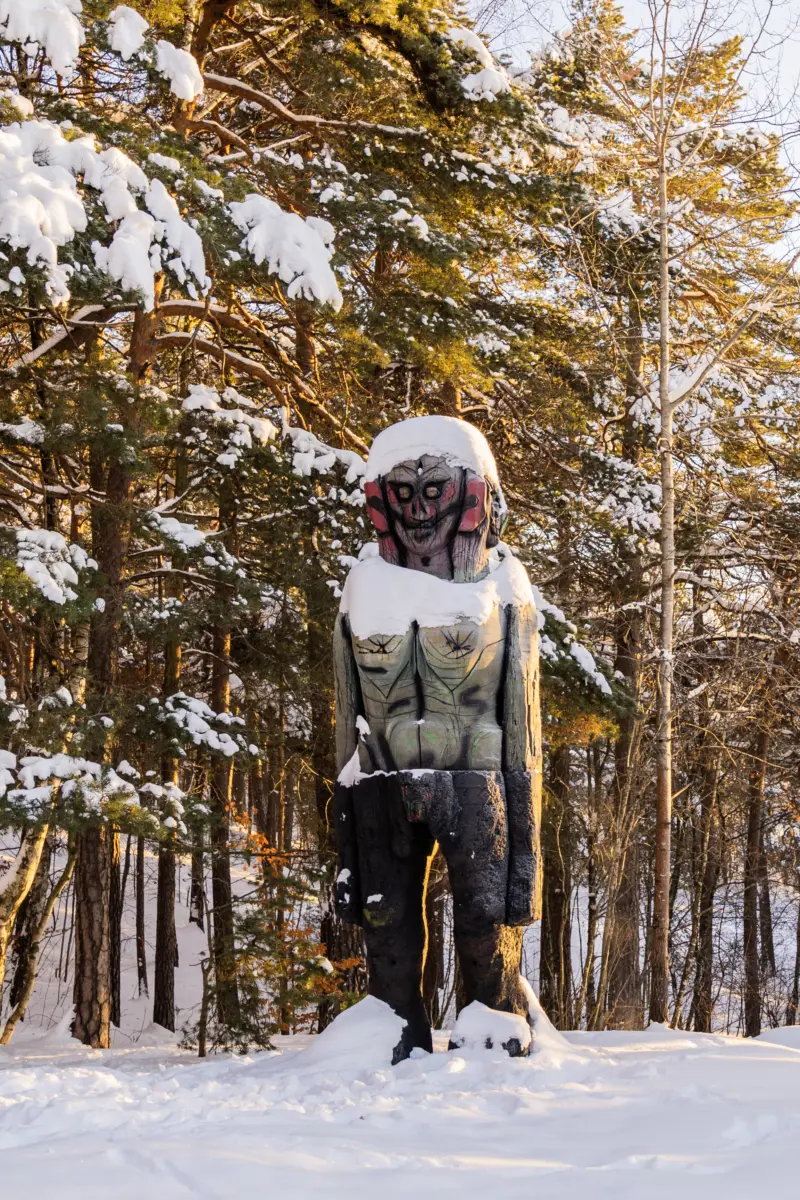
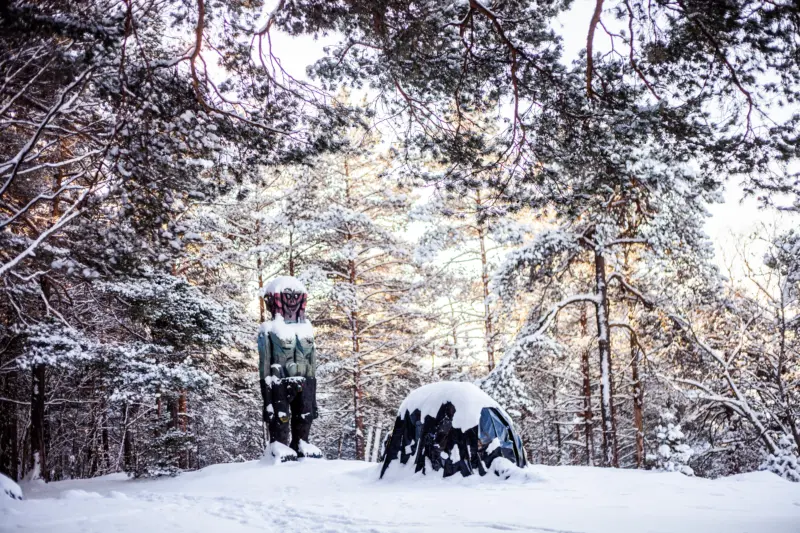
We Come in Peace is an installation consisting of two figures placed towards each other. One is lying prostrate to the ground, the other standing. The lying figure is titled Benaam, which is urdu and translates into «nameless». The figure is covered by something that looks like a black rubbish bag or a tarpaulin. The hands that stick out from under the cover are huge in comparison to the body and from the back of the sculpture protrudes something tail-like or possibly even excrement. The standing sculpture shares its title with the installation. Here we are presented with multi-gendered and several-headed figure. It has some human attributions, but it appears to be something alien. Bhabha takes these two figures and places them as actors on a stage. What exactly is going on between them?
Bhabha’s art has many references to science fiction, horror and pop culture in addition to art historical eras and movements such as the classical and archaic eras, indigenous art, expressionism and the art brut movement. By indiscriminately mixing elements from pop culture and high culture, Bhabha creates artwork that is described as fascinating, challenging and relevant, leaving the viewer with many possible interpretations. As a sculptor she is self- taught, mainly working in bronze, clay, wood, cork, styrofoam and other found materials.
The title We Come in Peace, is a direct reference to the science fiction film The Day the Earth Stood Still from 1951, directed by Robert Wise. The aliens in the film tell us that they come in peace, but as Bhabha points out, it is human nature to fear the unknown. The humans in the film respond by mounting an attack.
The tension between the two figures is ambigious. Are we witnessing a meeting between a worshipper and a god? The enforcer and the subjugated? Survivor and deceased? Even though the sculptures are portrayed as something different and unknown, Bhabha insists that this does not necessarily mean something frightening or antagonistic. In this way, the artist challenges the viewer’s own prejudices when confronted with the unknown. Previously, Bhabha has also used Benaam to represent the civilians murdered in the wars in Iraq and Afghanistan.
Guided tours
Experience We Come in Peace and many of the other artworks in the collection with our art mediators. We offer guided tours for private groups all year round.