
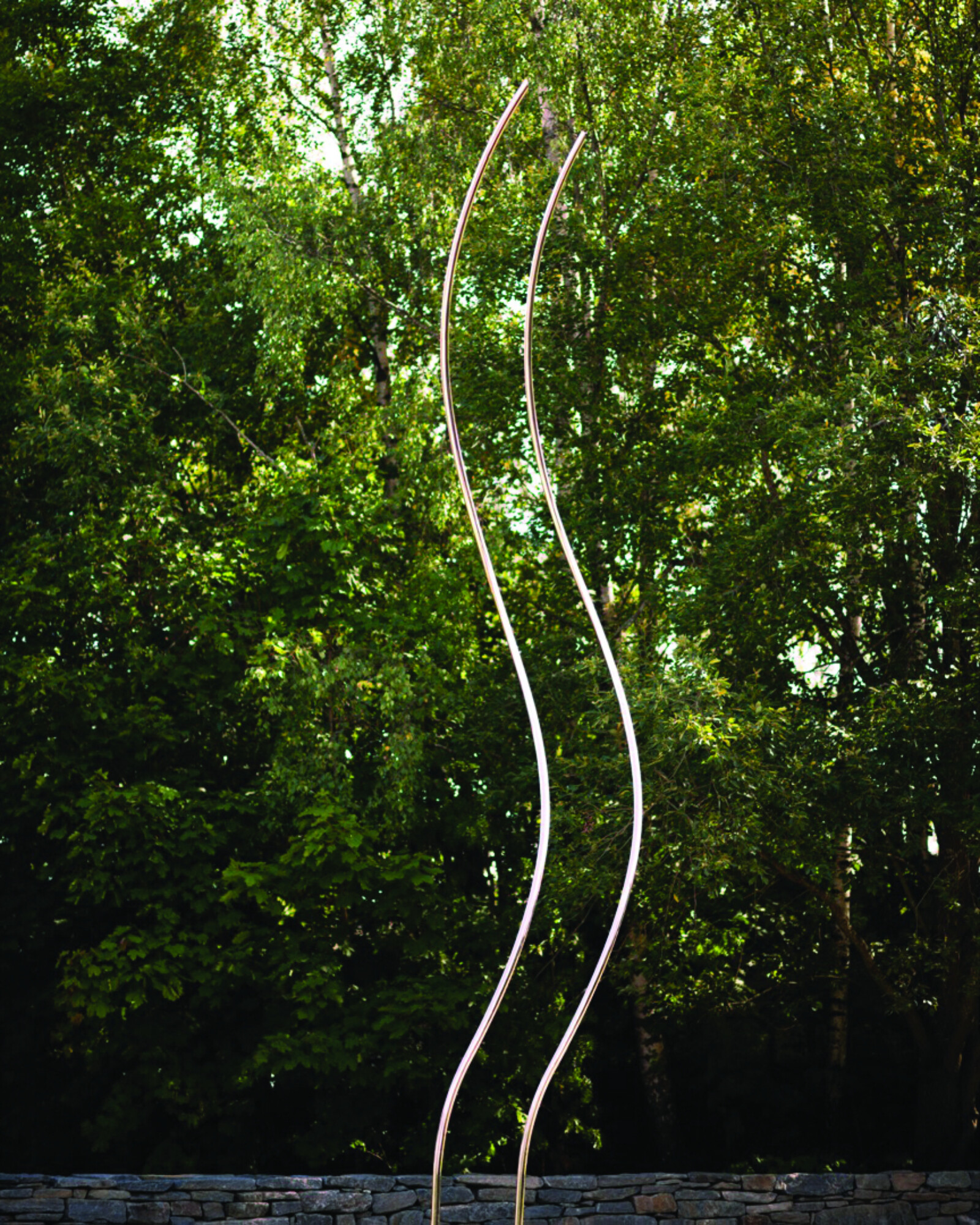
The Dance
- Date 2013
- Unveiled 2013
- Material Stainless steel
- Details Cinetic
- Dimensions 700 x 215 x 51 cm
© George Cutts / BONO. Photo: © Ivar Kvaal
«The inspiration and theme of all my sculptures is landscape, plant growth, light and water.»
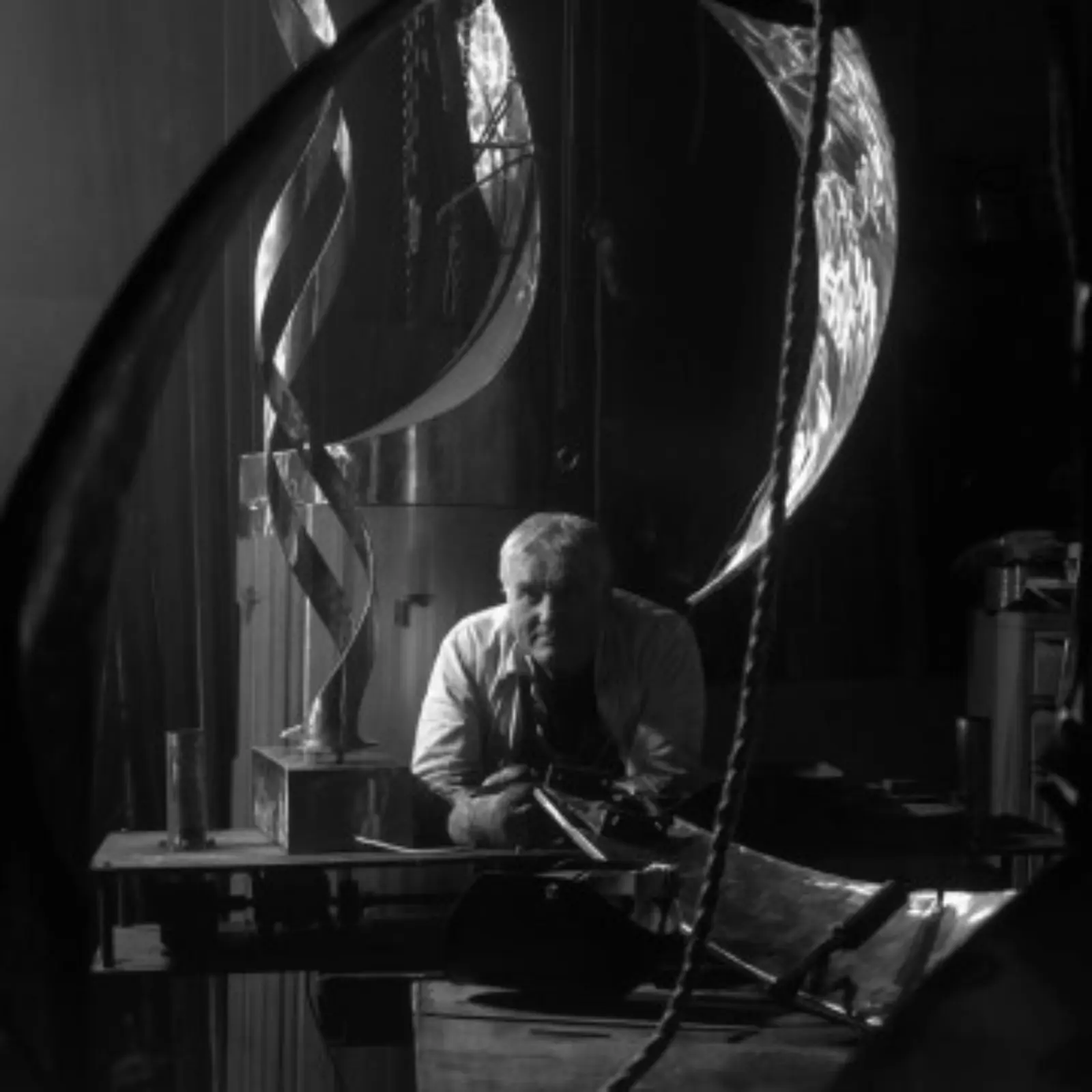
George Cutts
(b. United Kingdom, 1938)
George Cutts quit school as a fourteen-year-old and started work as an apprentice at a shipyard in northern England. He showed a lot of talent for steel work and won a prestigious grant for further art studies. At the time he was the youngest student to be accepted at Royal College of Art in London. Throughout a long career, Cutts has remained focused on large scale public work. He has also taught at several institutions, among them the Royal College of Art. He lives and works in Wadhurst, East Sussex.
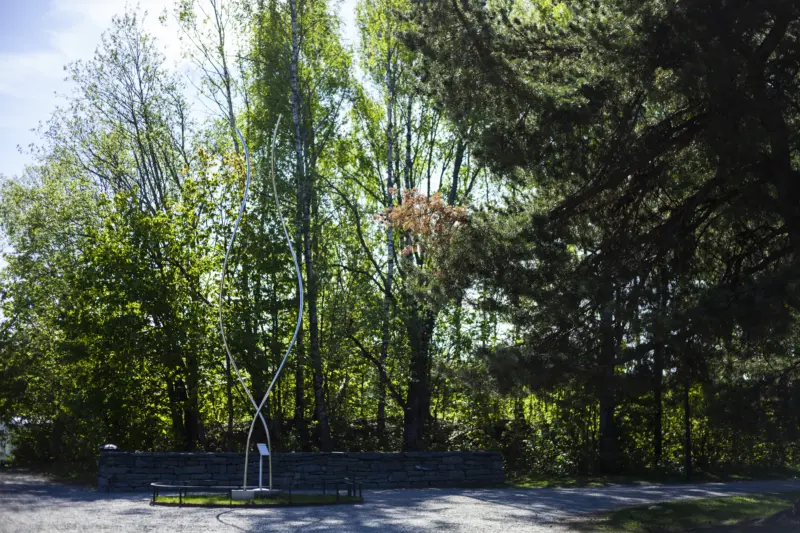
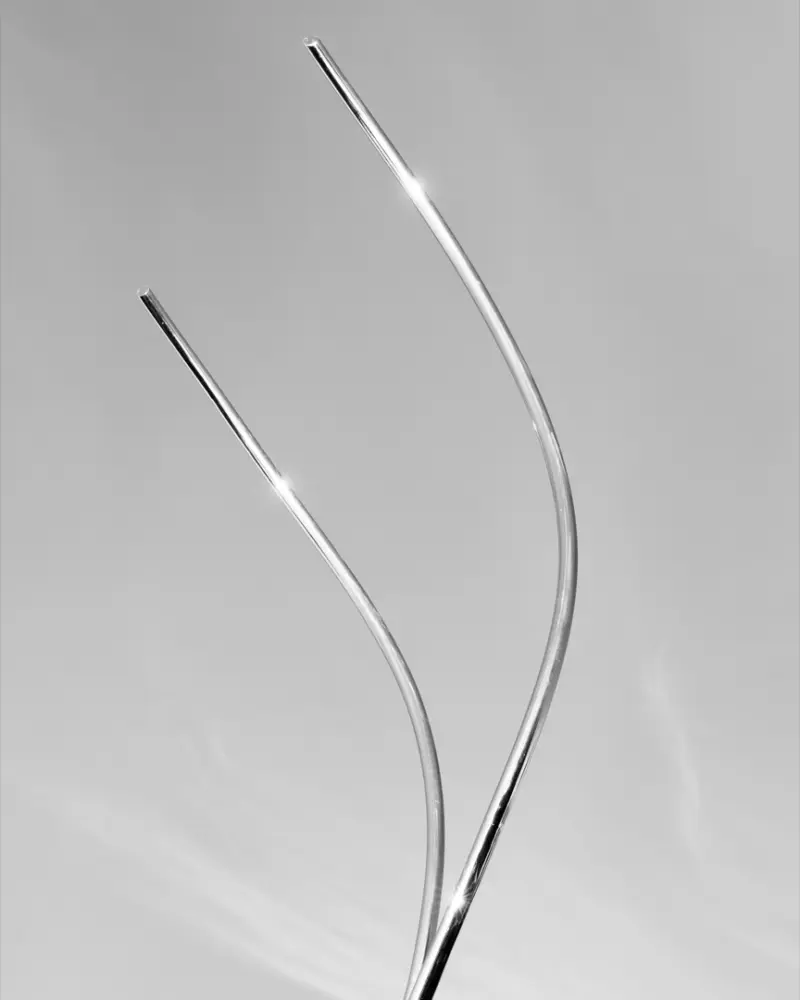
The Dance in the Ekeberg Sculpture Park consists of two twisting posts that reach up to the sky. They rotate in opposite directions, and the movements create a perpetual and dynamic exchange between concave and convex lines. The surface of the steel reflects the light, and the rotations create a kind of soft and billowing choreography. An optical illusion arises where the movements make it difficult to judge whether the lines go up or down. The polished surface is reminiscent of quicksilver and the soft rotation of seaweed that billows back and forth in the underwater currents.
Ekebergparken's The Dance is in constant movement. The slim, elegant forms keep shifting in an enthralling and almost mesmerizing dance. The artist presents us with optical illusions and plays with the interaction between shapes.
Cutts was one of the first sculptors to combine stainless steel and stone in sculptures. He works with static as well as moving installations, mostly outdoors, and often utilizing huge formats. He aims to express a connection between shape and surroundings, and the reflection of light in the polished surfaces of the sculptures. He is a traditional sculptor in the sense that he shapes almost everything with his own hands and seldom delegates work to assistants. Cutts has an in-depth knowledge of materials from his time as a metal worker in the shipyard industry, and his style is restricted to a modernist, abstract expression.
Kinetic sculptures, that’s to say sculptures where movement itself is an integral part of the artwork and where the effect is dependent on movement to manipulate how we see our surroundings, is an art form that arose in the early 1900s.The Russian avantgarde artist Naum Gabo (1890– 1977) is seen as one of its pioneers.

Guided tours
Experience The Dance and many of the other artworks in the collection with our art mediators. We offer guided tours for private groups all year around.