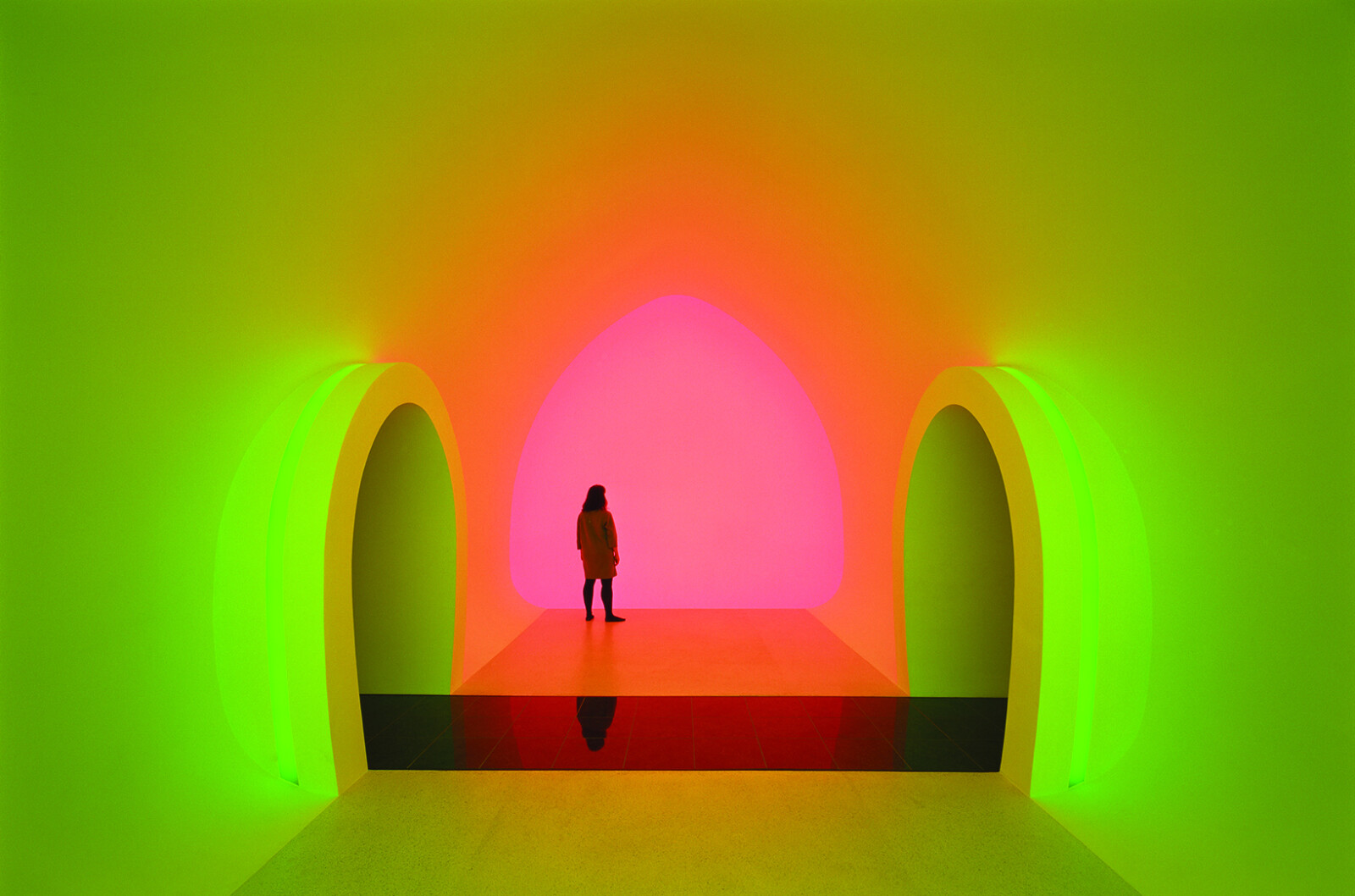
Skyspace – The Color Beneath & Ganzfeld – Double Vision
- Date 2013
- Unveiled 2013
- Material Steel, LED lights, concrete
- Type Light installations
- Details Site Spesific
- Available Sundays & private bookings
- Dimensions Ganzfeld: 25 m2 / Skyspace: 18,7 m2, height 8,3 m
© James Turrell / BONO. Photo: © Florian Holzherr
«— This world that we have around us is not a world that we receive, but more a world that we create and make. Now this seems a bit of a surprise, because we really feel, and we are very much attached to the fact that we are receiving these perceptions as opposed to creating them. But we do create the reality in which we live.»
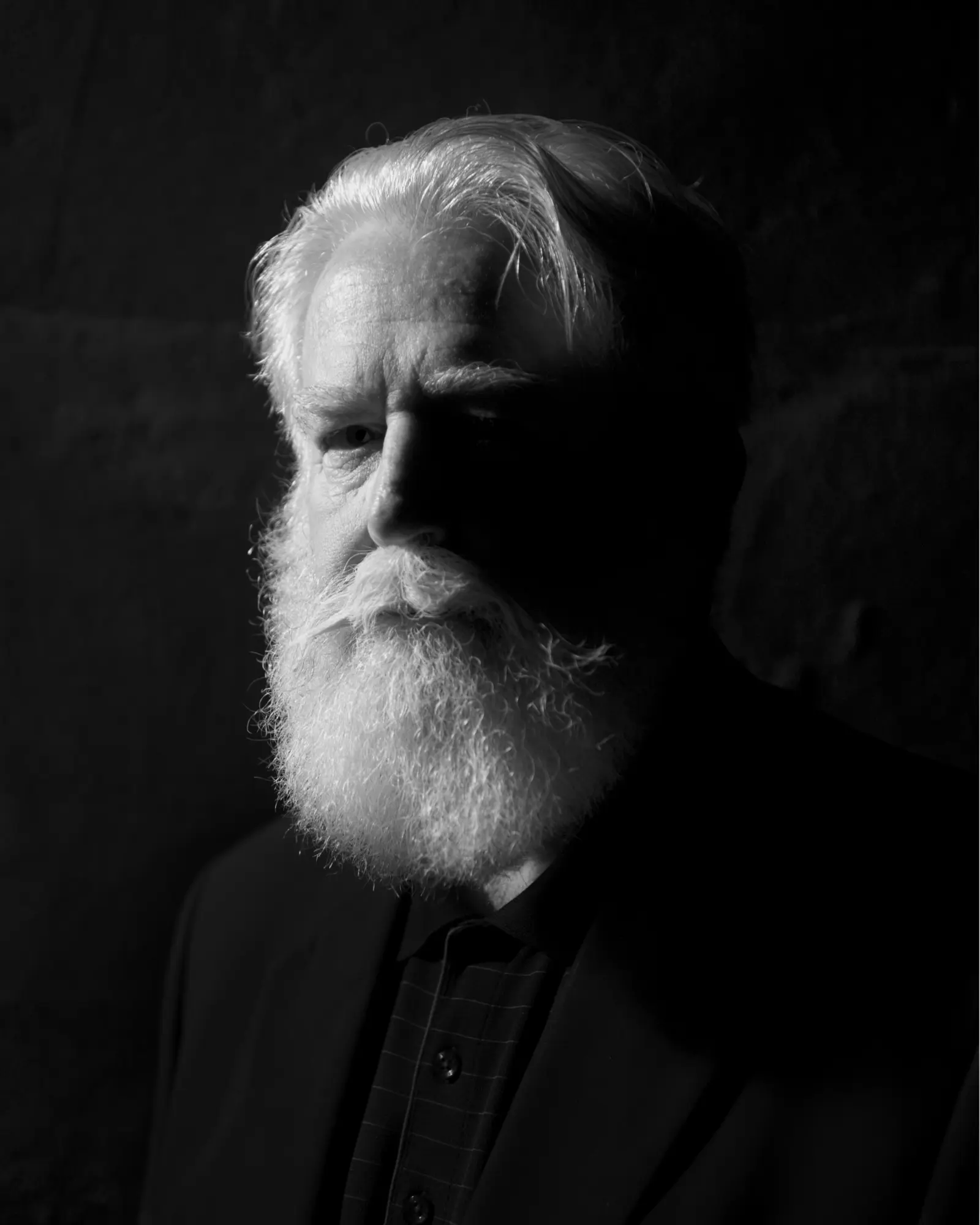
James Turrell
(b. Pasadena, California, USA, 1943)
James Turrell was born in Pasadena, California, and grew up in a Quaker family. He got his pilot’s licence at the age of sixteen and completed his BA in Psychology at Pomona College in 1965. At the same time, he studied art, maths, geology, and astronomy. In 1966, he began his art studies at the University of California and made his first light projections. In 1973, he completed his studies at Claremont Graduate University. Turrell became, together with amongst others Robert Irwin (1928-2023) and Mary Corse (b. 1945), one of the main protagonists of the Light and Space movement, an art movement from the end of the 1960s, which used a minimalist formal language, geometric abstraction, and created sculptures of air, space, and light. In the late 1960s, he joined the LACMA Art & Technology Program, making extensive studies on the Ganzfeld effect. He is world-leading in his field, with permanent installations across the world, and a series of extensive retrospectives at significant institutions like som LACMA (Los Angeles County Museum of Art, 2014), the Museum of Fine Arts Houston (2013) and Guggenheim, New York (2013). In 2009, the James Turrell Museum – the Hess Art Collection, opened in Colomé, Argentina, featuring a number of Turrell works in the collection of Donald Hess, presented at Hess’ vineyard in the Andes.
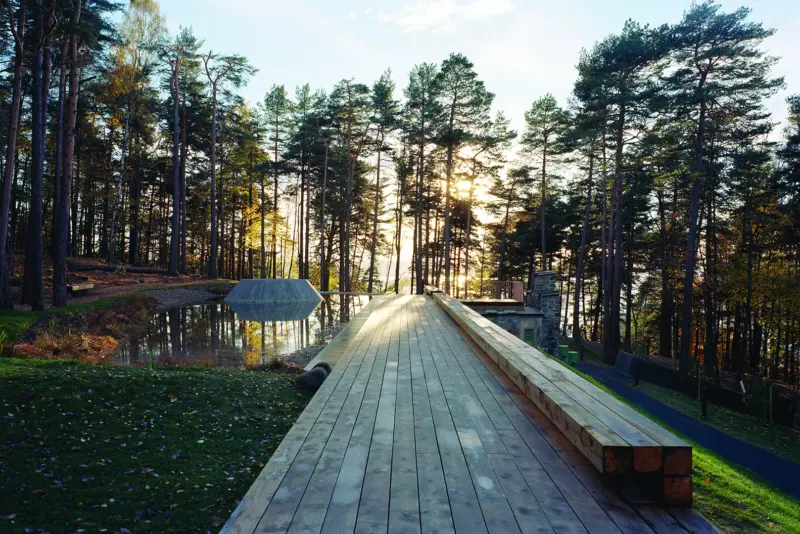
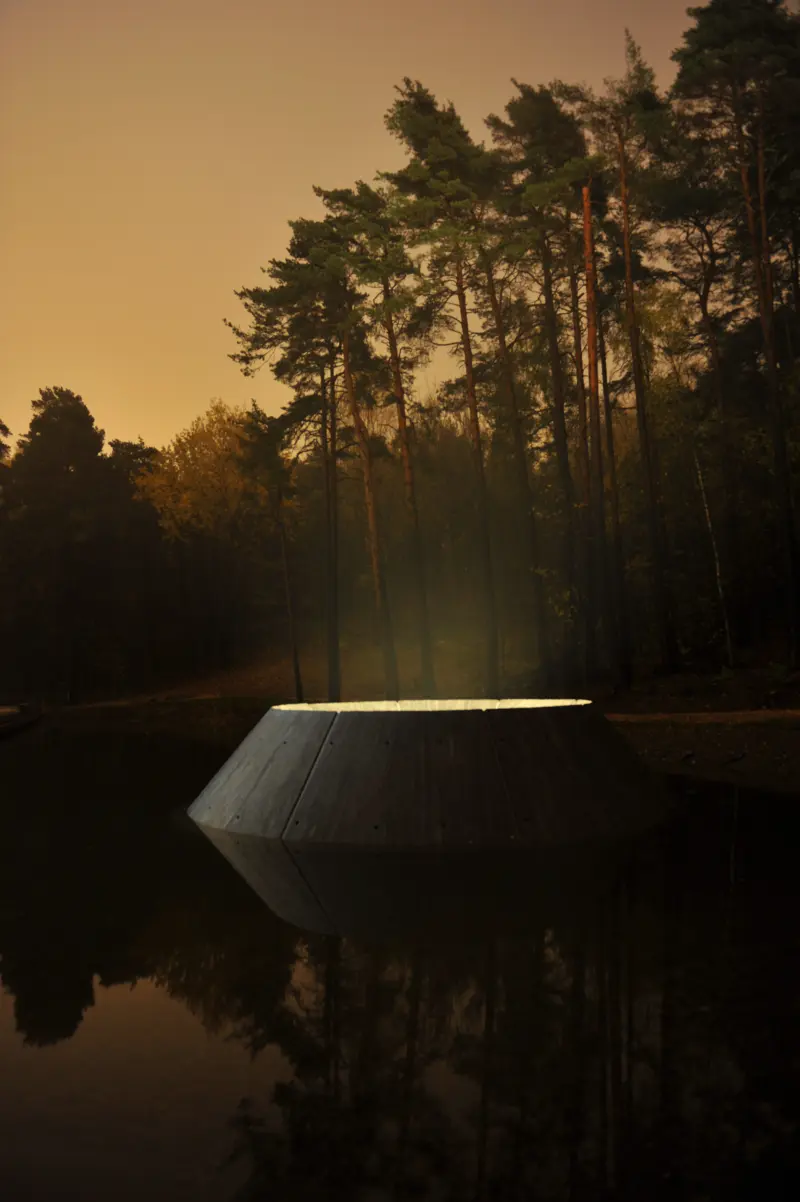
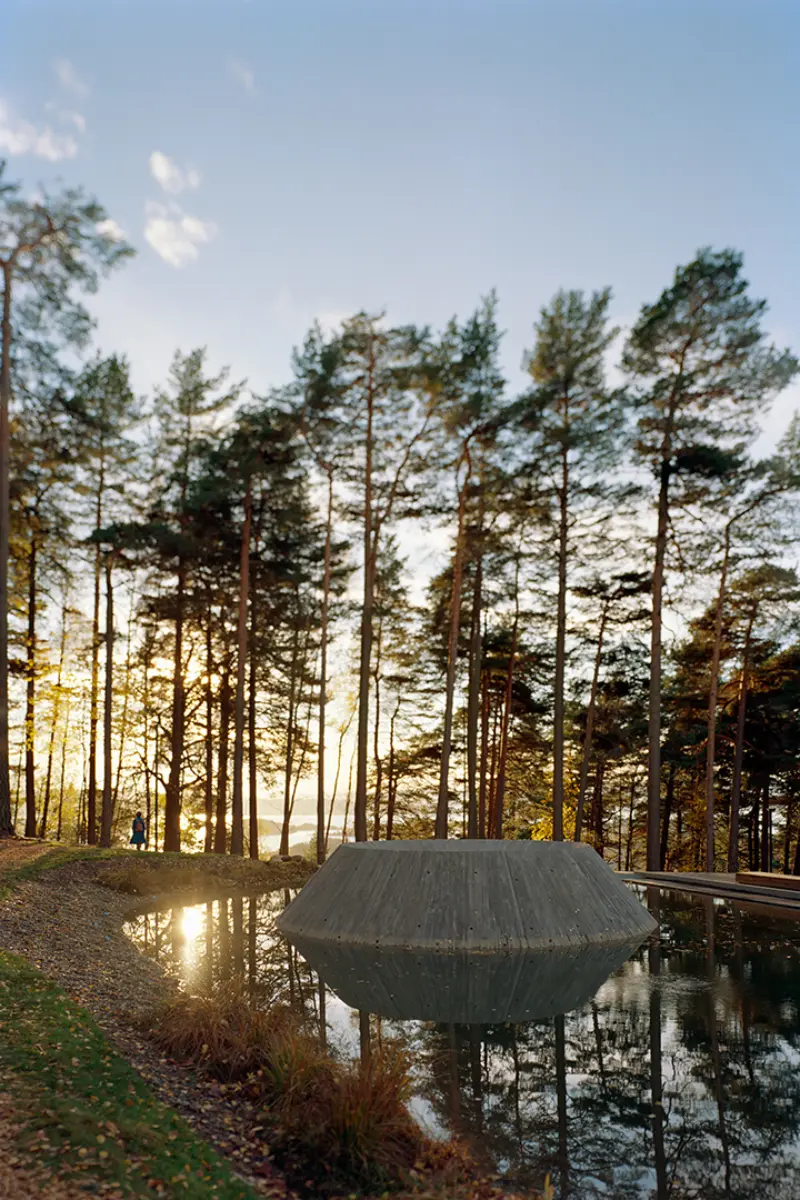
James Turrell is an American artist who works with light, colour and space. His installations show a common trait in way they tend to encompass the spectators, so that the light and colour effects they experience are controlled fully by the artist's concept. He was the first artist to be contacted by the art committee to commission a site-specific artwork for the park. He visited the area in 2010 and saw the old water reservoir built in 1916.The result is the most extensive installation in the collection of the park. Turrell ended up making two site-specific works.
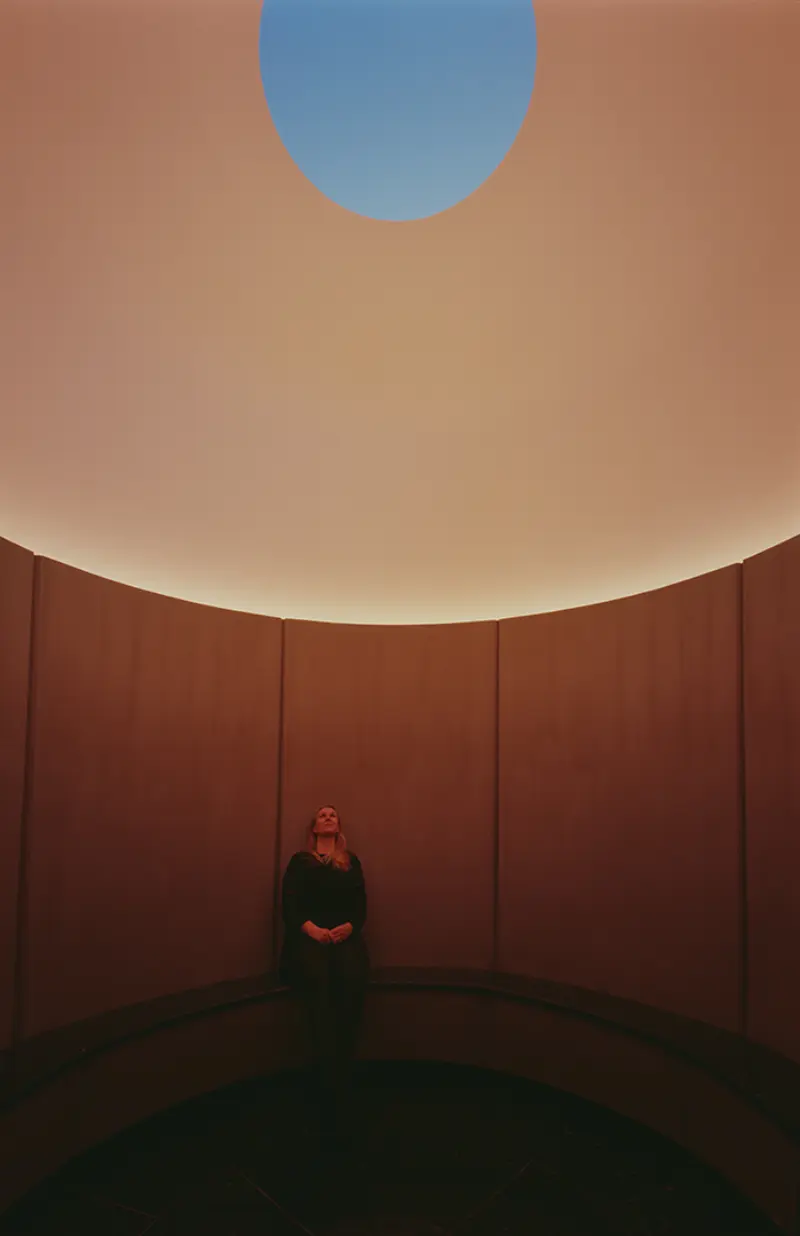
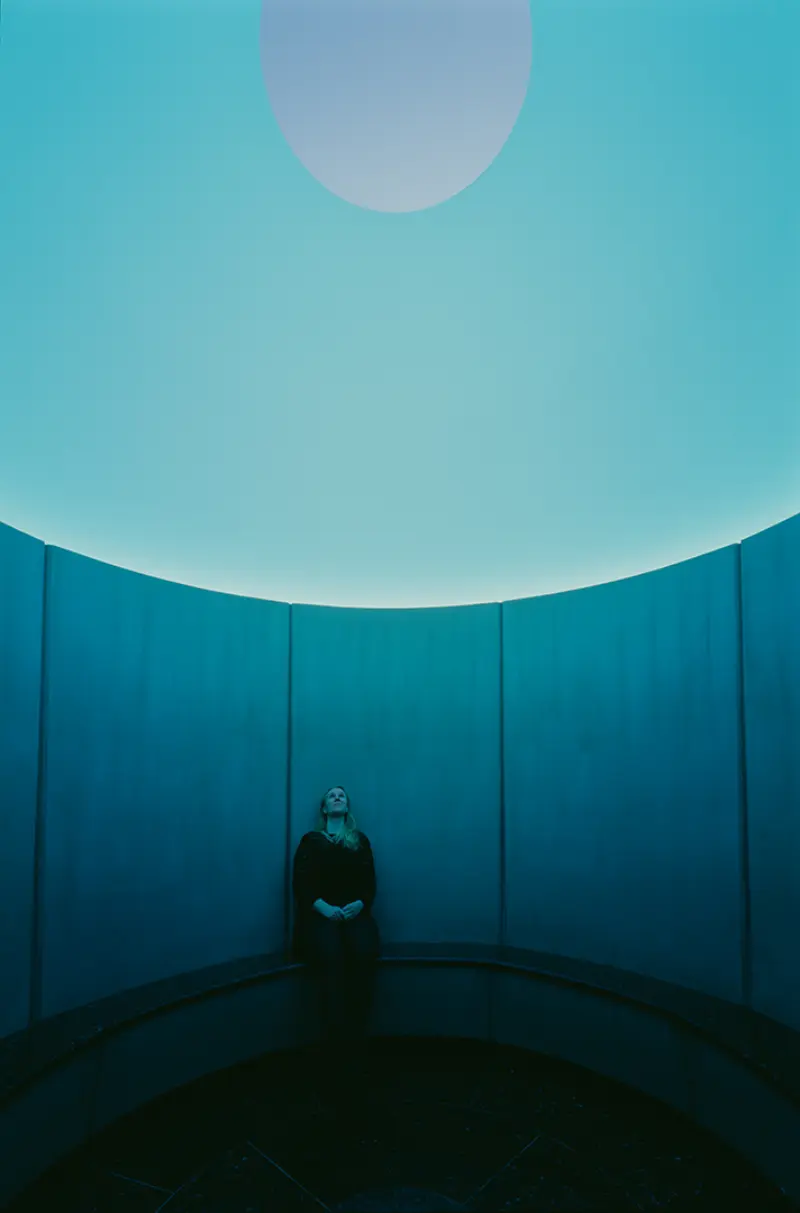
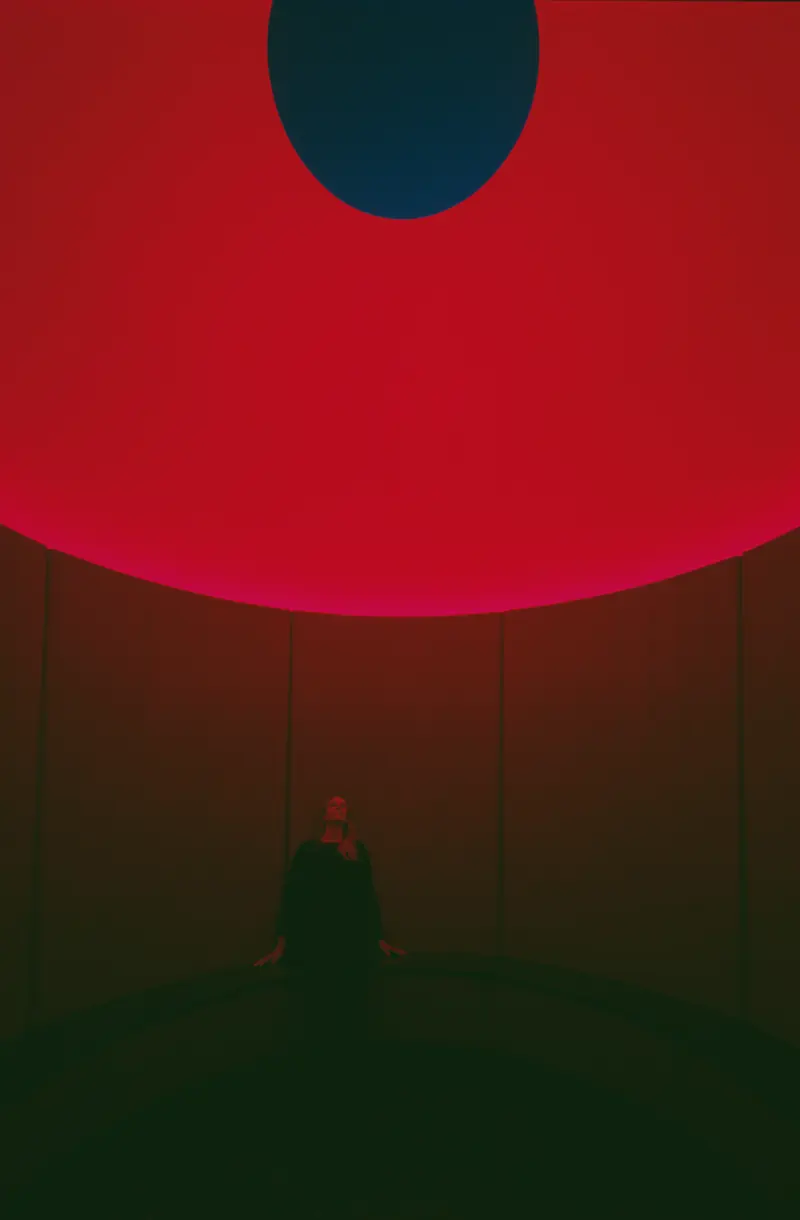
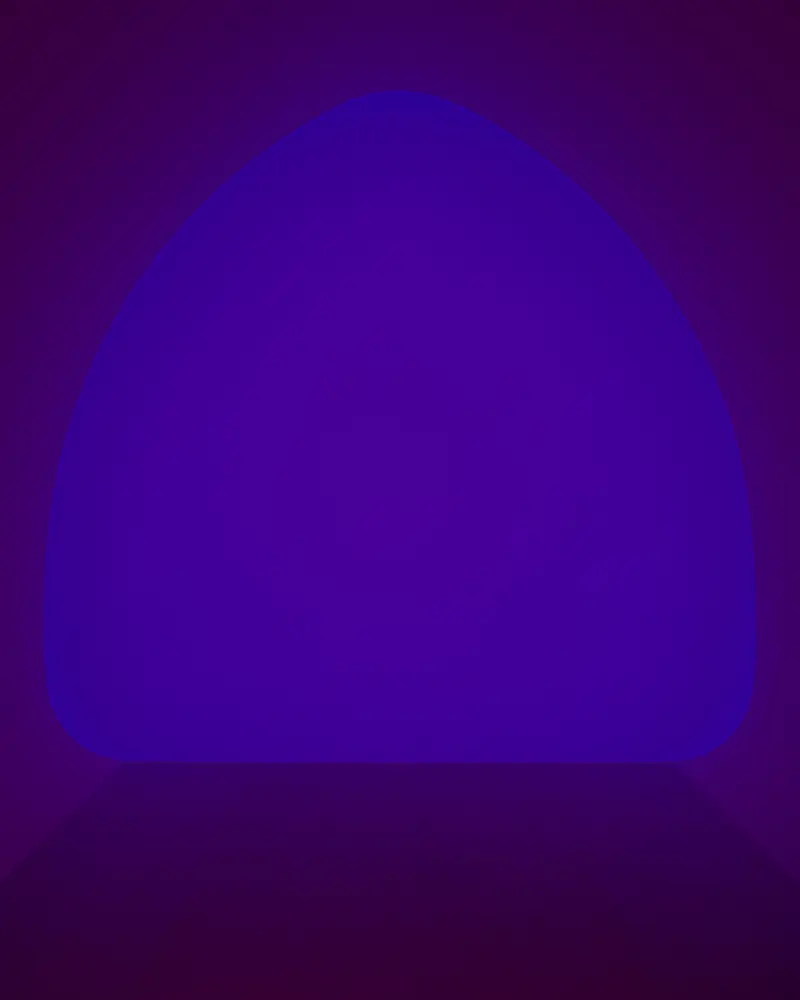
In Ganzfeld: Double Vision the artist makes use of colour to influence our perception and sense of space. During dawn and sunset, you can experience Skyspace - The Color Beneath through Sessions, that create a magnificent communion between the room you sit in and the sky above.
Skyspace - The Color Beneath
Turrell’s best known works are the architectonic Skyspace installations. He has installed over ninety Skyspaces all over the world since the 1970s. In Norway, there is another Skyspace in Øystese, Hardanger (Kunsthuset Kabuso, 2016).
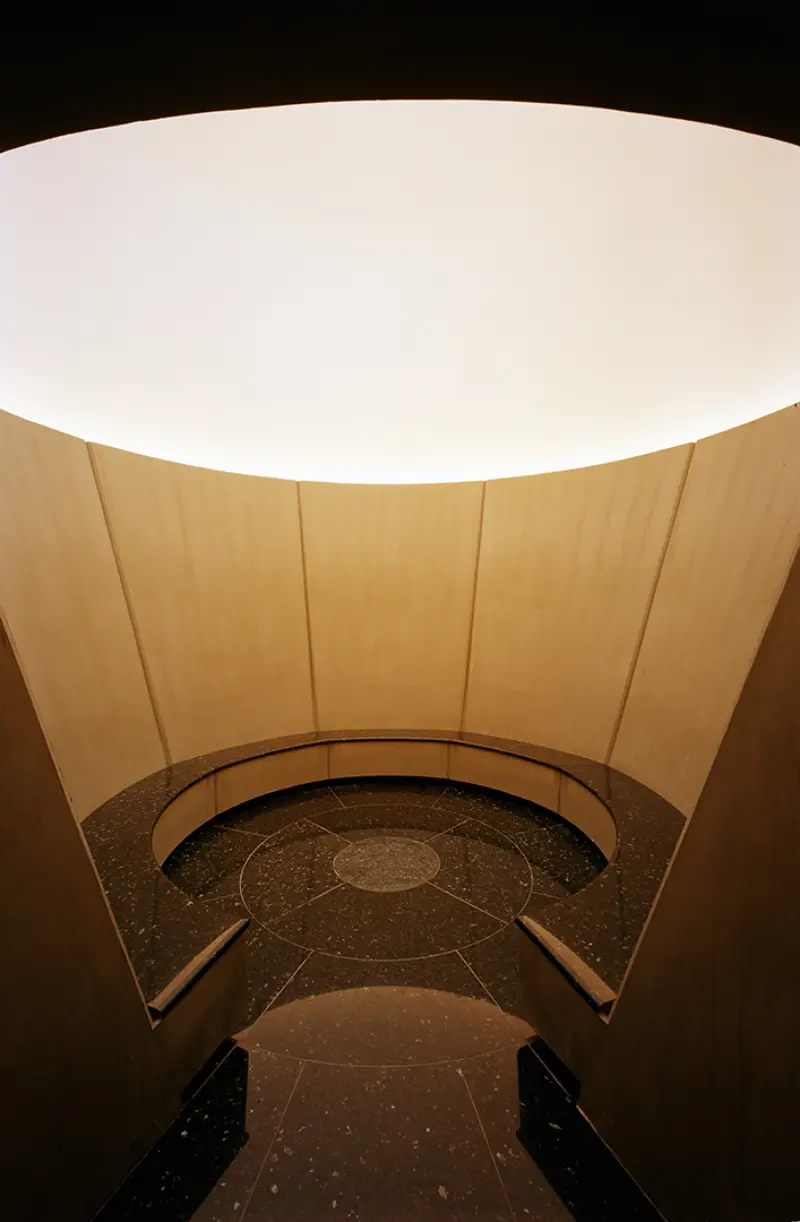
The Skyspaces come in many shapes and sizes, have unique titles, and direct connections to the spaces in which they are installed. Their common denominator is a room with a hole in the ceiling. Along the edges of the room are benches for a limited number of people. The space is filled with light. It has been Turrell’s lifelong ambition and intention to make one hundred Skyspaces in his lifetime. Turrell’s first Skyspace was made in 1975 and the aim is to make one for each time zone.
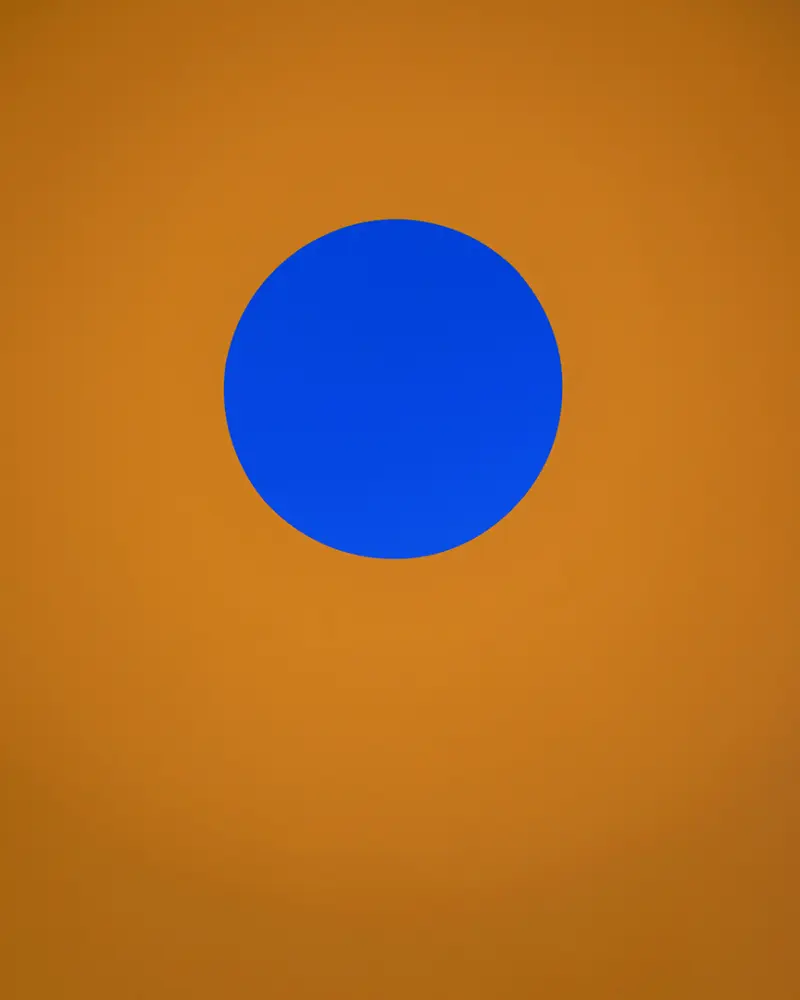
Skyspace - The Color Beneath features an underground dome shaped as a circular room, built in connection to the old water reservoir. At the highest point - the centre of the dome, there is an oculus showing a limited section of the sky. The architectural form of the dome and the space is reminiscent of the Pantheon in the Basilica di Santa Maria ad Martyres in Rome (completed ca. 140 AD). Just like in the Pantheon, the “eye” is completely open, so that if it rains or snows, it will also rain or snow inside.
The light installation has an advanced program, and it is only at dusk and dawn that the visitors can experience a colourful light show that transforms the experience of the room and the sky above. The light that fills the room is experienced in a material sense. It changes colour slowly and has different levels of intensity. It strengthens the natural light that comes from above and this produces an effect that makes us believe that the sky also changes colour.
Turrell highlights what it means to be quiet over a period of time together with other people. This can be a difficult experience for many, and as he has pointed out: silence can be a bit strange for an art audience, as they normally talk a lot.
Ganzfeld - Double Vision
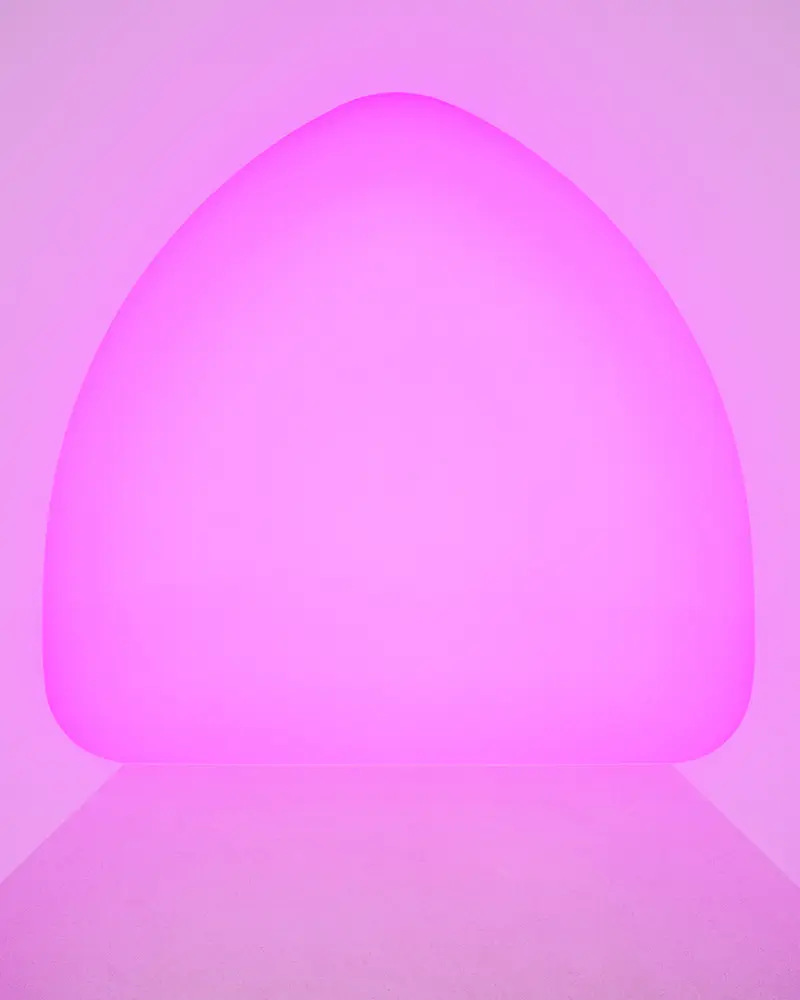
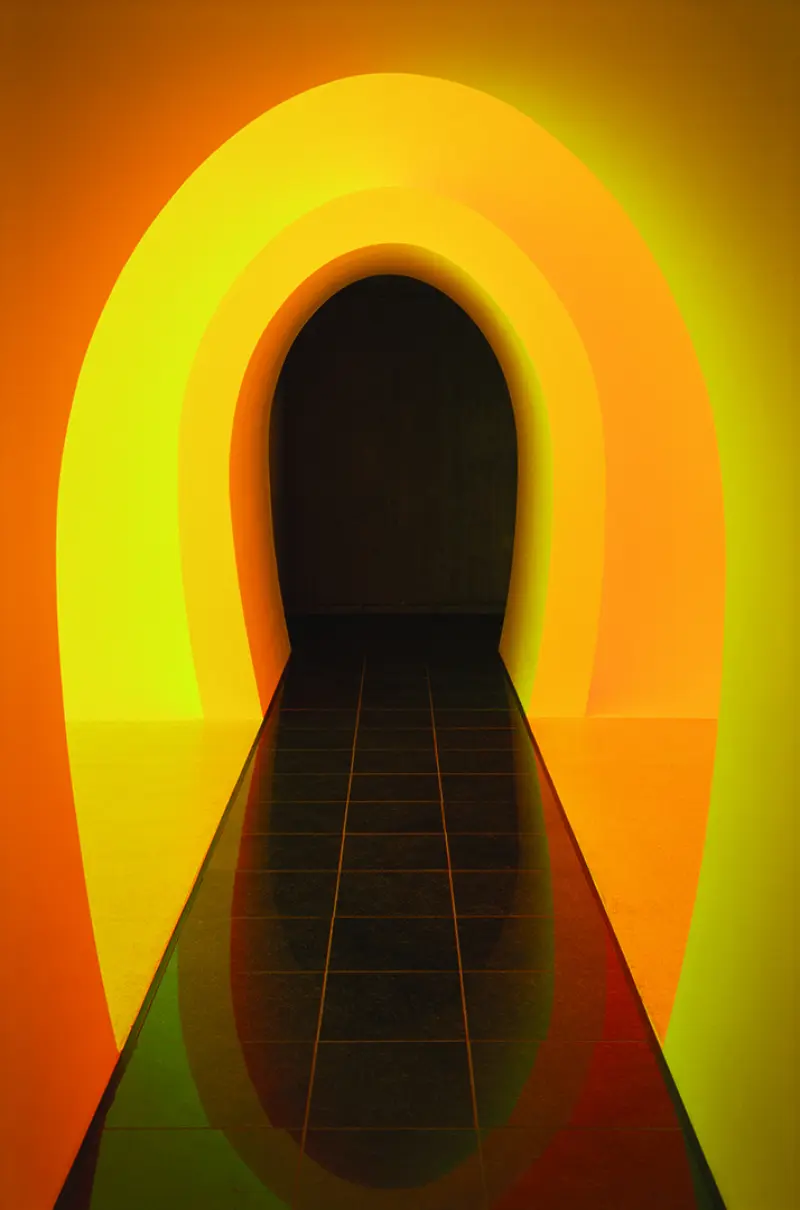
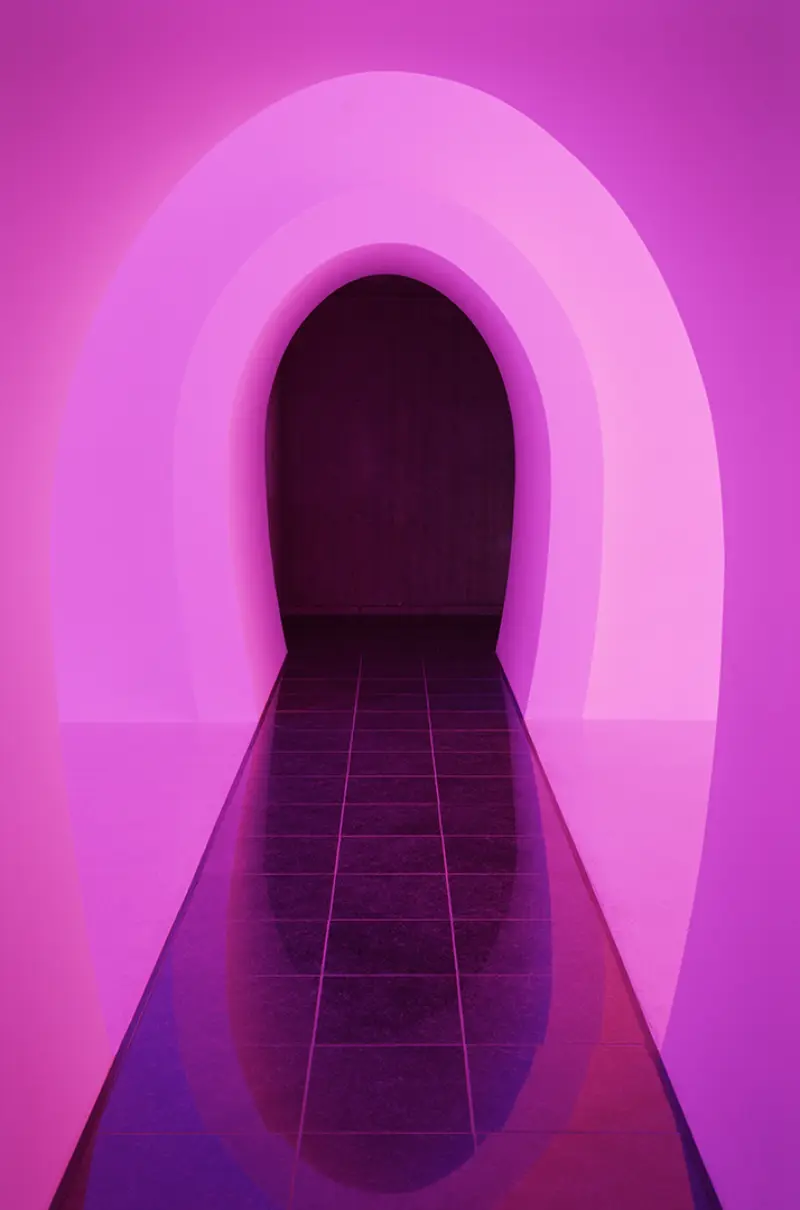
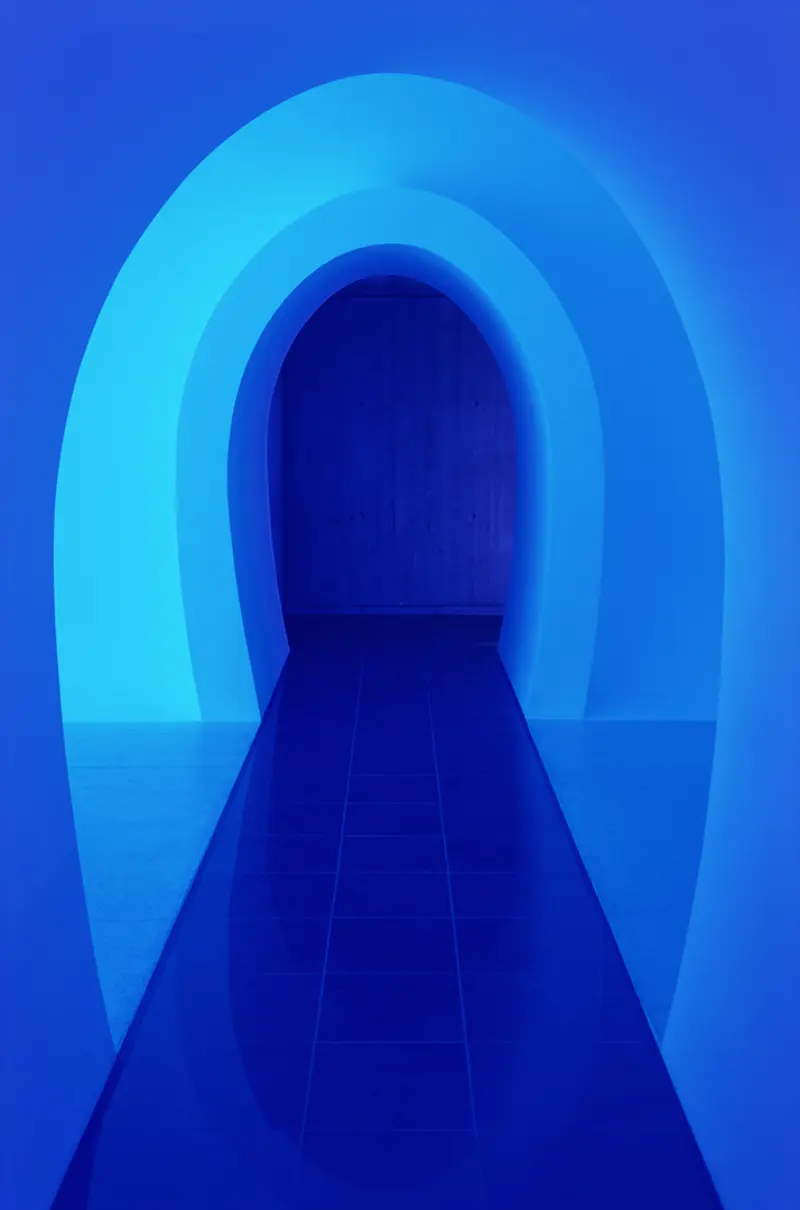
The second installation, Ganzfeld - Double Vision, is located in a space where two underground water tanks originally resided. The space is painted completely white and consists of an inner room with curved walls on either side, as well as an outer room with curved walls. The whole space lights up in a colourful play of light that slowly changes colour and density.
The light and the lack of corners and edges results in the loss of a sense of depth. Turrell has created an architectural space that is about the space between the walls rather than the walls themselves. To enter into Ganzfeld – Double Vision is like stepping into a neon cloud where we experience the light so densely that it almost seems tangible.
The title Ganzfeld comes from the Ganzfeld effect, a visual phenomenon caused by exposure to unstructured stimulus, called sensory deprivation hallucinations. The word itself may be translated from German to “the whole field”. When the eyes are deprived of visual signals, the sense of depth disappears, and the brain creates visual stimulation by itself. We perceive this as visual noise, e.g. as swarms of light points in movement. Over time, this can potentially cause hallucinations or visual disruptions.
A low-level form of this is snow blindness, which happens when a snow-covered landscape reflects such a strong light that we lose our perception of depth and start seeing black dots. In Ganzfeld – Double Vision Turrell transforms the light into something materialistic, and we thereby become aware of our own perception. The Ganzfelds make up a long series of works, the one in Ekebergparken stands out with its two parallel fields.
Sunset/Sunrise Sessions
Get the full experience and book a Sunset/Sunrise Session. We offer Sessions all year round.
Private tours
We offer private tours inside Ganzfeld - Double Vision and Skyspace - The Color Beneath all year round.
Sunday guided tours
Ganzfeld & Skyspace are open for free mini tours every Sunday.