
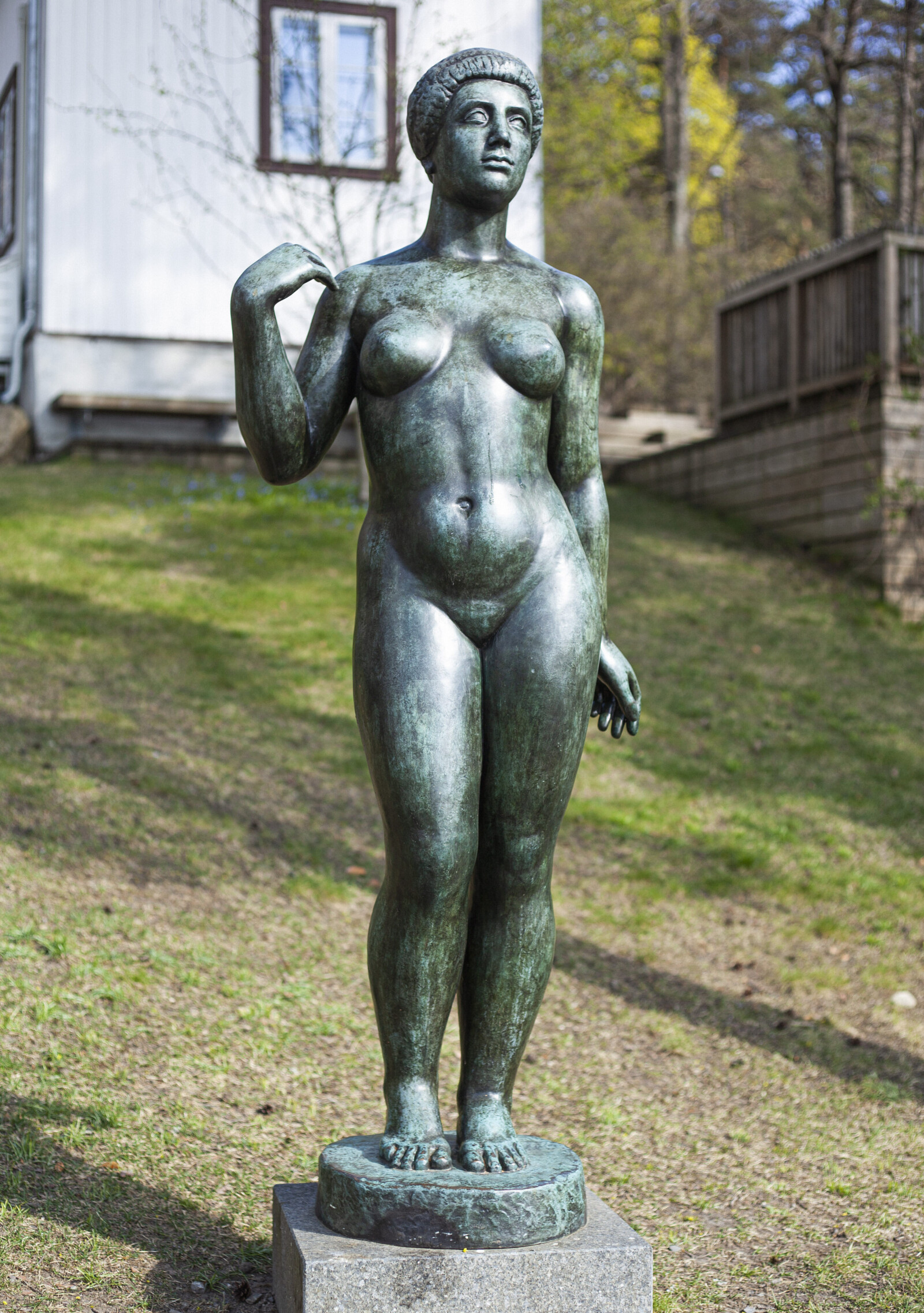
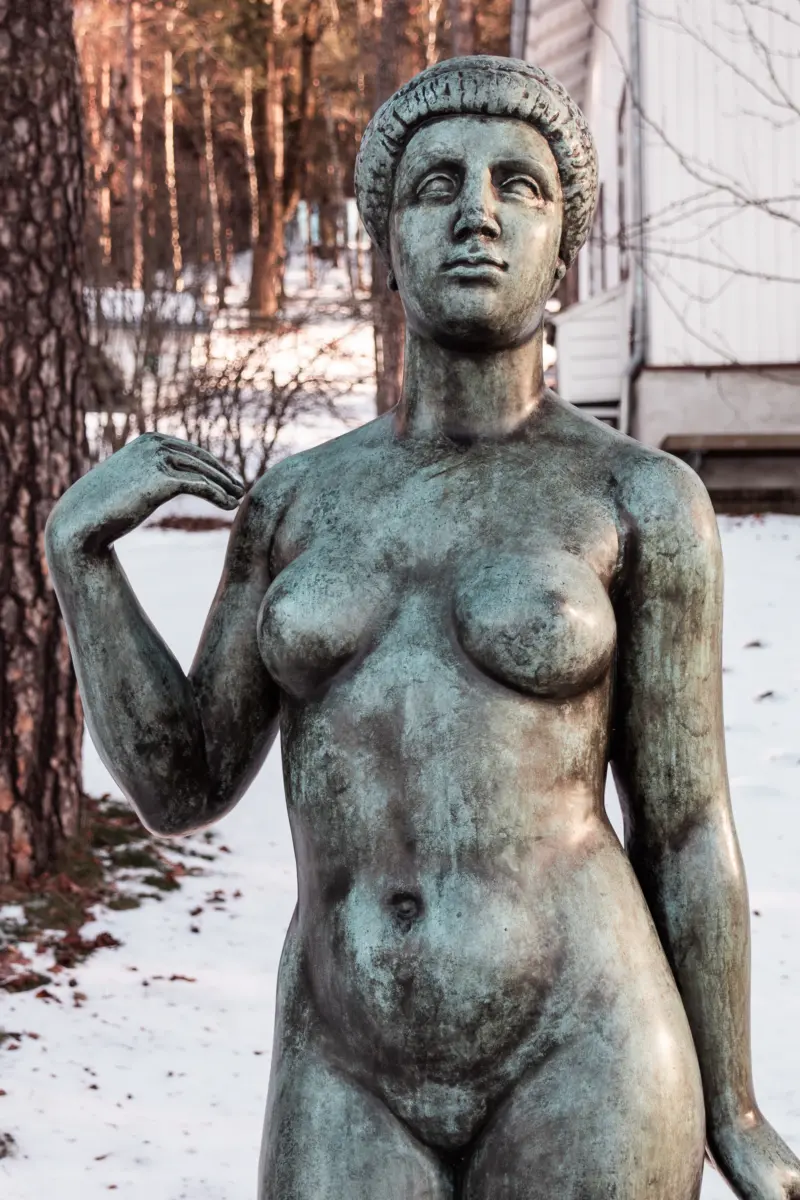
Nue Sans Draperie
- Date 1921
- Unveiled 2013
- Material Bronze
- Dimensions 192 cm
Photo: © Kristina A. Kvåle /Ekebergparken
«I am no poet, so I express myself through my sculpture.»
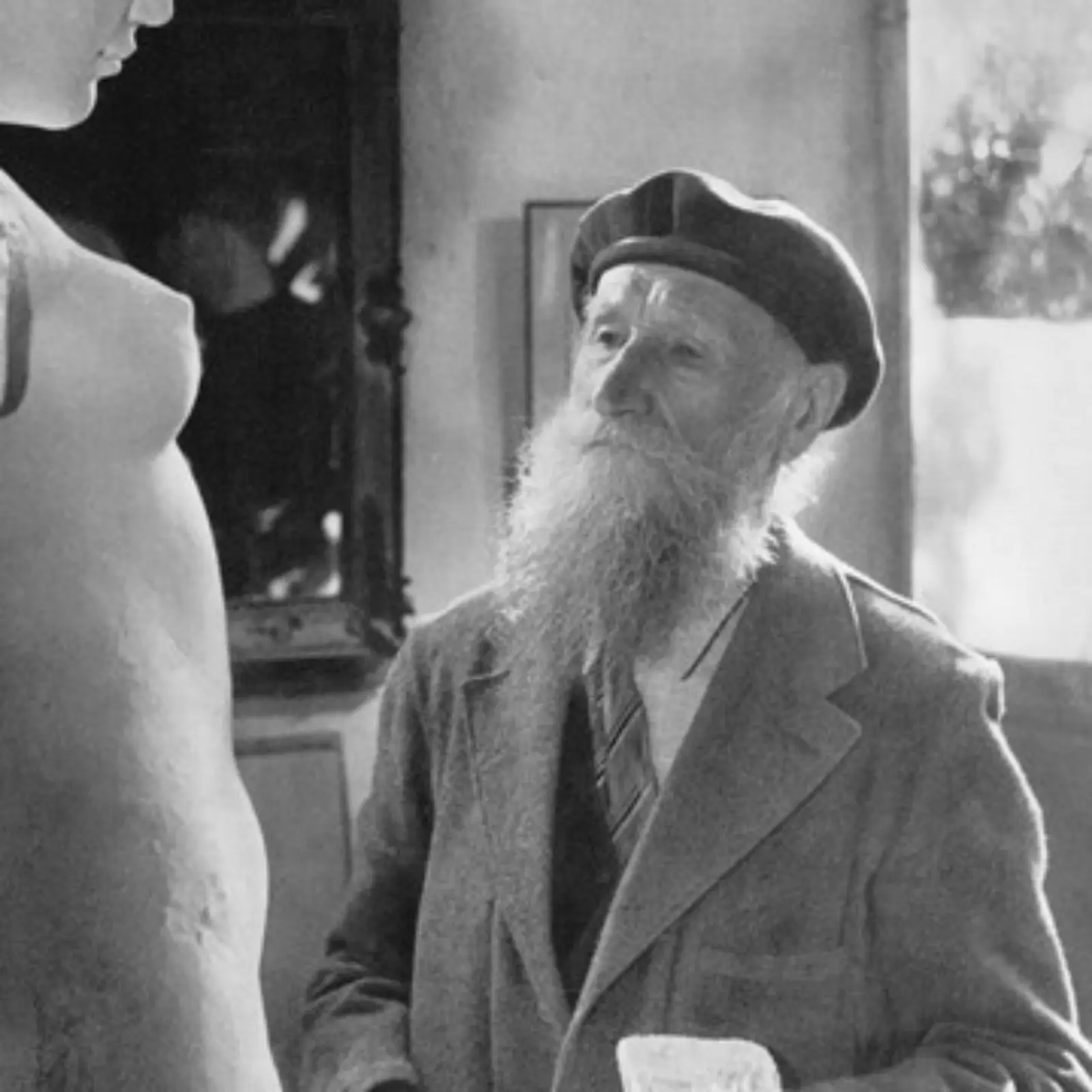
Aristide Maillol
(b. Banyuls-sur-Mer, France, 1861-1944)
Aristide Joseph Bonaventure Maillol was a painter, sculptor, and printmaker. He studied at Ecole des Beaux-Arts in Paris from 1885 and was August Rodin ‘s assistant for a short time. He was a member of Les Nabis, a group of artists in the 1800s focusing on symbolism, that were deeply dedicated to the artist Paul Gaugin (1848-1903). Maillol started off with painting and tapestry but moved on to sculpture and was particularly interested in the female body. He had an analytical approach to his work and focused on form and volume rather than movement. This, combined with reintroducing classical principles, made him groundbreaking in his time. The female body is idealised in Maillol‘s work and often personifies natural elements like air and water or the seasons. His focus was on a calm and self-sufficient allure, rather than the body as an erotic object.
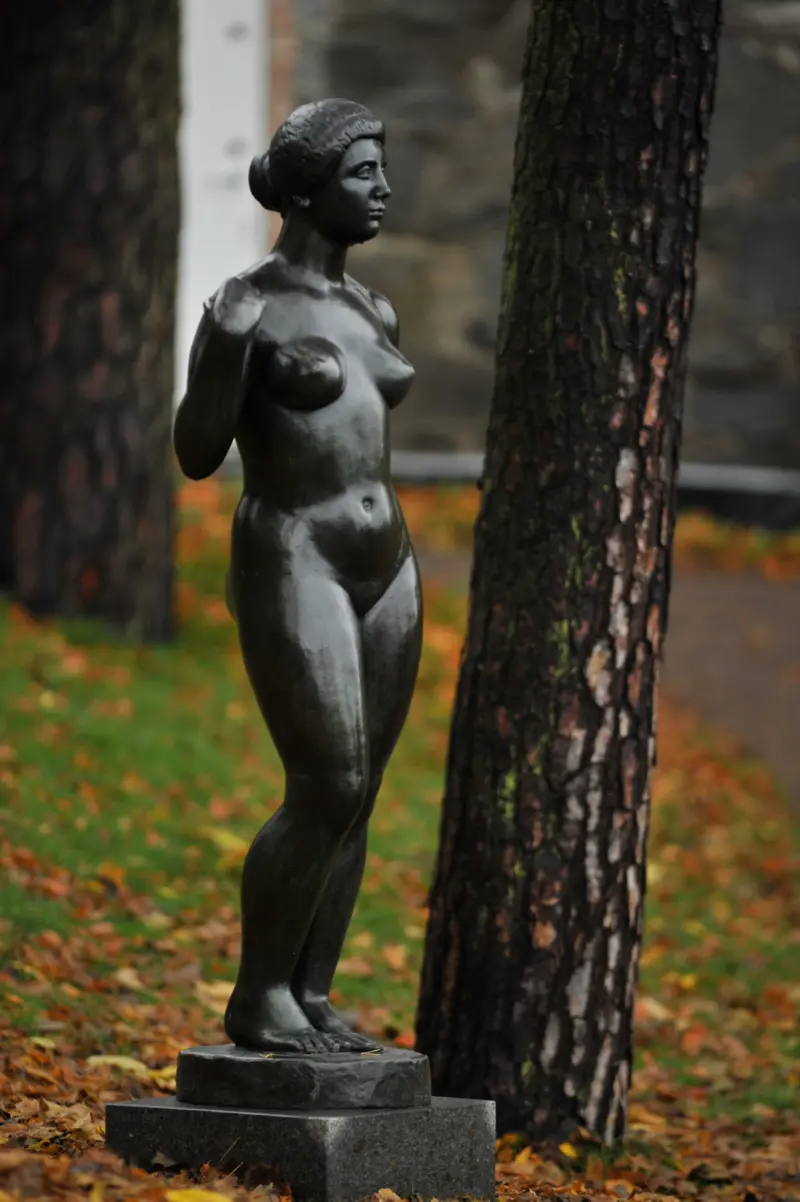
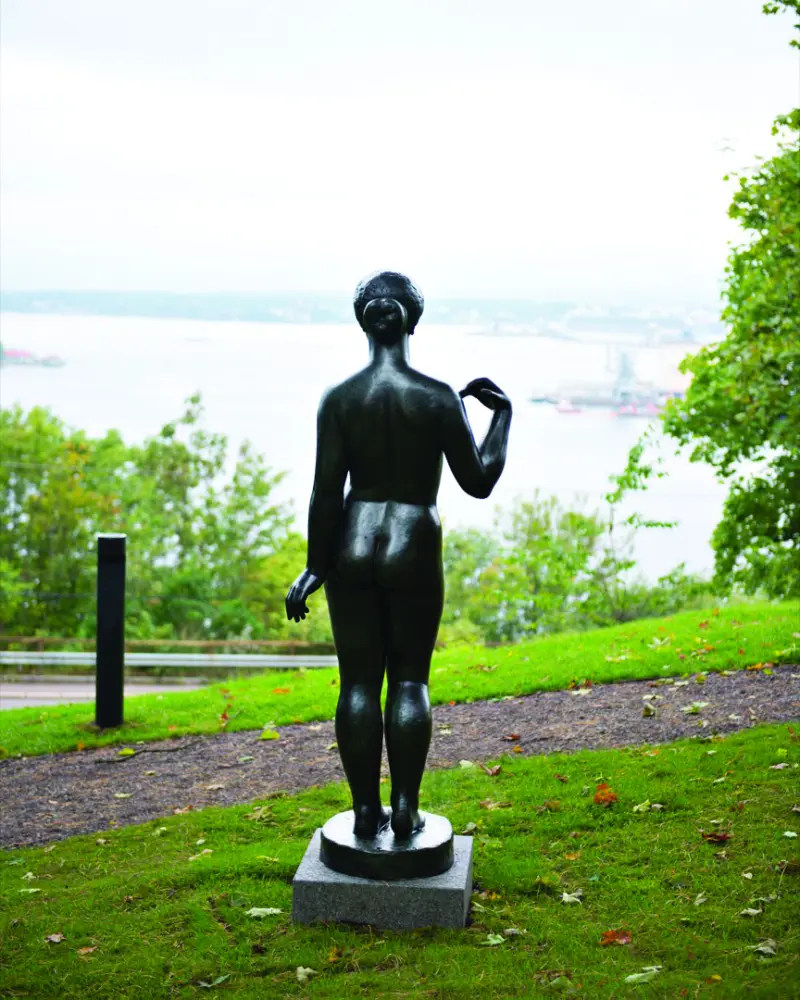
Nue Sans Draperie stands in an unadorned classical contrapposto, with a sharp bend at the hip and the weight of the body on one leg. The sculpture has been shaped symmetrically, without much detail and the face left smooth, without expressions divulging any feelings other than an ambiguous smile inspired by archaic statues. There are few or no tense muscles. The body parts have been rounded, and the skin looks soft even though the material is bronze. The simplified naturalism we see in Nue Sans Draperie is characteristic for Maillol’s sculptures. He was particularly captivated by the female body. Archaic Greek ideals were among the springs of Maillol 's inspirations.
Nue sans draperie - “nude without drapery” - alludes to the way female nudes could be depicted in earlier times. As it was uncouth to display the naked female body, artists circumvented the problem by partly wrapping it in a drapery. Even if the figure were only to clasp it in one hand, the sculpture might pass as partly clothed or about to take a bath. Aristide Maillol made it clear that his female figures are fit to stand unrobed, without draperies.
In his time Maillol became an important counterpart to August Rodin. Where Rodin’s sculptures challenge the balancing point and indicate movement, Maillol’s sculptures have an architectonic structure and monumentality. Maillol’s almost academic method where movement is toned down and the form’s balance is harmonised, was considered original and bold. Today Maillol is seen as an important pioneer of abstraction and modernism. The sculptors Jean Arp (1886-1866), Constantin Brânçuși (1876-1957), and Henry Moore (1898-1986) are clearly influenced by him, and they carried on this heritage from Maillol in their artistic expressions.
Guided tours
Experience Nue Sans Draperie and many of the other artworks in the collection with our art mediators. We offer guided tours for private groups all year round.