
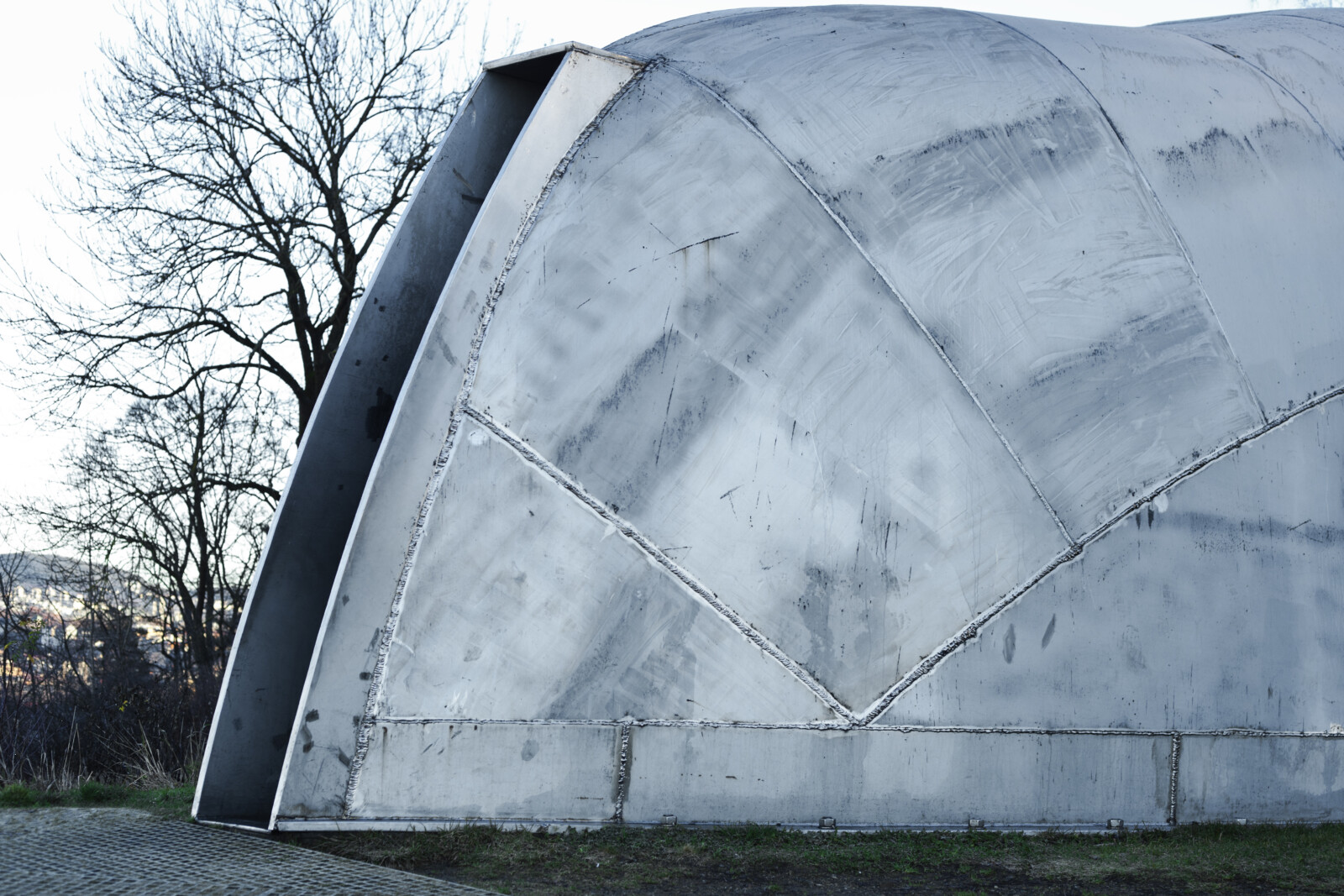
Indre rom VI – Livsløpet (Inner Space VI – The Realm of Life)
- Date 2013
- Unveiled 2013
- Material Stainless steel
- Dimensions 750 x 400 x 370 cm
© Per Inge Bjørlo / BONO. Photo: © Kristina A. Kvåle /Ekebergparken
«Art is a way of thinking. Under the pressure of our time, we need places to correct ourselves. I want every individual to visit Indre rom VI-Livsløpet with this as their goal: to understand we are utterly alone out there.»
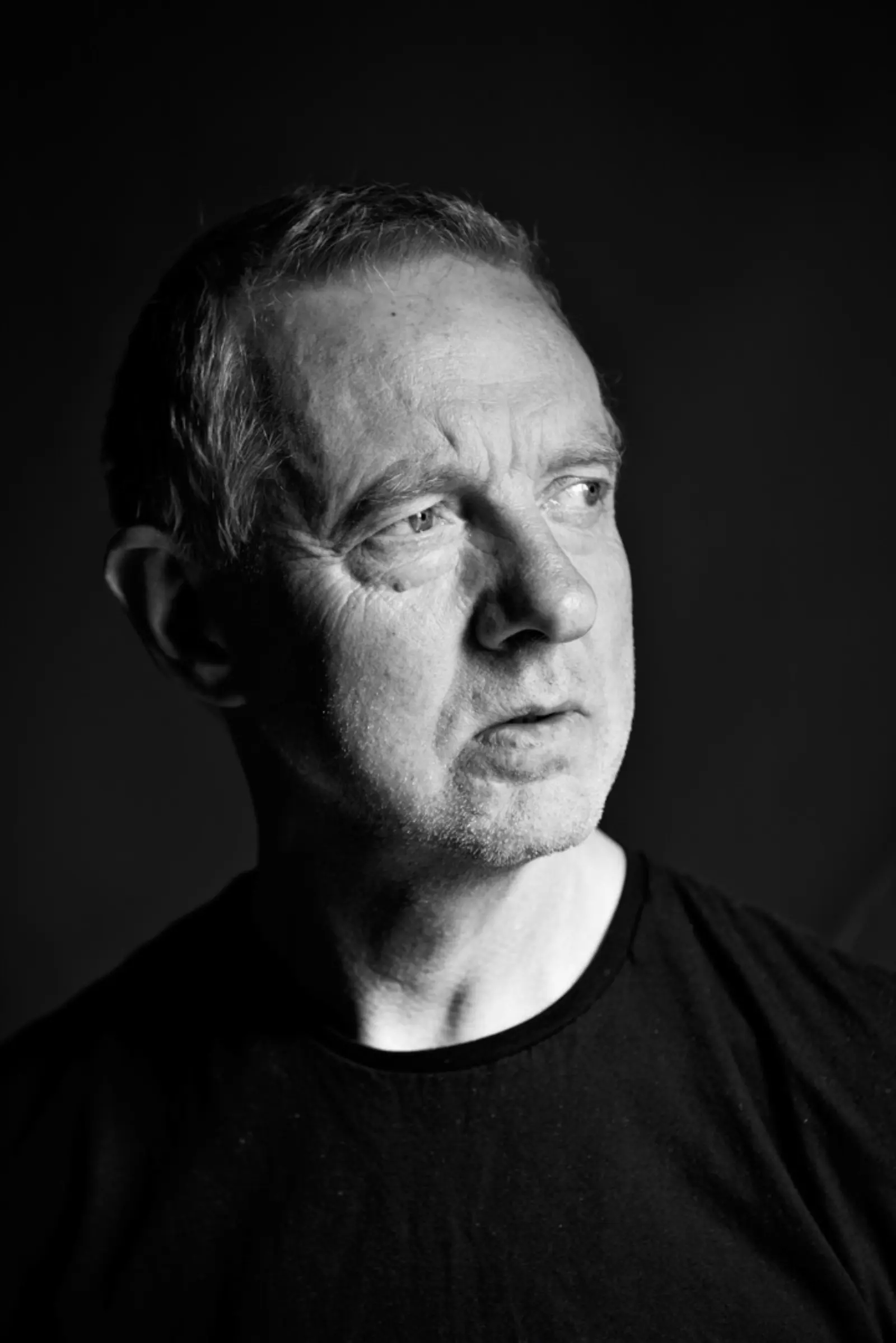
Per Inge Bjørlo
(b. Ålesund, Norway, 1952)
Per Inge Bjørlo is a sculptor, painter as well as being an important contributor to the visual arts. He is considered one of Norway's most profiled contemporary artists. Bjørlo's most renowned works are the series Indre rom (Inner Space) and his large sculptures at Oslo Airport, Gardermoen. Per Inge Bjørlo grew up in Spjelkavik outside of Ålesund, and lives and works in Hønefoss. He studied at Bergens Kunsthåndverkskole (Bergen School of arts and crafts, 1974-77) and the Art Academy in Oslo (1977-81), under Ludvig Eikaas. Bjørlo works with paintings, drawings, prints, sculptures, installations, and performances. He is seen as one of Norway’s first installation artists with the series called Indre rom, the first of which was shown at Henie Onstad Art Centre in 1984.The theme of the series is psychological conditions, such as anxiety and claustrophobia. Bjørlo represented Norway at the art biennales in São Paolo in 1985 and Venice in 1988 with the Indre rom-series, and has since completed several public commissions in Norway, such as Alexis (1988) at Gardermoen. His works are included in the collections of the National Gallery in Oslo, Arts and Culture Norway and the art collection of Oslo Municipality.
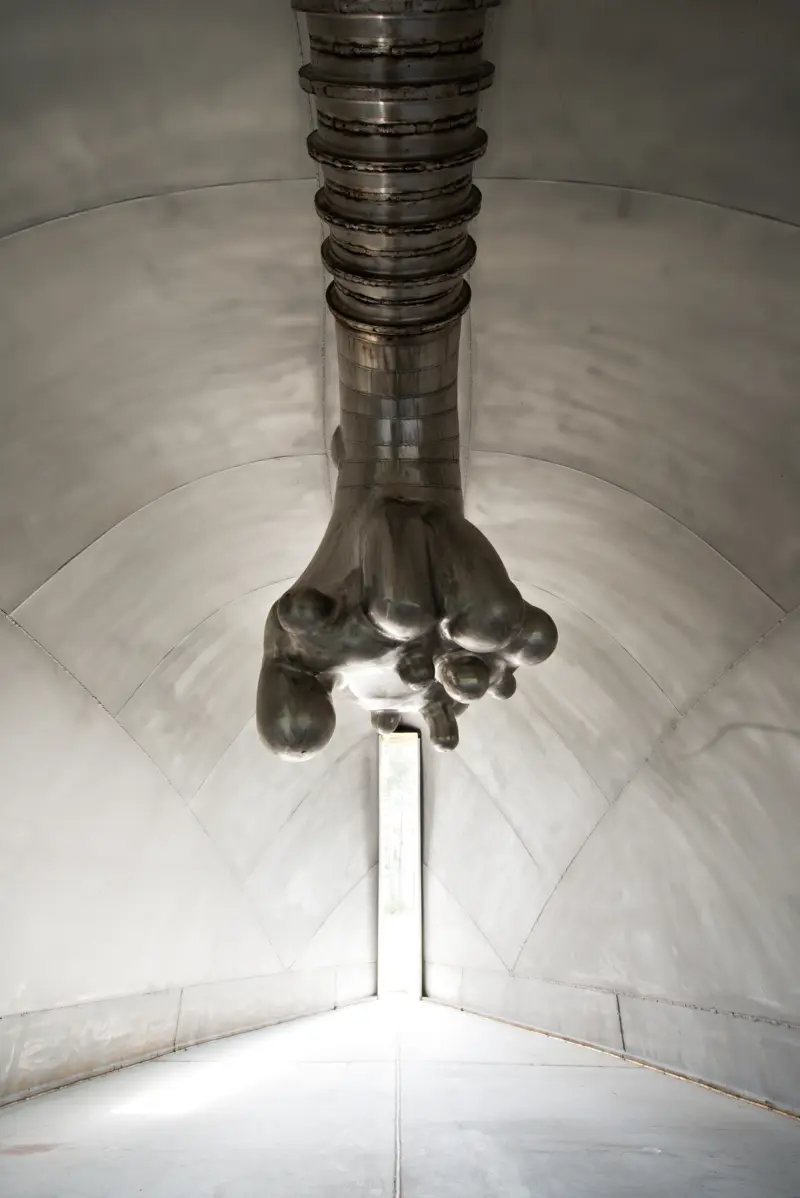
Indre rom VI- Livsløpet (Inner Space VI- The Realm of Life) is commissioned especially for Ekebergparken. Visitors may enter the installation, becoming more than just onlookers; they can touch, see and hear the oeuvre and its spatial qualities. Outside the sculpture there is a bench in Bjørlo’s signature materials: steel and rubber. He has stated that it is a place for contemplation and meditation.
Art is a cerebral process to Bjørlo, a guide when life has turned difficult and come to a standstill. It is also a challenge beyond oneself - art creates a space to examine the human condition.
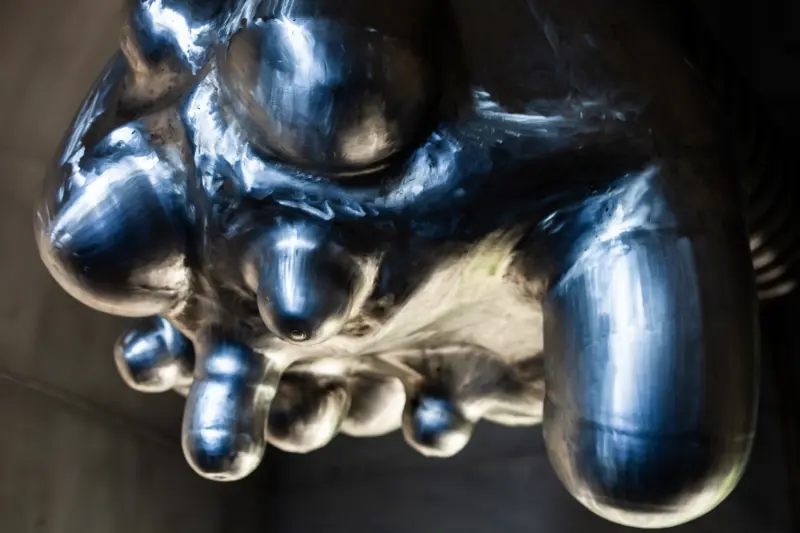
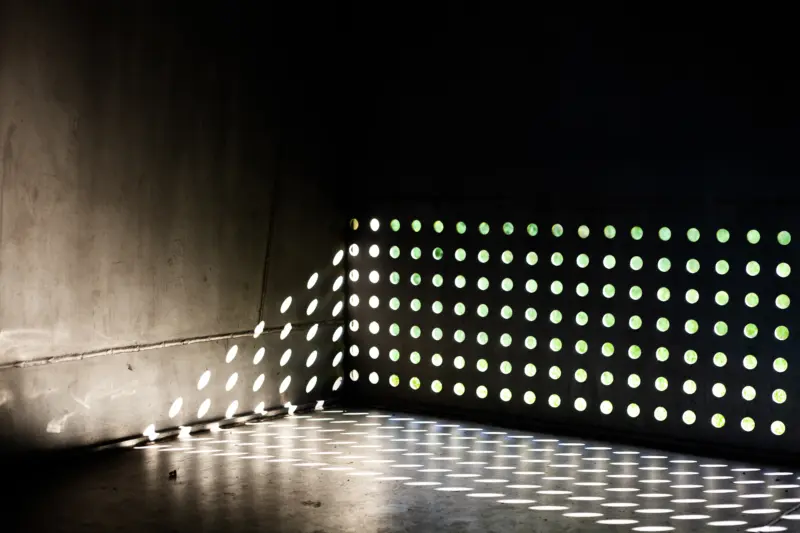
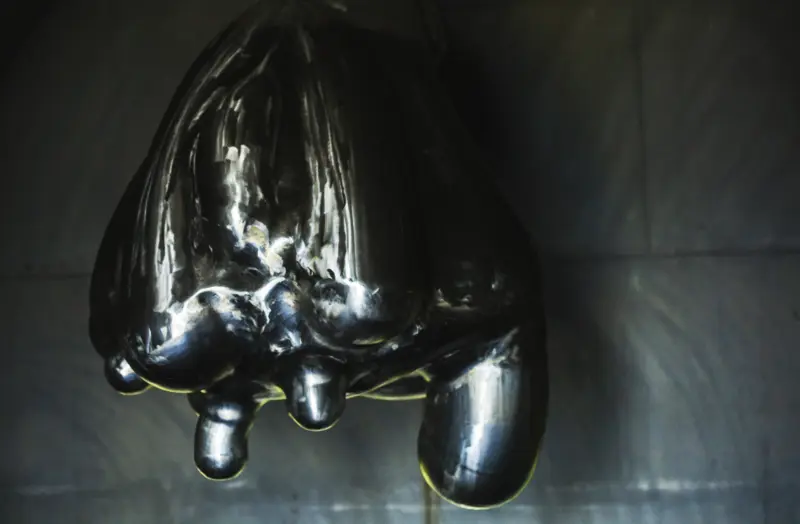
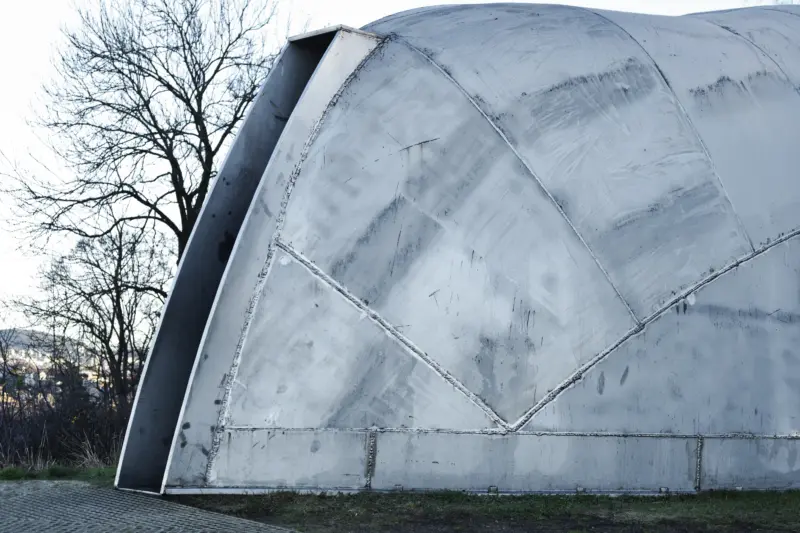
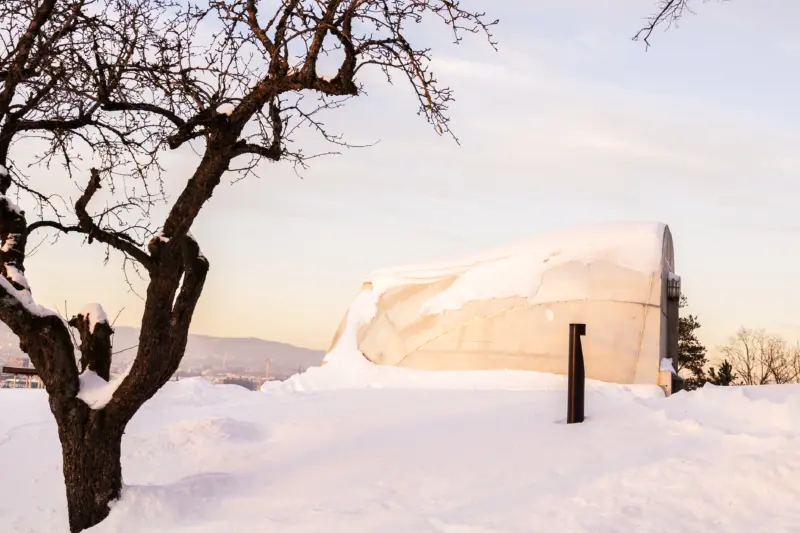
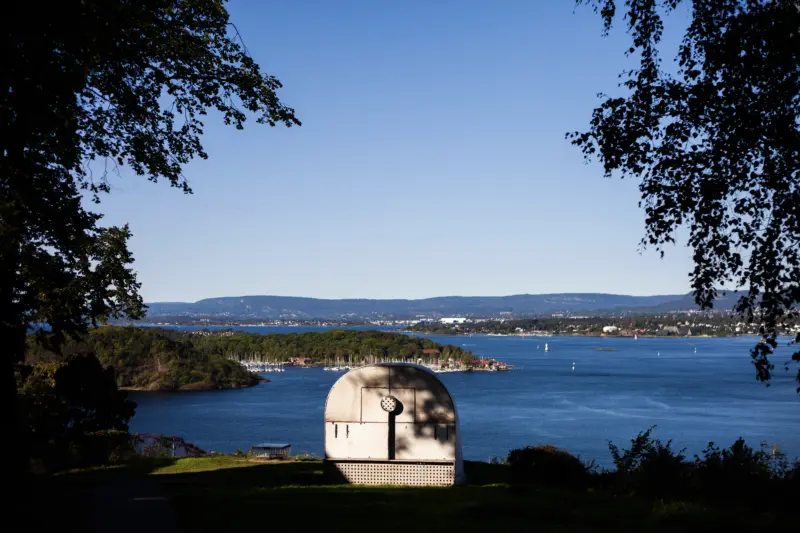
Indre rom VI—Livsløpet was made for the sculpture park and is positioned facing the Oslo Fjord. From the outside it looks like a grey bunker. The top is curved and has a small vertical opening at the front. The spectators are invited to enter through this narrow split. The room inside is dark and cold, the sound of steps and voices creates an overwhelming echo, and the only light sources are the entrance in the front and a few holes at the bottom of the back wall. There is some kind of growth emerging from the wall, which becomes a foreign element in the otherwise industrialised, empty spacde. It has an organic form and can resemble a tumourgrowing out of the cold steel. The visible scars of the welding and the organic outgrowth contributes to the physical experience of the spectator in such a way that when they enter, they step into a form of inner, mental space. Bjørlo has his own way of encouraging us to reflect on what we are feeling rather than what we are seeing.
Indre rom VI—Livsløpet is the sixth and so far, the final installation in this series. Indre romVI in the Ekeberg Sculpture Park and Indre rom V, which is in the National Museum’s collection, are the only works in the iconic series that still exist.
Guided tours
Experience Inner Space VI – The Realm of Life and many of the other artworks in the collection with our art mediators. We offer guided tours for private groups all year round.