
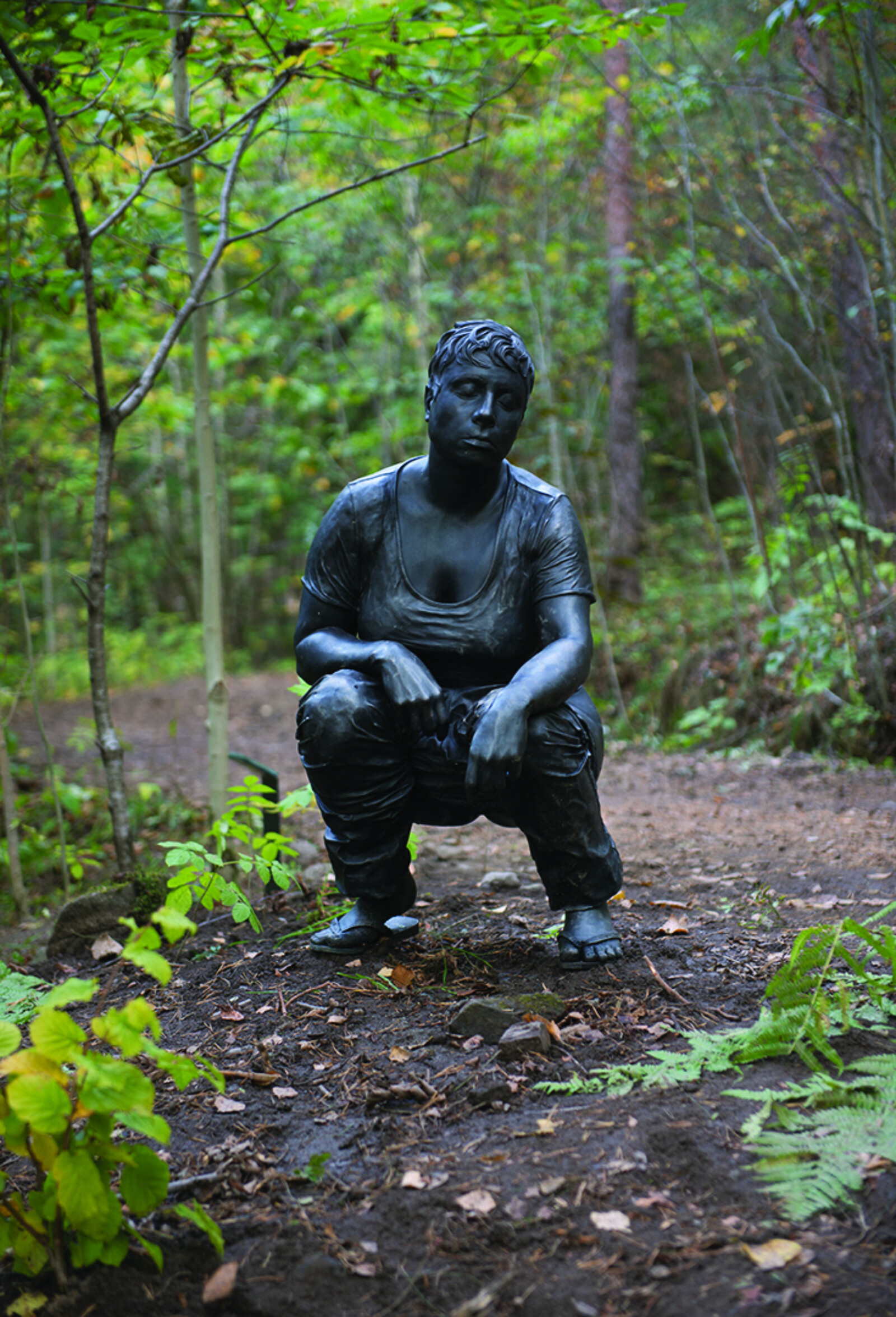
Fideicommissum
- Date 2000
- Unveiled 2013
- Material Bronze
- Details Fountain in the summer season
- Dimensions 99 x 71 x 52 cm
© Ann-Sofi Sidén / BONO. Photo: © Ivar Kvaal
«Where does a park or an idea begin and stop?»
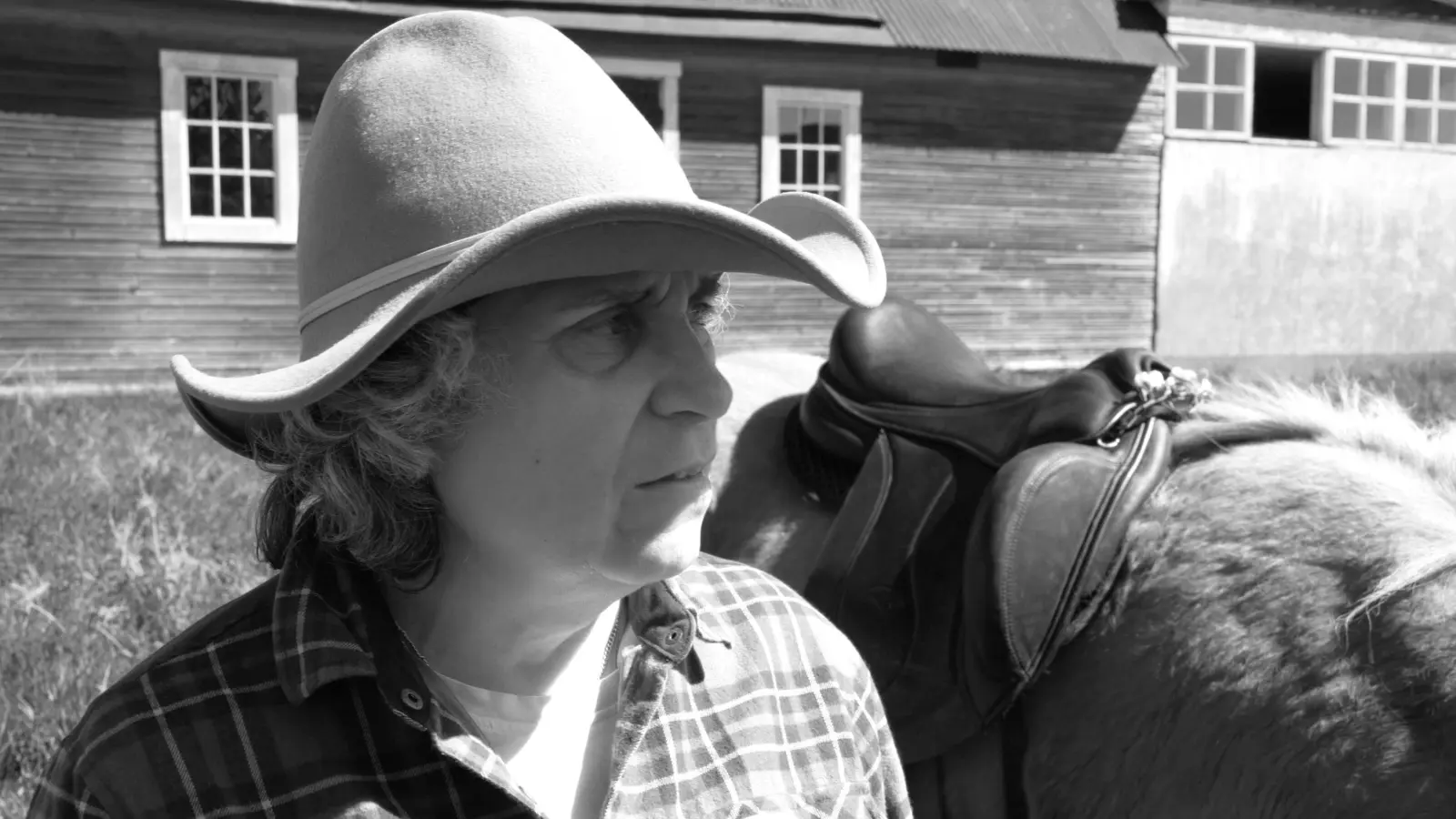
Ann-Sofi Sidén
(b. Stockholm, 1962)
Ann-Sofi Sidén was trained traditionally as a painter at Skowhegan School of Painting and Sculpture i Maine, USA, but has made a major impact with her video, installation and sculptural art. She will often feature herself in her art or create alter egos where she examines complex psychological conditions. Her works are included in a number of collections, such as American University Museum at the Katzen Arts Center, Washington DC; Borås Konstmuseum, Borås; Kiasma, Helsinki; Magasin 3, Stockholm; Museum of Contemporary Art, Miami and Moderna Museet, Stockholm. In the period 2007-2017 she held a position as professor at the Royal Institute of Art in Stockholm.
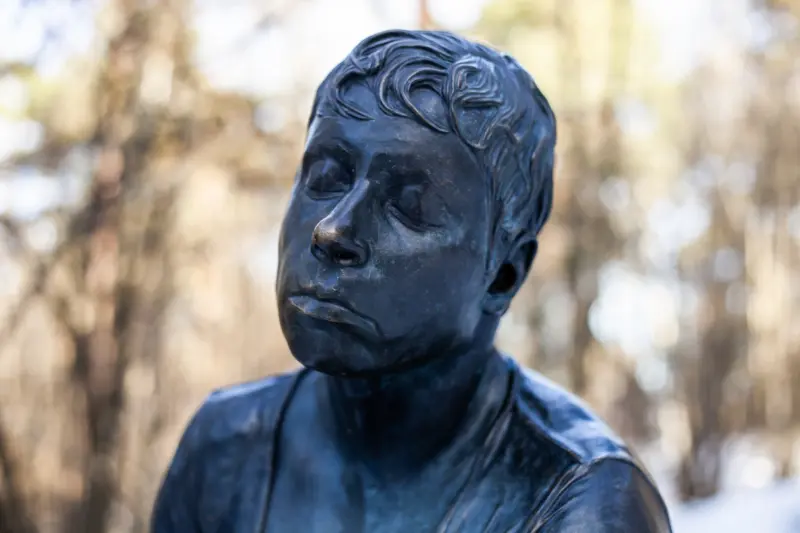
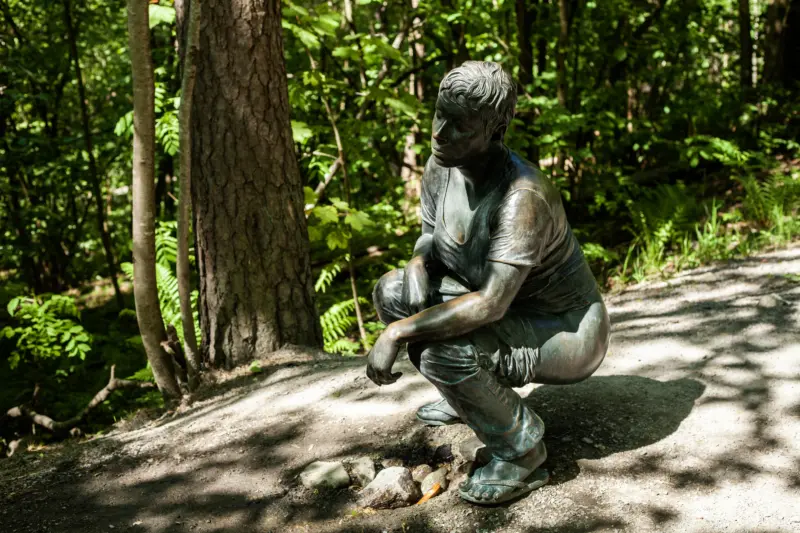
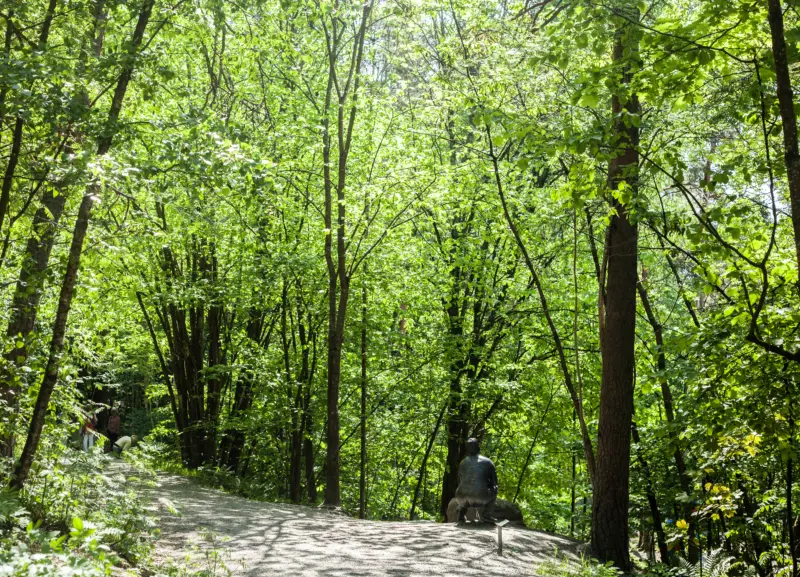
The sculpture Fideicommissum, is a full-size self-portrait. The sculpture is a life size cast of the artist squatting, trousers around her ankles and relief on her face, while peeing. The sculpture is also a fountain which now and then lets water out from below, in a twist on the classical fountain motif of the little boy spurting water. It is extremely naturalistic in the detailed hair, sandals and folds of the clothes, where even the label is depicted.
Fideicommissum functions as a fountain during the summer season.
The idea of immortalising this bodily urge in bronze came to Sidén in 1999, when she was recording a film project at Wanås Konst. Wanås is a castle and parkland in the northern parts of Skåne, Sweden. The estate was converted to an art centre in 1987. While working in the park, Sidén found herself needing to answer a call of nature. Sidén made six editions of Fideicommissum and the first one was placed at Wanås.
The title Fideicommissum is a direct commentary on Wanås and the castle’s history as part of the tradition of Swedish aristocratic inheritance. The term fideikommiss denotes an estate that could never be sold legally; the only exchange of ownership could be though inheritance. In Swedish aristocracy, only the first-born son of the family inherited. This institution was ended by the Swedish government in 1964, but the Wanås estate was entailed until 1978. The title, staging and placement of the sculpture right next to the castle makes the artwork a kind of territorial marking and a commentary on gender inequality and power relations. Bare-bottomed, with a tinkle in the grass and a twinkle in her eye, Sidén shows exactly what she thinks about this tradition.
Fideicommissum is especially relevant to the Ekeberg Sculpture Park. From the 1700s onwards, Ekeberg’s main farmhouse was subject to a similar tradition, called stamhus, where the farm was supposed to be inherited in its entirety by the eldest son. It was only as recent as 2005 that this was abolished for this property, even though new inheritance jurisdictions in the stamhus tradition were prohibited in the Constitution of Norway right from start in 1814.
Guided tours
Experience Fideicommissum and many of the other artworks in the collection with our art mediators. We offer guided tours for private groups all year round.