
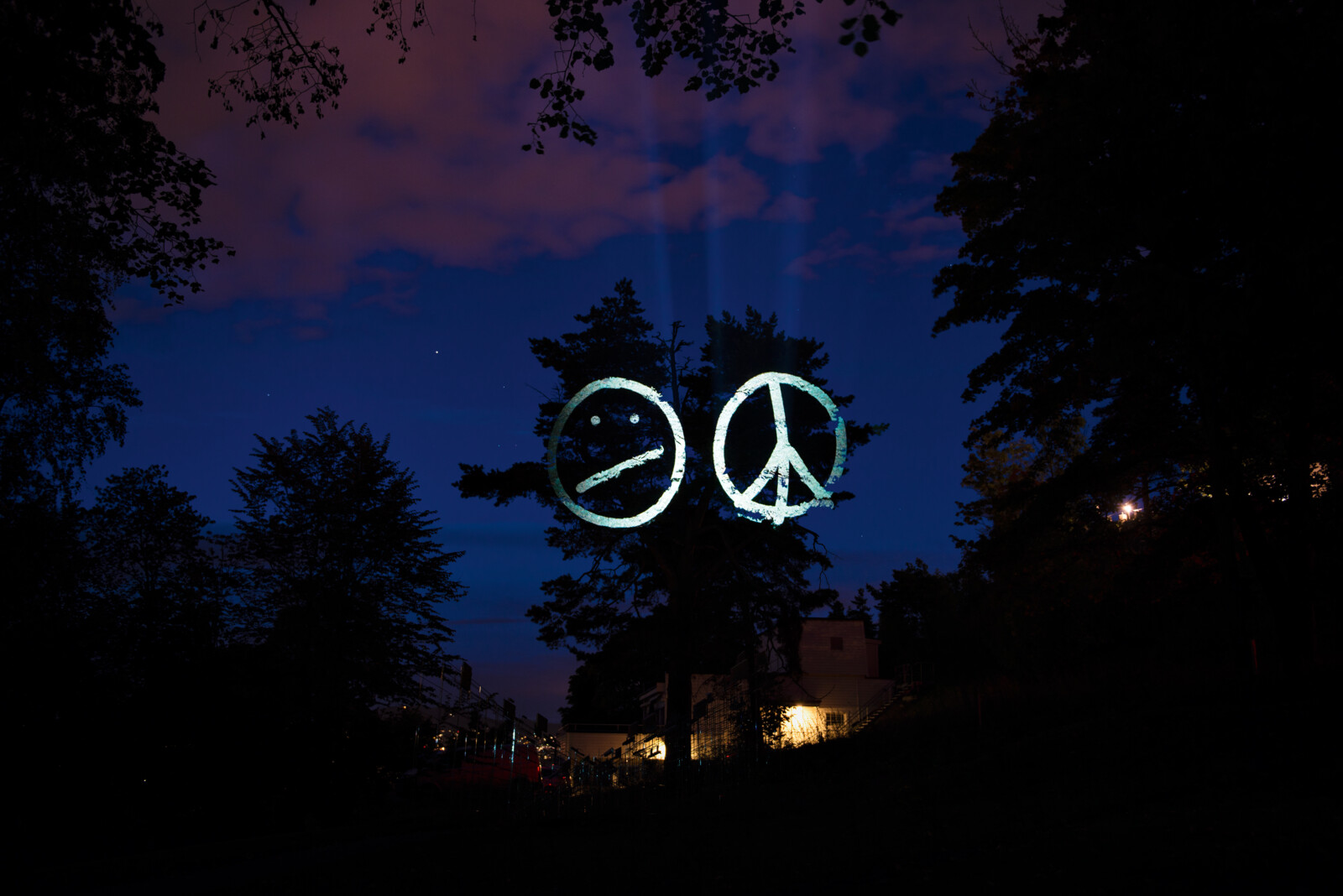
Cognitive & Dissonance
- Date 2013
- Unveiled 2013
- Material Video projection & sound
- Dimensions Variable
- Available 15:00-21:00, every day
© Tony Oursler / BONO. Photo: © Ivar Kvaal
«I always say you have to look for things in places you wouldn’t expect to find them.»
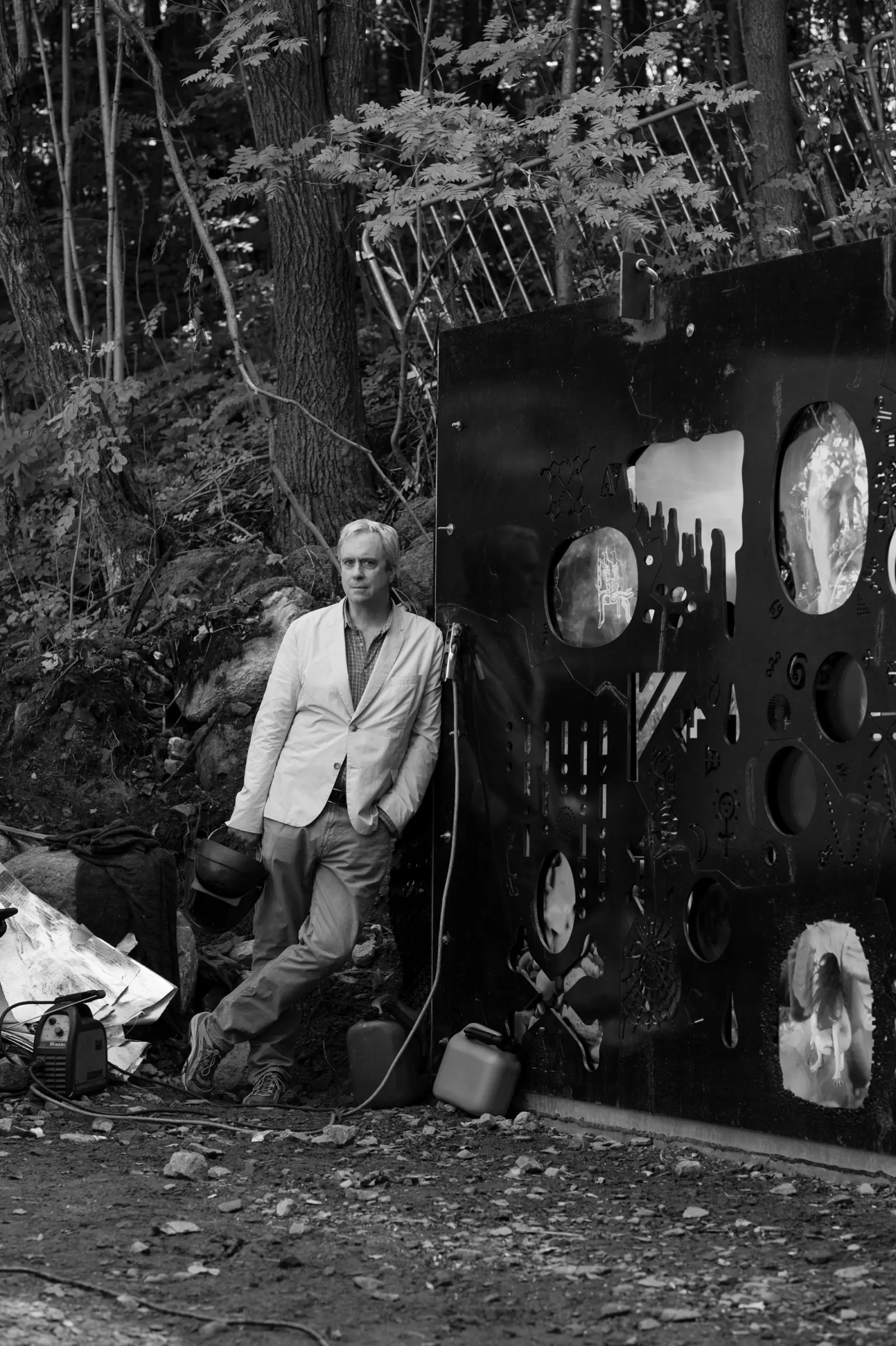
Tony Oursler
(b. New York, United States, 1957)
Tony Oursler is particularly known for combining light, sound and movement in his art. He studied at CalArts, alongside among others Mike Kelley and John Baldessari, with Laurie Andersson among the teachers. During the 1990's, Oursler became known for his Talking Lights, and The Influence Machine (2000), using light projections on trees, smoke and buildings in New York City's Madison Park and London's Soho Square. His works have been shown at, among many institutions, The Kitchen, New York, Stedelijk Museum, Amsterdam, Documenta (1987, 1992, 1997), Kassel, Museum of Modern Art, New York, Centre Georges Pompidou, Paris and Tate Modern, London.
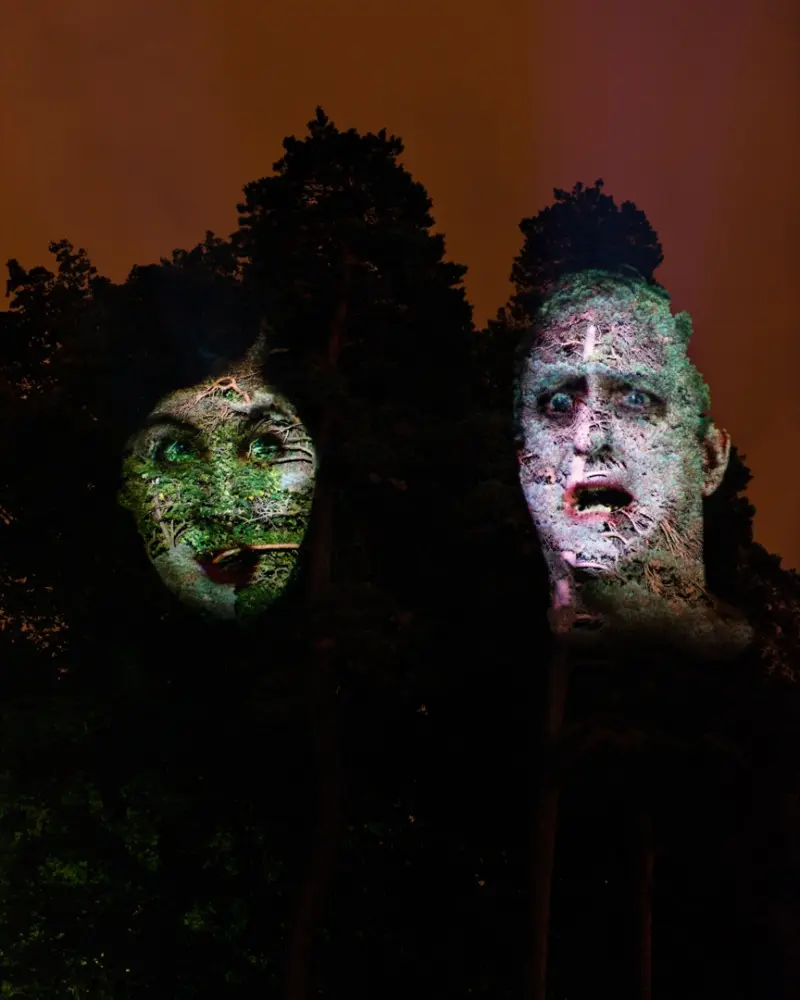
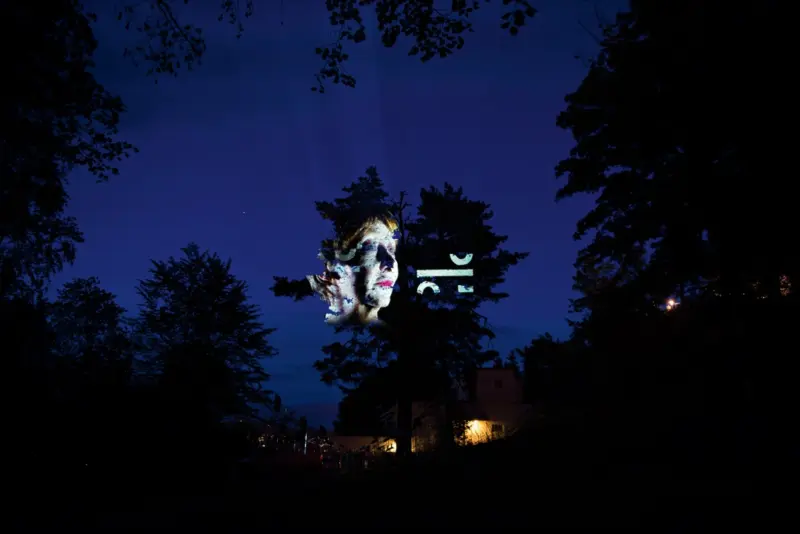
Oursler has conceived three works specifically for the Ekeberg Park. They are independent of each other, yet they create a common context. The artist has also been inspired by the history of communication, in particular our relationship with technology and language. The projections Cognitive & Dissonance question how truth and content are produced in the internet age. The work can only be seen in the dark. At dusk, it appears in the foliage and shows us the teeming telecommunication network that perennially surrounds us.
Oursler was one of the artists invited to Ekeberg in 2010 by the art committee to develop a proposal for a site-specific artwork for the park. He was inspired by Ekeberg’s rich historical layers. The rock carvings, cup-marks and burial mounds are forms of communication from the past and he wanted to connect this with the history of the Nordic countries as trailblazers in telecommunication. He made not one - but three proposals for the park, each with titles and descriptions recognizable as data technology terms. The three works trace a multi-platform of communication with each other. It starts with Klang showing visual language formations; then Spectral Power—coded spoken information; and Cognitive & Dissonance—an imprint of the messages that the other works try to communicate. They make up a Son et Lumière; a sound and light production shown in places of historic significance.
Cognitive & Dissonance can only be seen and heard at dusk in autumn and winter. Living images of large faces and symbols are projected against two different treetops. The tree crowns give an exciting surface structure and the images alternate. The two projections seem to be in dialogue with each other. The audience must stand in a specific spot close by to hear the sound that belongs to the work. The voices you hear talk incoherently and in snippets, and it is often difficult to distinguish the words. The title refers to the term for an uncomfortable condition stemming from cognitive conflict—the difference between expectations and the experienced reality.
Guided tours
Experience Cognitive & Dissonance and many of the other artworks in the collection with our art mediators. We offer guided tours for private groups all year round.