
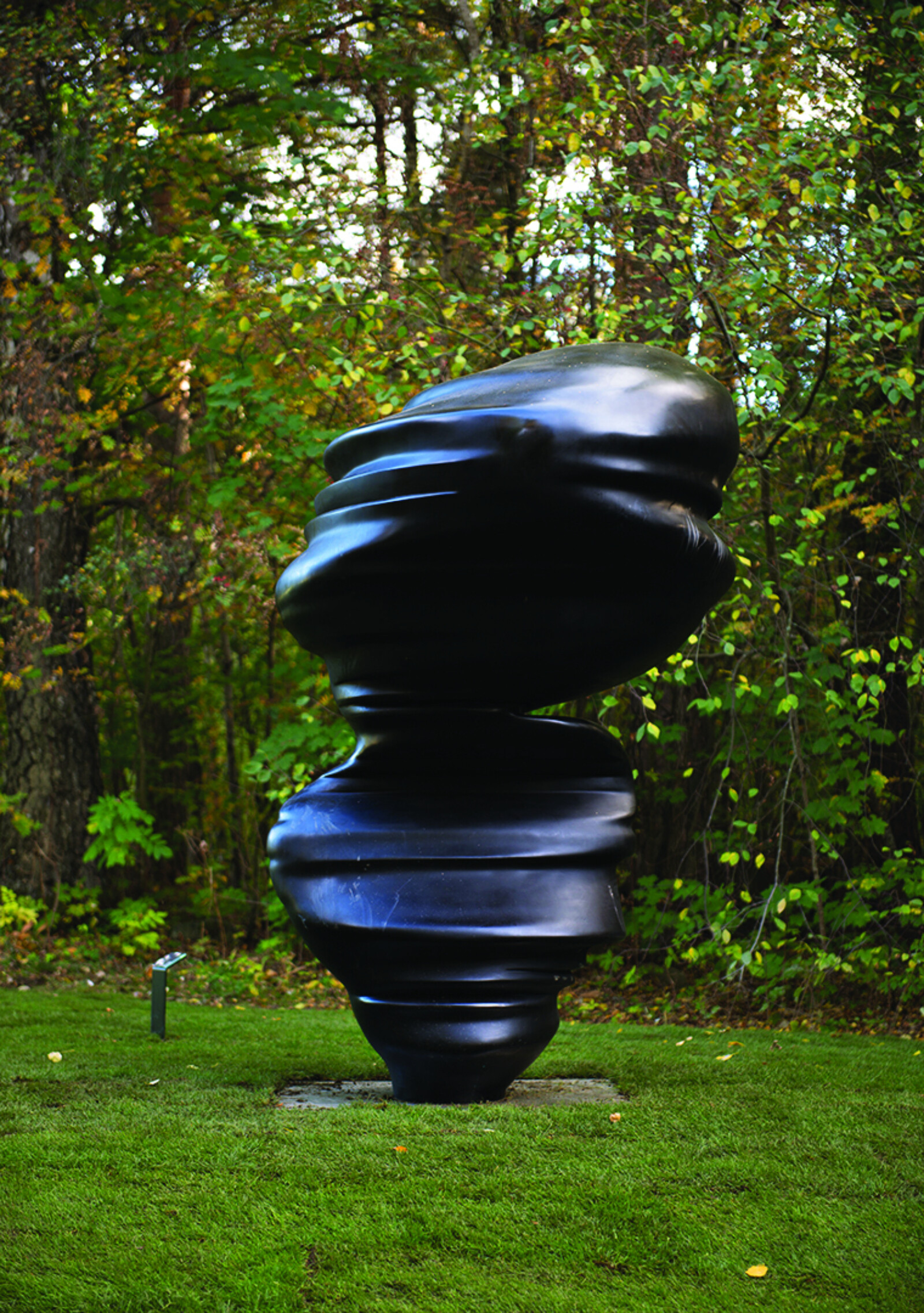
Cast Glances
- Date 2002
- Unveiled 2013
- Material Bronze
- Dimensions 238 x 199 x 159 cm
© Tony Cragg / BONO. Photo: © Ivar Kvaal
«I always have rules about what I´m doing, and the game becomes to break the rules, but on my own terms.»
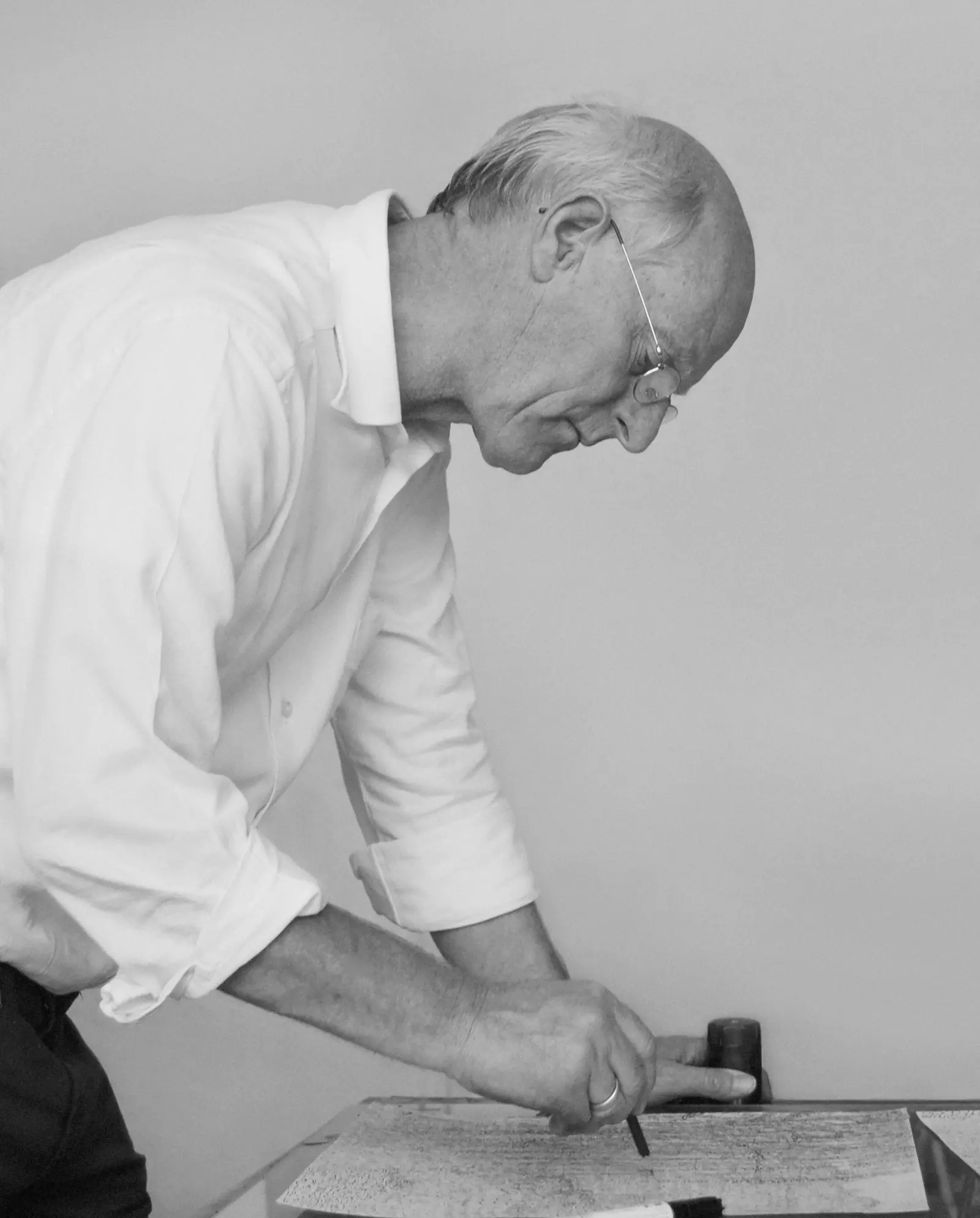
Tony Cragg
(b. Liverpool, United Kingdom, 1949)
Cragg is regarded as one of the most important British sculptors of his time and has won several awards for his innovative and enchanting works that are often frozen in action. Cragg explores an unconventional use of materials and uses plastic, fiberglass, bronze, and Kevlar. As a young man Sir Anthony Douglas Cragg worked as a laboratory technician and studied biochemistry. Through 1969-77 he studied art at Gloucestershire College of Art in Cheltenham, Wimbledon School of Art and Royal College of Art in London. Since the 1970s he has been teaching, and worked as a professor, at L’Ecole des Beaux Arts de Metz, Kunstakademie Düsseldorf – here he was also principal from 2009-13, and Universität der Künste, Berlin. He moved to Wuppertal in Germany in the late 1970s, where he still lives and works. Since the end of the 1970s he has had an extensive and international exhibition practice, including public commissions. His works have been displayed, among many places, at the Documenta (1982 and 1987) in Kassel; Louisiana, Humlebæk (1984); the Venice Biennale (1986, at the UK pavilion in 1988, 1997); Museo Nacional Centro de Arte Reina Sofia, Madrid (1995); Centre Georges Pompidou, Paris (1996); and Musée du Louvre, Paris (2011). In 1988 he won the prestigious Turner Prize. In Norway, the sculpture park at Kistefos features several sculptural works by Cragg.
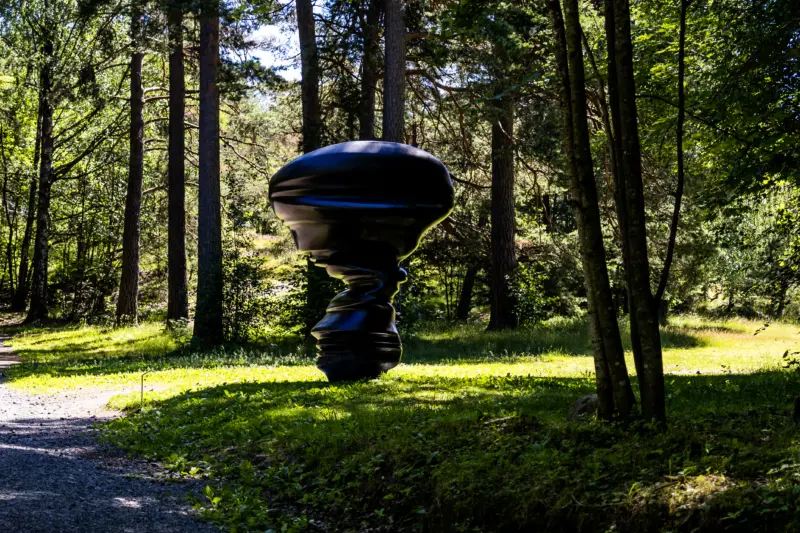
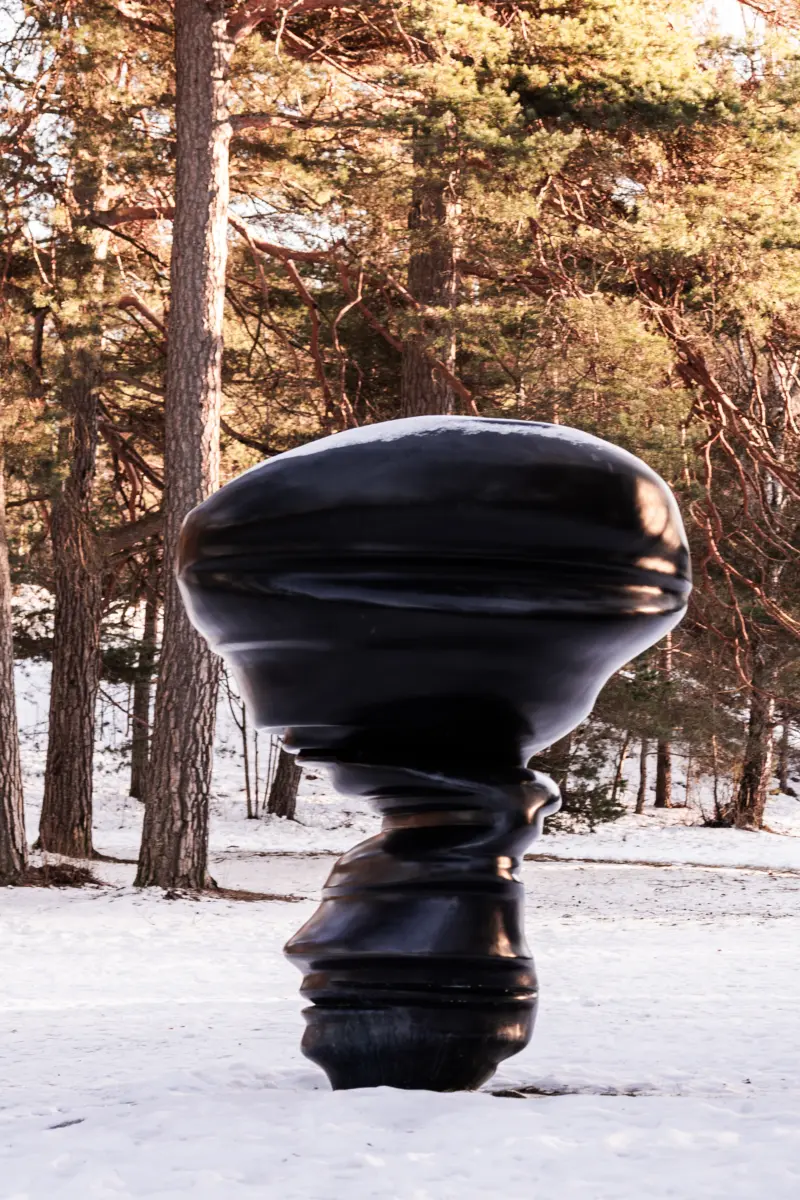
Cast Glances is part of the Rational Beings series. As the spectator moves around the sculptures, Cragg lets facial features and profiles come into sight. There is a complicated process behind these astonishing effects. Building on drawings and models, Cragg creates crafted pieces that seem both organic and dynamic. Cast Glances is also a play on words, as the spectator “casts” aspects of the sculpture by looking at it from different angles.
Tony Craggs art practice has a most varied output, in both form and materials. His work encompasses installations, found objects, stone, wood, glass, ceramics, bronze and stainless steel, but also works on paper; printmaking and drawings. Cragg’s interest in geology is apparent in several of his works, where the form may resemble abstracted stone formations.
Through the 1990s Cragg was working on two different, but related series, titled Early Forms and Rational Beings. In the series Early Forms Cragg was exploring the idea of containers as a metaphor for the body. By enlarging and reshaping the form’s qualities Cragg manipulated the container’s surfaces and gave them a new form of physicality. In Rational Beings, of which Cast Glances is a part, Cragg developed this interest.
In Cast Glances the focus is shifted from the organic to the more dynamic, where the sculptures seem to be in flux when they really are static objects. Cast Glances consists of elliptical discs that are placed on top of each other in a vertical axis. In the abstract forms that constitute the ellipses we can see the profiles of human faces. Faces appear and disappear depending on where you are standing, which reinforces the impression of the sculpture being in constant movement.
Guided tours
Experience Cast Glances and many of the other artworks in the collection with our art mediators. We offer guided tours for private groups all year round.