
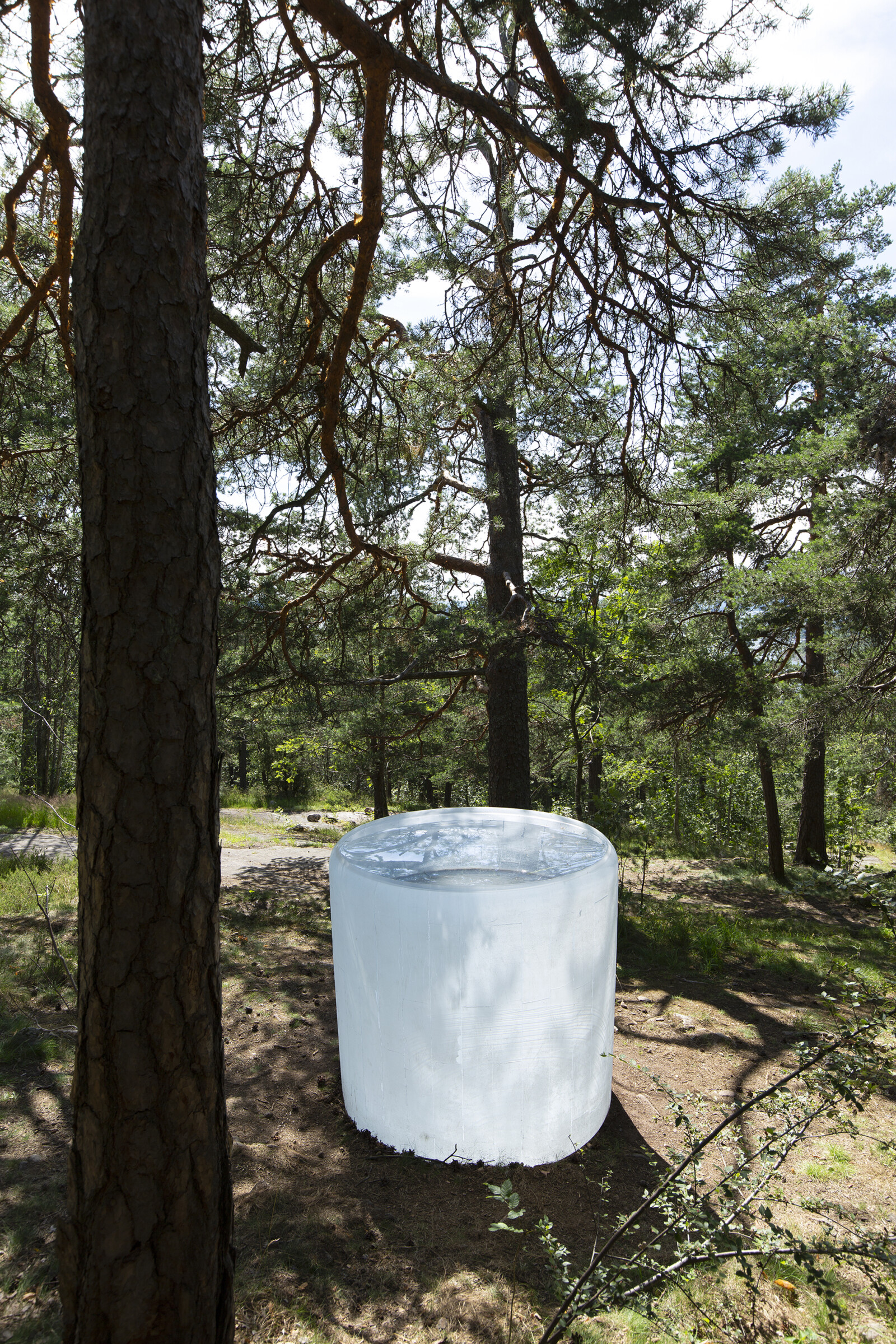
Air Burial (Oslo)
- Date 2019
- Unveiled 2019
- Material cast glass
- Dimensions 131,4 x 142,2 cm
© Roni Horn / BONO. Photo: © Uli Holz
«Water is a form of perpetual relation, not so much a substance but a thing whose identity is based on its relation to other things. Most of what you’re looking at when you look at water is light and reflection.»
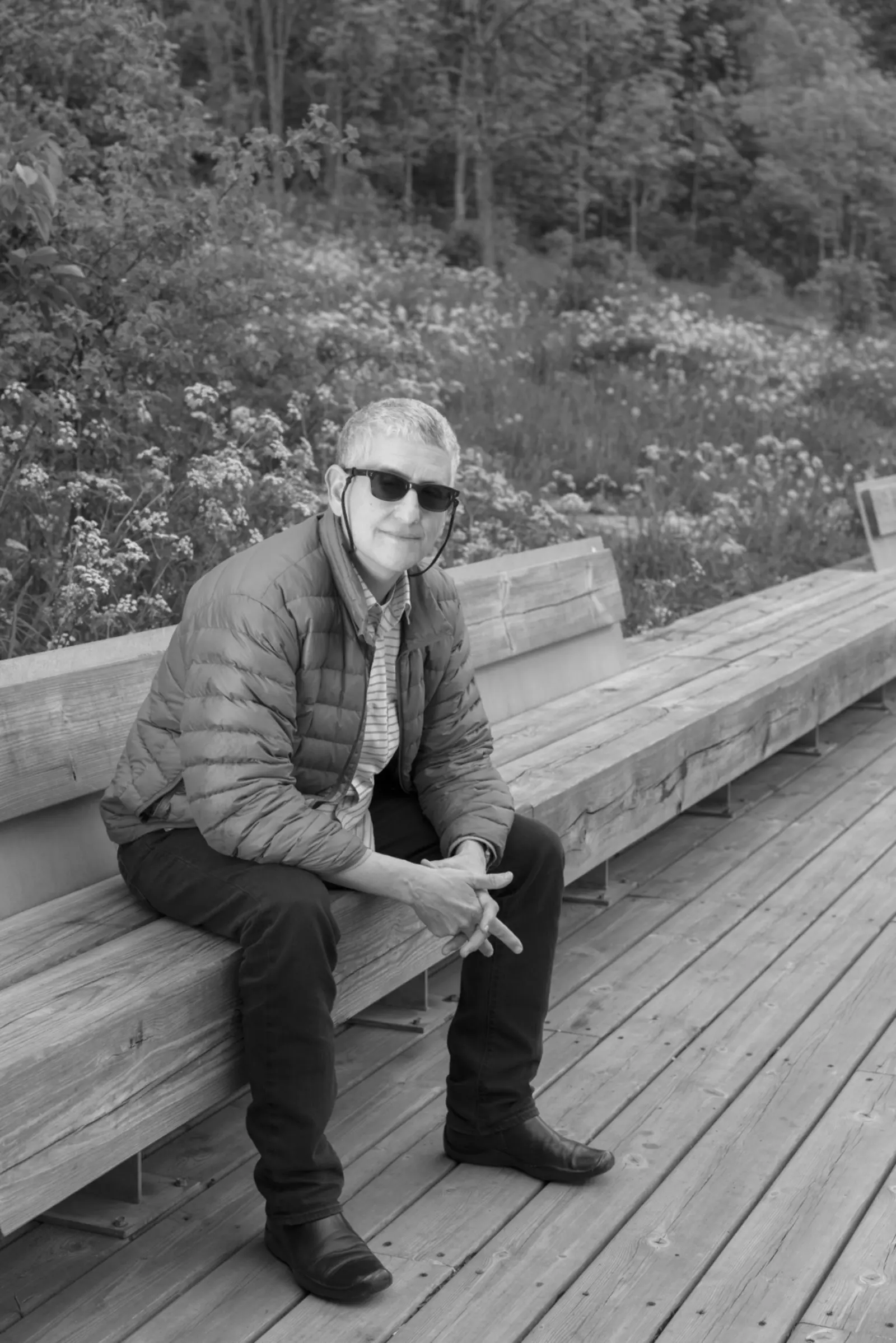
Roni Horn
(b. New York, United States, 1955)
American artist Roni Horn has through a long career distinguished herself as one of the world’s leading contemporary artists. She studied at Rhode Island School of Design, and later on at Yale University, where she graduated from the MFA sculpture program. Since the 1970s, she has worked with photography, sculpture, installation, and text. In her art practice she is often concerned with dualities, and explores the relationship between nature, its geological processes, identity and cultural heritage. She works in a minimalistic style and often has a poetic and emotional layer to her work. Materials are of importance to Horn; she makes use of each material’s specific qualities. There are examples of gold, rubber, and cast glass in her sculptural work. Roni Horn lives and works in New York and Reykjavik, and in 2023 she also obtained Icelandic citizenship. Her work can be found in a number of collections; the Guggenheim, New York; Judd Foundation; Museum of Modern Art, New York; National Gallery of Art, Washington, D.C.; Museum of Contemporary Art, Los Angeles; Art Institute of Chicago; Whitney Museum, New York; and Tate, London, etc.
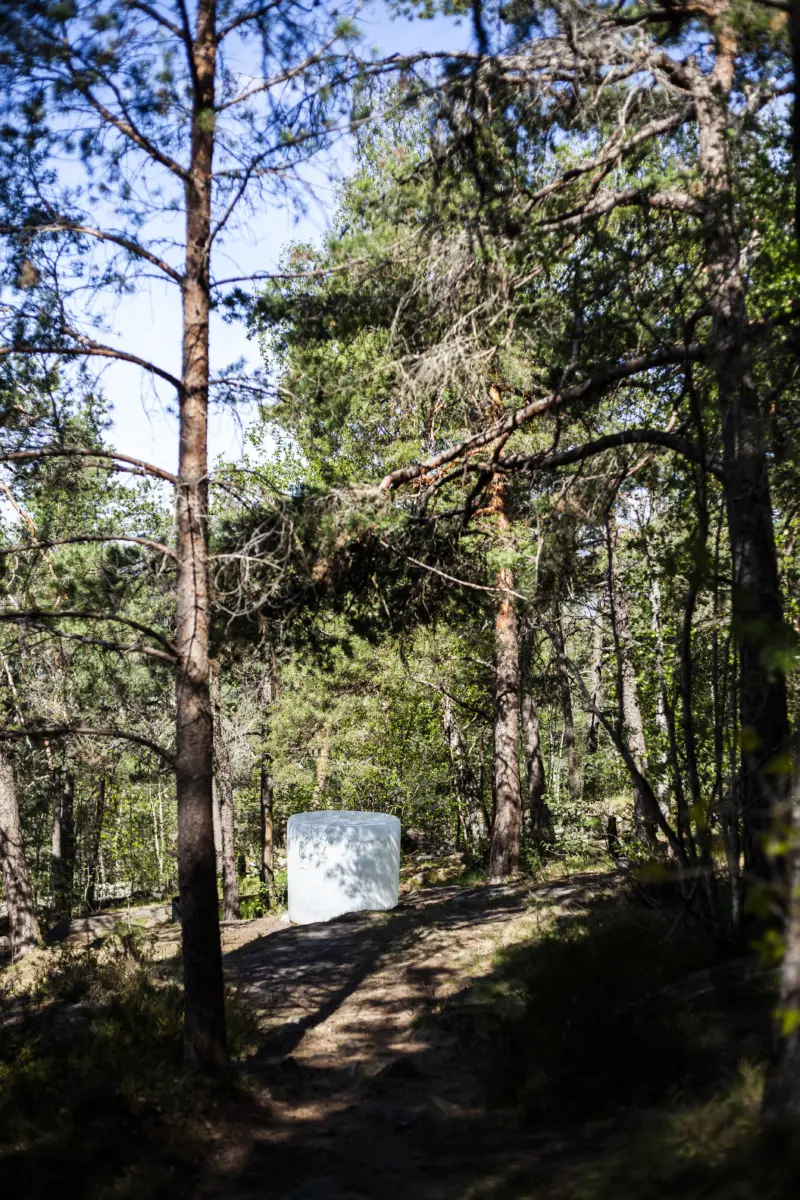
Air Burial (Oslo), is part of a group of cylindrical glass sculptures developed by Horn since the 1990s. The glass is melted and poured into the cast, before it is left to set over a period of several months. This process gives the work its characteristic expression of a translucent exterior and a transparent, seemingly liquid interior.
The title of the work is a reference to sky burials: a burial practice carried out in parts of China, Mongolia, and Tibet. The body of the deceased is placed on a mountaintop and exposed to the elements until it is slowly broken down and becomes one with nature. This practice is also called excarnation and was practised in parts of Europe during the Iron Age. Air Burial (Oslo) is also exposed to the elements and will slowly decompose and completely disappear.
The nature in Iceland has a unique place in Horn’s artwork. In the 1990s she started making sculptures in glass as an homage to the country and the people who live there. The glass sculptures have become a well-known feature of her work, and Air Burial (Oslo) belongs to this category. It is a tall cylinder with a textured surface on the outside and a transparent core.
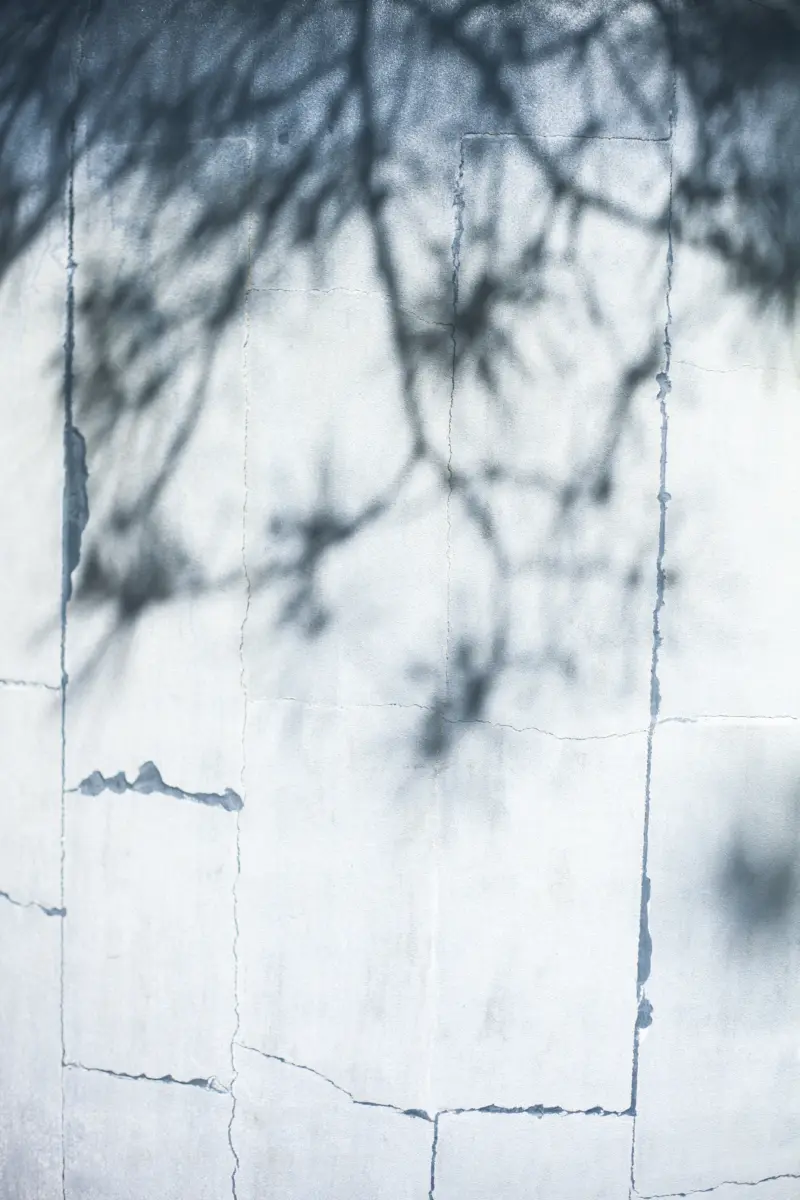
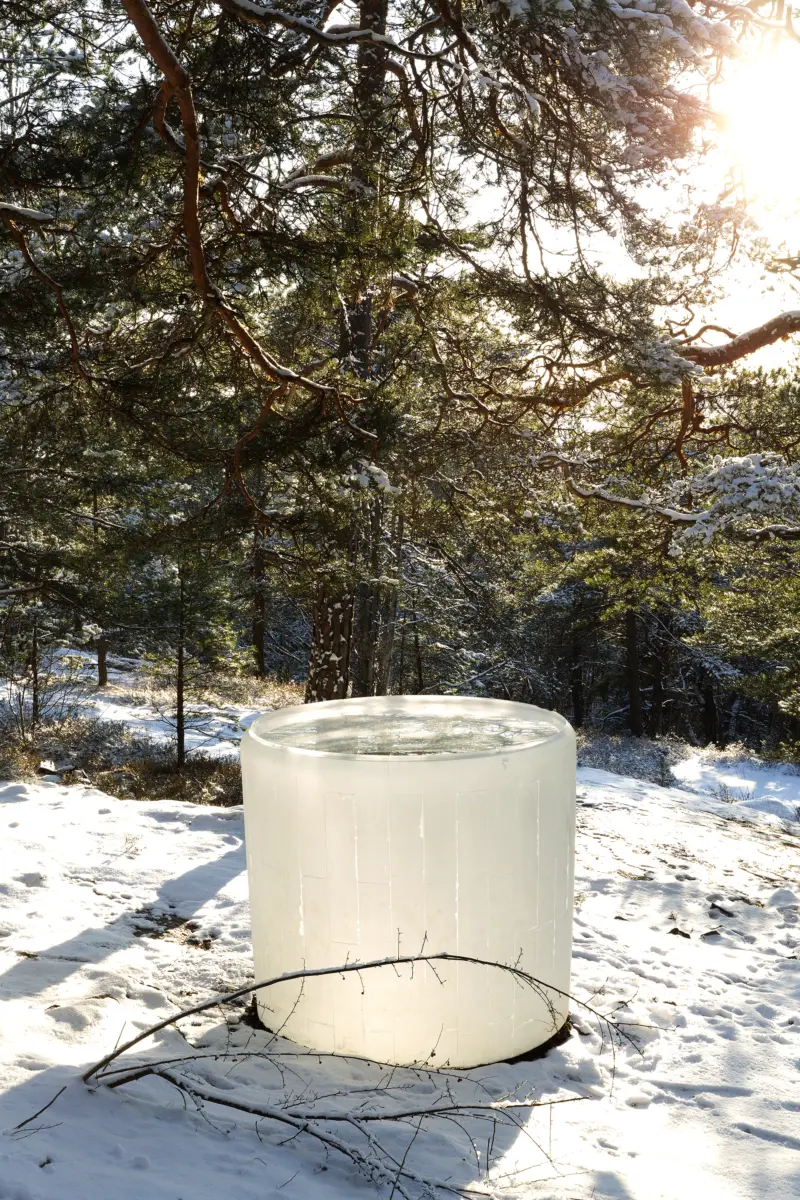
Air Burial (Oslo) seems solid yet liquid at the same time and this duality is captured in its surface. The glass has set slowly inwards and outwards over several months in the mould. The process has made the outside rough, whitish and translucent, while from the top and inwards it is transparent and can look like water that has frozen over and turned to ice. The surfaces reflect the natural light differently depending on the seasons, time of day, and weather conditions, and in this way connects the work to the environment’s changing conditions and the cycles of nature.
Guided tours
Experience Air Burial (Oslo) and many of the other artworks in the collection with our art mediators. We offer guided tours for private groups all year around.