The War Cemetery (WWII)
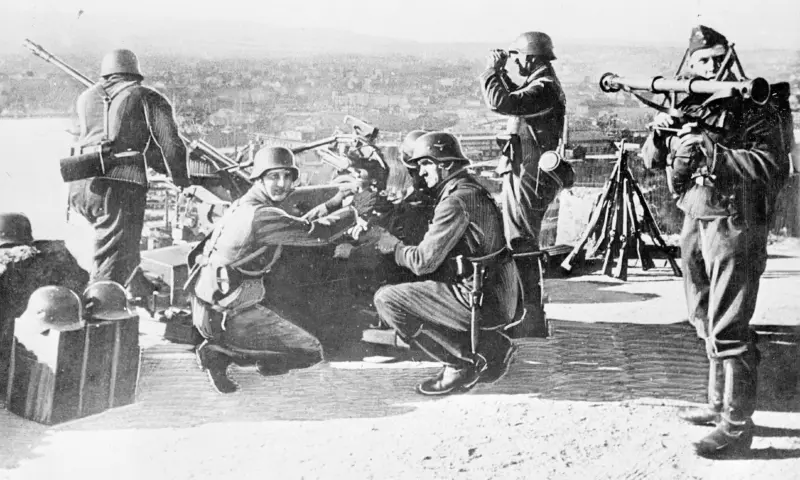
The Ekeberg area, with its steep hillsides, the plateau and the striking view of the city and the fjord, was seen as a strong strategic and military point for centuries, and for the occupying forces during World War II.The German forces took over the existing buildings, built more houses, cable trenches and bunkers. They established a big defence structure on the hillside by the villas and water reservoir. The defence system consisted of, amongst other elements, artillery positions for surveillance of the harbour and air space. The mountain was blasted with dynamite in several locations to make a shelter for ammunition. Over 5000 mines were placed to protect the anti-aircraft facility Grossbatterie Anton. The mines were positioned in many places across the facility, including the hillside behind the Ekeberg Restaurant and up towards Ekebergsletta.
The city gardener Marius Røhne, who was responsible for the public park at Ekeberg after the war, reminds us of how extensive this defence system really was. He wrote that the remains of the German occupation at Ekeberg gave him “(...) a horrible realisation of what the sacrifice would have been if we were to liberate Oslo by force”. (Marius Røhne, “Oslos kommunale parker og grøntanlegg 1810–1948”, 1967). Røhne further relays that for him, the worst part of the German exploitation at Ekeberg was not the vandalization of the area to construct military positions, but the War Cemetery they left behind.
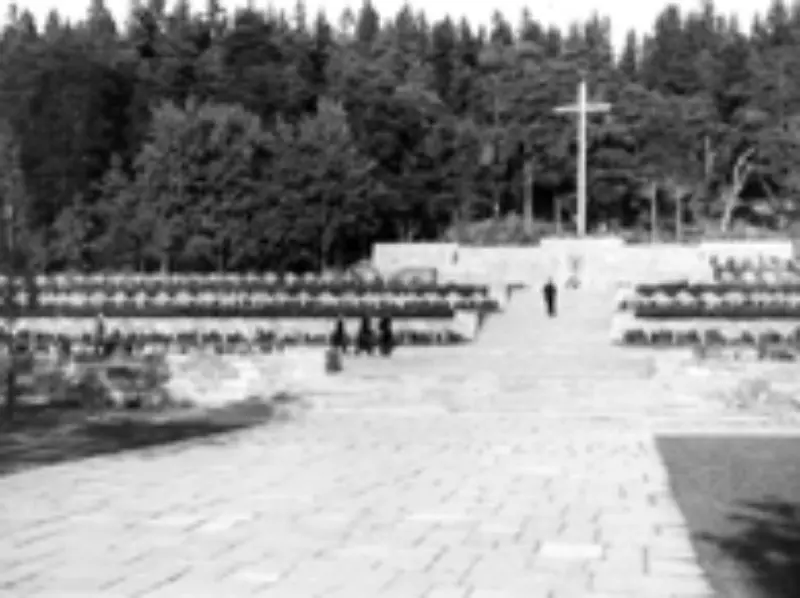
The War Cemetery at Ekeberg was established by the occupying forces in the spring of 1940 and in the end covered over twenty-three acres. It was placed where we find Svenskesletta and Ridesletta today and consisted of a pompous installation of terraces and a monumental double staircase with a ceremonial square. A huge cross towered over the monument and in the centre, a bronze eagle with a swastika was placed. An enormous stone wall encircled the entire cemetery.With the establishment of a cemetery for fallen German soldiers, the area became a heavy symbol of the nazi occupation of Norway.
By the end of the war, over 3000 German soldiers, most of them of high rank, were buried here. The first to be interred were officers who lost their lives in the sinking of the German war cruiser, Blücher, on April 9, 1940. They were temporarily buried at Vestre Gravlund before being moved to Ekeberg.
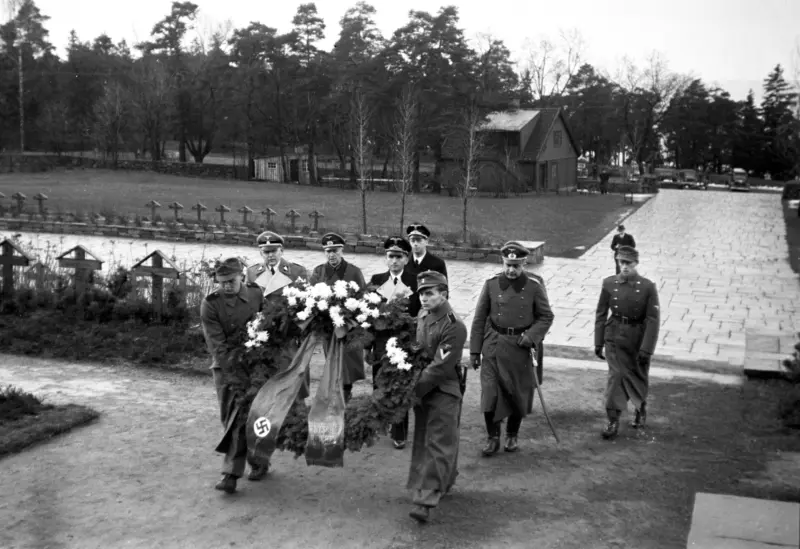
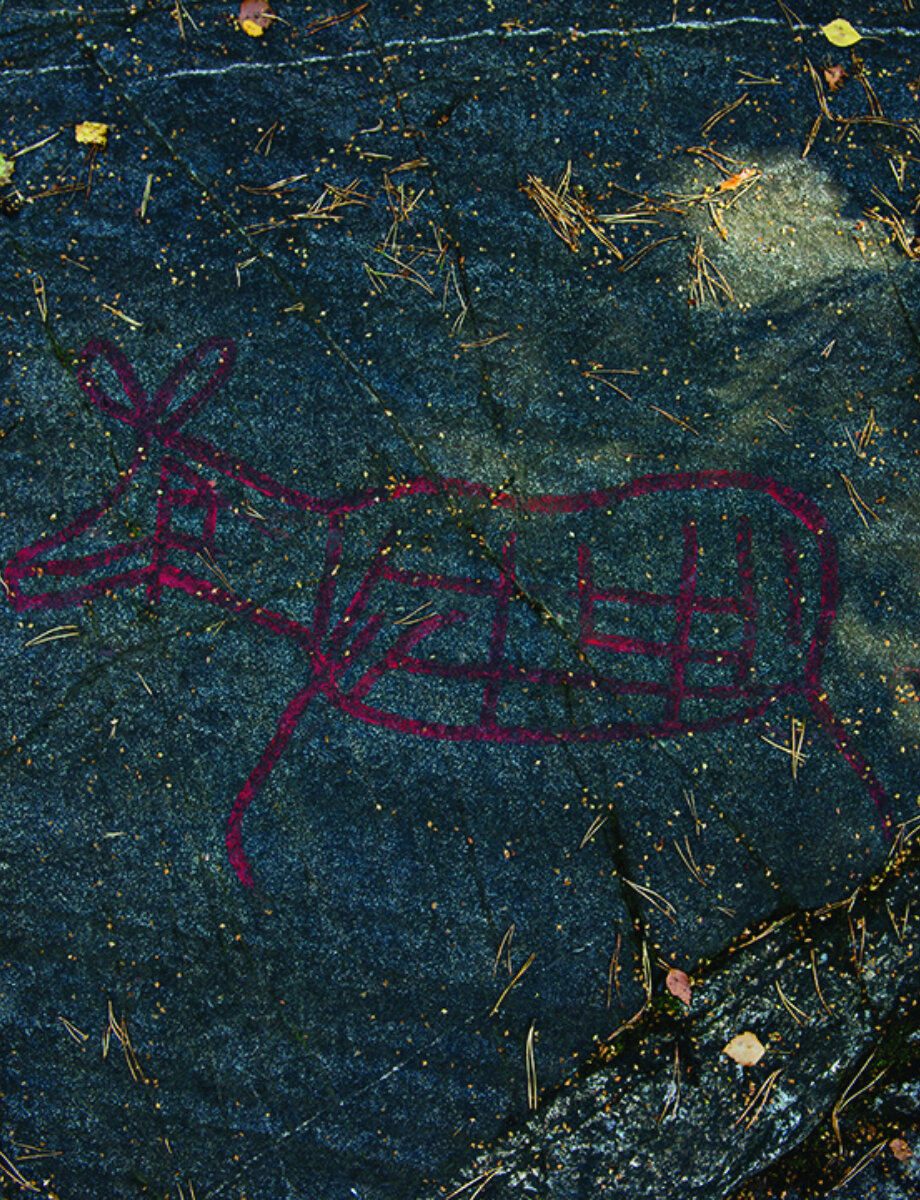
The War Cemetery became an area for grandiose and bombastic ceremonies by the occupying forces. They arranged wreath ceremonies in honour of the fallen soldiers, where entire companies often paraded on the terraces. Every time German heads of state visited Oslo, the War Cemetery was their first stop. Both Joseph Goebbels, who visited Oslo in November 1940, and Heinrich Himmler, who came in January 1941, visited the cemetery to place wreaths. In 1942, the first Norwegian soldier in German service was buried here with great pomp and circumstance. The ruling power made sure that this was well documented in the press. Another symbolic reason that Ekeberg was chosen as a location for the German War Cemetery, was that they knew about its cultural heritage. The Nazi government went to great lengths in the attempt to establish an ideology of the Germanic races as an embodiment of ancient and superior cultures. They also did this by collecting cultural heritage and historical remains from the countries they occupied. In particular, the rock carvings in Familiedalen were frequently visited during the occupation, by amongst others Himmler.
Sources / Further reading
Oslo kommune, Kulturetaten og C. Ludens Ringnes Stiftelse. (2010). Naturgrunnlag – registreringer og rapporter: Skulptur- og kulturminnepark på Ekeberg. Vedlegg 10 til planforslag, juli 2010
Oslo kommune, Kulturetaten og C. Ludens Ringnes Stiftelse. 2010. Konsept for kulturminneformidling: Skulptur- og kulturminnepark Ekeberg. Vedlegg 7 til planforslag, juli 2010
Røhne, M. (1967). Oslo kommunale parker og grønnanlegg 1810-1948. Oslo: Myrhes papirindustri
Sprovin, M. (2012). Okkupasjonsmaktens kulturminner-problemstillinger ved vern og bevaring. Fortidsminnevern: medlemsblad for Fortidsminneforeningen 37, 2012. (2)
Syvertsen, B. H. (2006). Den tyske krigskirkegården på Alfaset. Årbok. Oslo: Groruddalen Historielag
Willberg, J. (2016). Den farlige historien er den som forties. Fortidsminneforeningens årbok.
Historical timeline
Cultural Heritage
The comprehensive archeological surveys in preparation for the establishment of the sculptural park in 2011 showed that the cultural heritage at Ekeberg was even richer and more extensive than previously thought.
A Public Park Anno 1900
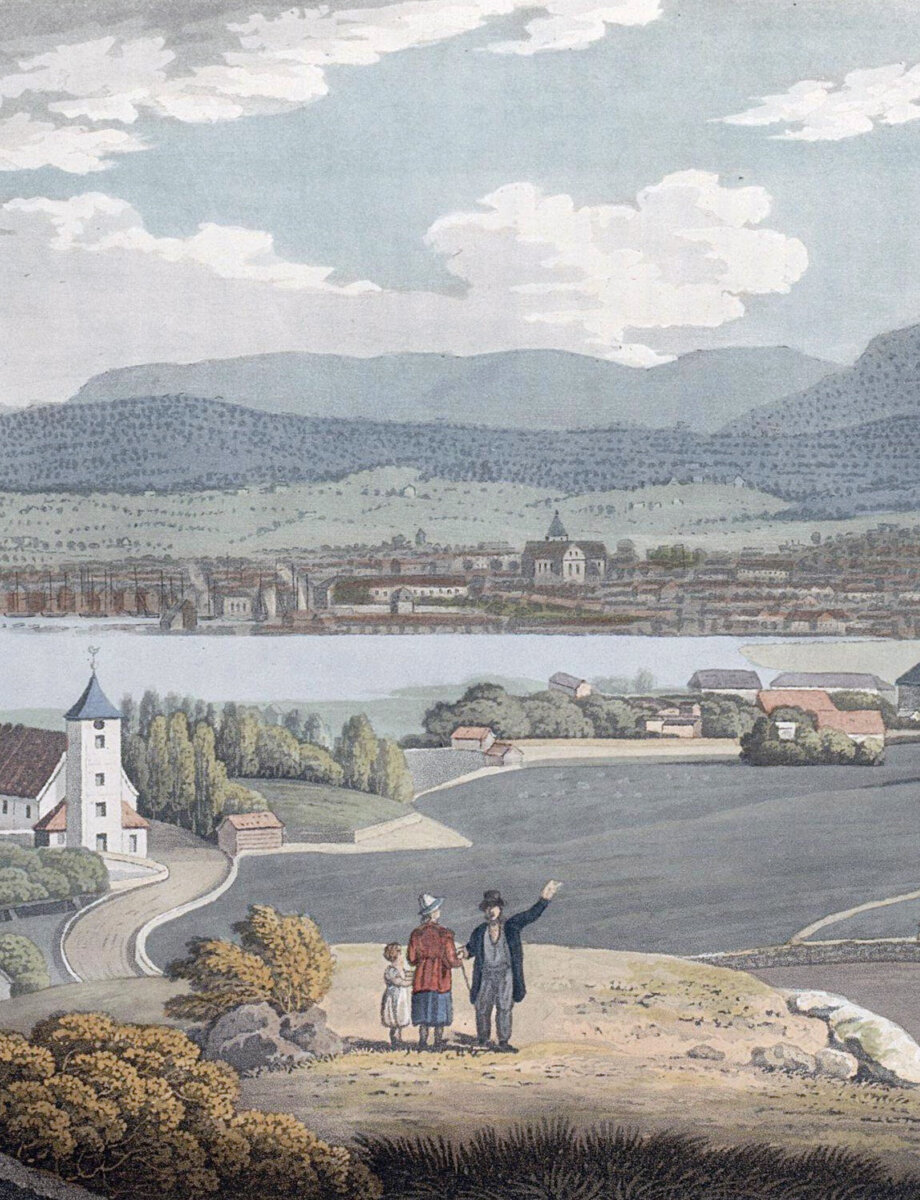
In 1889 the City Council bought a large private property at Ekeberg, with the intention to create a recreational area for the inhabitants of Kristiania.
Post-war
The whole of the Ekeberg area was cleared after the war. It became important to make sure the park was safe to use, but also important to get rid of the highly symbolical war cemetery as quickly as possible.
The establishment of Ekebergparken
The Ekeberg Park officially opened on 26th September 2013. Around fifty representatives from the Norwegian and international press attended. The reviews were overwhelmingly positive. Ekebergparken has since figured in many listings of the best sculpture parks in the world.